
Progress
Ozempic Face and Loose Skin After GLP-1 Weight Loss
"Ozempic face" is a media term, not a diagnosis. What research says about facial volume loss and loose skin after GLP-1 weight loss, and what is still unknown.
You catch yourself in a shop window and do a double take. Your jeans are looser and the stairs feel easier, but your cheeks look flatter than you remember, and there's a softness under your jaw that wasn't there before. Then a headline about "Ozempic face" turns up in your feed, and you start wondering whether the medication is doing something to your skin.
It's a reasonable worry. The short answer from the research so far is that what people call "Ozempic face" looks like what happens to a face after any substantial weight loss, especially fast weight loss. There's a lot that isn't known yet, though, and we'll be clear about which is which.
Is "Ozempic face" an actual diagnosis?
No. It's a nickname. A 2024 commentary in the Journal of Drugs in Dermatology calls it a media term for a supposed side effect, and asks whether it's a new adverse effect or simply the natural result of rapid weight loss. A 2025 systematic review in Aesthetic Surgery Journal Open Forum says the term was created and popularized by news outlets, and likely reflects a trend rather than new medical terminology or a new side effect.
The American Society of Plastic Surgeons describes it as a hollow, saggy or prematurely aged look that can follow rapid weight loss. Despite the name, it isn't specific to Ozempic. The same review notes that facial fat loss isn't mentioned in the Ozempic prescribing information.
So what's actually happening to my face?
Your face has fat pads that give it fullness, and they shrink with weight loss just like fat elsewhere. When volume drops faster than skin can tighten back, the skin can look looser.
There's now some measurement behind this. A small 2025 study looked at scans of 20 people taken before and after starting a GLP-1. Midface volume fell by a median of about 9%, mostly in the fat just under the skin, and the researchers estimated roughly 7% midface volume loss for every 10 kg of weight lost. It's a small, single-center study without a comparison group, so treat it as an early look rather than a firm number.
The systematic review found no evidence that GLP-1 medications target facial fat in particular. Its authors describe the changes as most likely a consequence of rapid weight loss.
Does the speed or amount of weight loss matter?
Probably both, along with age. Plastic surgeons quoted by the ASPS say the speed of loss is a key factor, and that younger skin tends to spring back better than older skin with less collagen. The systematic review also says the effect is more noticeable in older people.
For loose skin on the body, the clearest data come from bariatric surgery rather than GLP-1 medications. In a 2013 survey of 360 people at least a year after bariatric surgery, about 93% reported problems with loose skin, mostly on the abdomen, upper arms and buttocks. Larger weight loss and a bigger drop in BMI were linked to more discomfort. Average loss in that group was about 35 kg, so it's a different situation from many people on a GLP-1, but the pattern fits: more weight lost, more loose skin.
Can protein and strength training help?
They're worth doing, but be careful about what they can promise. The 2025 joint nutrition advisory says sufficient protein should be a priority to help preserve muscle and bone during GLP-1 treatment, and recommends regular strength training, at least three times a week. Holding on to muscle supports strength and function as you lose weight. Our pages on GLP-1 muscle loss, strength training on a GLP-1 and eating enough protein cover the details.
What no study shows yet is that protein or exercise prevents facial volume loss or loose skin. If someone sells you a routine that does, ask for the evidence.
What's known, and what isn't?
| Fairly clear | Still unknown |
|---|---|
| "Ozempic face" is a media term, not a diagnosis | Whether GLP-1 medications affect skin directly, beyond weight loss |
| Facial fat shrinks with weight loss, as body fat does | How common noticeable facial changes are on a GLP-1 |
| More weight lost is linked to more loose skin after bariatric surgery | Whether slower weight loss on a GLP-1 means fewer skin changes |
| Older skin tends to retract less | How much changes ease over time after weight stabilizes |
The systematic review points out that there are no prospective studies looking at facial changes directly, and calls for more research.
Who should I talk to?
Start with your prescriber, especially if your weight is coming off quickly and you'd like to understand whether that pace is expected for you. Any change to your dose is their call, made with you, not something to adjust on your own.
For the skin itself, a board-certified dermatologist can look at what's going on and talk through what, if anything, makes sense for you. We're not going to recommend treatments here. And if loose skin is getting in the way of exercise or everyday movement, say so. In the bariatric survey, half of those with loose-skin problems said it limited their daily physical activity. That's a health conversation, not only a cosmetic one.
What we'd track
- Your weekly average weight and its pace. A steady trend is easier to discuss with your prescriber than a pile of daily numbers.
- Protein. It's one of the few things clearly linked to protecting muscle, and it slips on low-appetite days.
- Strength sessions. A heavier weight or an extra set is progress the mirror won't show you.
- How you feel and function. Energy, sleep, stairs, how clothes fit. Jot these in your phone's notes alongside a monthly waist measurement.
Holt shows your weight as a weekly average and on charts over 7 days, 30 days, 90 days or a year, with your percent to goal. The photo meal scan estimates protein from your plate, and Apple Health brings in your workouts.
Track the pace, not just the number, in HoltBefore your next appointment, the Doctor Visit Report pulls your weight trend, doses and side effects into one PDF with suggested questions, which makes the conversation about pace much easier. For more ways to measure progress beyond the scale, see our GLP-1 progress tracker page.
See it in Holt
Real screens from the app — the same places you’ll log, review and share.
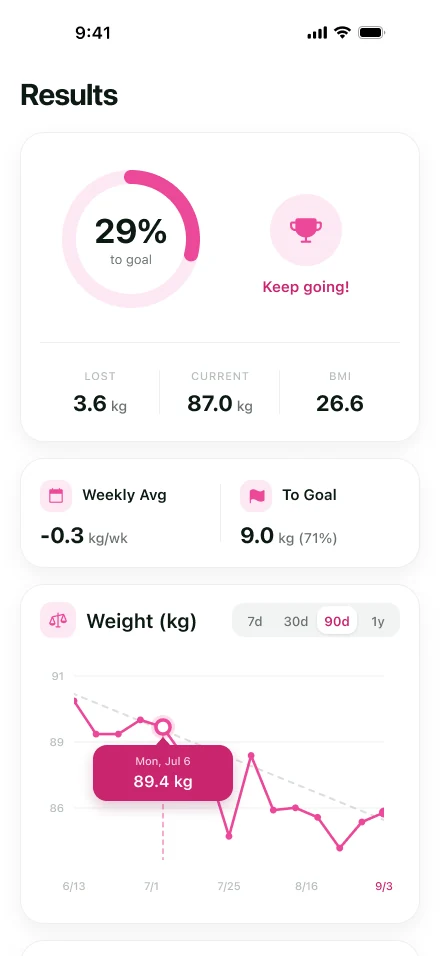
Progress toward your goal 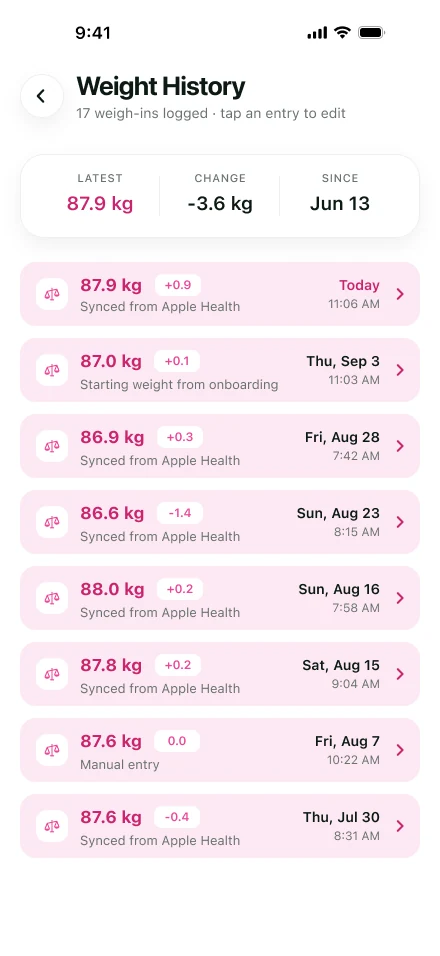
Weight history 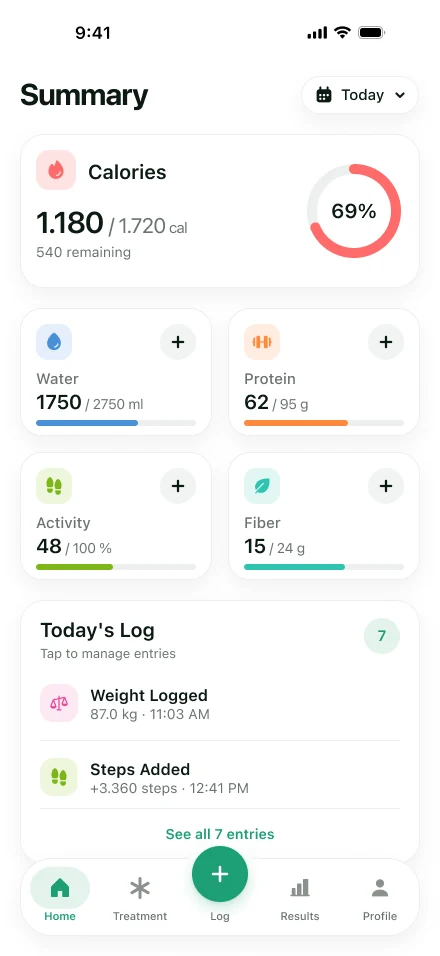
Your day at a glance
Frequently asked questions
Is "Ozempic face" a real medical condition?
It's a nickname popularized by the media, not a diagnosis. It describes a hollower or older-looking face after weight loss, and reviews in dermatology and plastic surgery journals describe it as most likely a result of fast, significant weight loss rather than a new side effect of the drug.
Does semaglutide or tirzepatide damage the skin directly?
There's no good evidence for that so far. A 2025 systematic review found no evidence that GLP-1 medications preferentially shrink facial fat, and noted facial changes aren't mentioned in the Ozempic prescribing information. Research on direct effects on skin is still limited.
Will I get loose skin on a GLP-1?
Not necessarily. In studies of people after bariatric surgery, loose skin was more common with larger amounts of weight loss, and plastic surgeons say age and how fast the weight comes off also matter. Nobody can predict it for one person.
Can protein and strength training prevent Ozempic face?
Not proven. Protein and resistance training are recommended to help preserve muscle during weight loss, which is worth doing for its own sake, but no study shows they prevent facial volume loss or loose skin.
Who should I talk to about changes in my face or skin?
Your prescriber is a good place to start, especially if you're wondering about the pace of your weight loss. A board-certified dermatologist can assess your skin and talk through options. Don't change your dose on your own to slow things down.
Sources
- Natural Weight Loss or "Ozempic Face": Demystifying A Social Media Phenomenon — Journal of Drugs in Dermatology, 2024
- "Ozempic Face" in Plastic Surgery: A Systematic Review of the Literature on GLP-1 Receptor Agonist Mediated Weight Loss and Analysis of Public Perceptions — Aesthetic Surgery Journal Open Forum, 2025
- Radiographic Midfacial Volume Changes in Patients on GLP-1 Agonists — Otolaryngology–Head and Neck Surgery, 2025
- How plastic surgery can address "Ozempic face" — American Society of Plastic Surgeons, 2025
- Physical discomfort due to redundant skin in post-bariatric surgery patients — Journal of Plastic, Reconstructive & Aesthetic Surgery, 2013
- Nutritional priorities to support GLP-1 therapy for obesity: a joint Advisory from the American College of Lifestyle Medicine, the American Society for Nutrition, the Obesity Medicine Association, and The Obesity Society — Obesity (Silver Spring), 2025
Keep reading
 Progress
Weight Loss Plateau on Ozempic or Zepbound — Why It Happens
Weight loss stalled on Ozempic, Wegovy or Zepbound? What the trials show about plateaus, why they happen, what to track instead, and when to talk to your prescriber.
 Nutrition
Eating Out on Ozempic or Zepbound — How to Order and Enjoy It
Eating out on a GLP-1 with a smaller appetite? How to order protein-first, handle big portions and rich food, box leftovers, and log the meal without fuss.
 Lifestyle
Alcohol on Ozempic or Zepbound — What the Labels and Research Say
Can you drink on Ozempic, Wegovy or Zepbound? What the labels do and don't say, what early research shows about GLP-1s and alcohol cravings, and what to note.