
Ozempic Side Effects — Nausea, Low Blood Sugar & the 2 mg Step
What the Ozempic label says about side effects in type 2 diabetes — stomach symptoms by dose, low blood sugar with insulin or sulfonylureas, eyes, and when to call.
Worth remembering
- The label's most common Ozempic side effects are nausea, vomiting, diarrhea, stomach pain and constipation.
- Most nausea, vomiting and diarrhea in the trials happened during dose escalation.
- Low blood sugar is the big one to watch if you also take insulin or a sulfonylurea.
- In the trial comparing them, stomach side effects were somewhat more common at 2 mg than at 1 mg.
- Tell your prescriber about any change in your vision, especially if you have a history of diabetic retinopathy.
You moved up to 0.5 mg on Thursday. By Saturday lunch, half a sandwich felt like a full meal, and by Saturday evening you were feeling sick. Then on Sunday morning your glucose meter showed a number lower than you're used to. Is that the Ozempic, the sulfonylurea you've taken for years, or just a smaller breakfast?
Most Ozempic side-effect articles are written as if everyone is taking it for weight loss. Ozempic's label is a type 2 diabetes label. So the side effects worth understanding include the stomach ones, and also what happens when Ozempic meets the other diabetes medicines you may already take.
What are the most common Ozempic side effects?
The label lists five side effects seen in at least 5% of people and more often than with placebo: nausea, vomiting, diarrhea, stomach (abdominal) pain and constipation. In the label's pooled placebo-controlled trials in type 2 diabetes:
| Side effect | Placebo | Ozempic 0.5 mg | Ozempic 1 mg |
|---|---|---|---|
| Nausea | 6.1% | 15.8% | 20.3% |
| Vomiting | 2.3% | 5% | 9.2% |
| Diarrhea | 1.9% | 8.5% | 8.8% |
| Stomach pain | 4.6% | 7.3% | 5.7% |
| Constipation | 1.5% | 5% | 3.1% |
Less common stomach effects in the label include indigestion, burping, gas, reflux and gastritis. Outside the stomach, it mentions tiredness, a changed sense of taste (dysgeusia) and dizziness.
The label also says most nausea, vomiting and diarrhea happened during dose escalation. That's why the first weeks after a step tend to be the bumpy ones, and why the schedule climbs slowly.
So what changes at the 2 mg step?
The label's schedule starts at 0.25 mg weekly for four weeks, then 0.5 mg. If more glucose control is needed, the dose can go to 1 mg after at least four weeks, then to 2 mg after at least four weeks on 1 mg. 2 mg is the maximum.
In a 40-week trial comparing the two higher doses, stomach side effects were reported by 34% of people on 2 mg and 30.8% on 1 mg, and the label says no new safety signals were identified. So the 2 mg step isn't a new set of side effects. If stomach symptoms came back after a past step-up, though, it's reasonable to expect they might again.
Why does low blood sugar matter so much with Ozempic?
Ozempic helps your body release insulin when blood sugar is high. On its own, that tends not to push glucose too low. In the label's 30-week monotherapy trial, no severe low blood sugar episodes were reported.
The picture changes with other diabetes medicines. The label warns that combining Ozempic with insulin or an insulin secretagogue such as a sulfonylurea raises the risk of hypoglycemia, including severe episodes. It says reducing those doses may be necessary. In the trial of Ozempic added to basal insulin, documented symptomatic lows were reported by 29.8% of people on 1 mg, compared with 15.2% on placebo.
The Medication Guide lists signs of low blood sugar including dizziness, sweating, shakiness, blurred vision, slurred speech, hunger, confusion, a fast heartbeat and feeling jittery. If you take insulin or a sulfonylurea, ask your prescriber how to recognize and treat a low, and whether your other doses should change. Don't adjust them on your own.
What about my eyes?
In a two-year trial in people with type 2 diabetes and high cardiovascular risk, the label reports diabetic retinopathy complications in 3.0% of people on Ozempic versus 1.8% on placebo. The increase was larger in people who already had retinopathy. The label says people with a history of diabetic retinopathy should be monitored. The Medication Guide asks you to tell your provider about any change in vision.
What else does the label warn about?
Less common but serious possibilities in the label include pancreatitis, gallbladder problems, kidney problems from dehydration, severe stomach problems, serious allergic reactions, and food or liquid getting into the lungs during anesthesia. That last one is why the label asks you to tell anyone doing a procedure that you take Ozempic. The label also carries a boxed warning about thyroid C-cell tumors seen in rodents. It's not known whether this applies to people. Ozempic shouldn't be used by anyone with a personal or family history of medullary thyroid carcinoma or MEN 2.
What we'd track
If you're on Ozempic, these are the entries that make side effects easier to understand and discuss:
- Dose and shot day. Most stomach effects cluster after a step-up, and you can only see that if each symptom has a date next to a dose.
- Glucose readings and any lows. Note the time, the number, and what you'd eaten — especially if you also take insulin or a sulfonylurea.
- Stomach symptoms by day. Nausea, vomiting, diarrhea or constipation, with a rough severity.
- Fluids on bad days. The label links vomiting and diarrhea to dehydration and kidney problems.
- Vision changes. Even a small change is worth a note and a call.
Holt lines up side effects against your dose days, logs water and meals with calorie and protein estimates, and pulls it into a doctor-visit report you can bring to your diabetes appointments.
Track Ozempic side effects alongside your dosesFor the weekly routine itself, see our Ozempic tracker.
See it in Holt
Real screens from the app — the same places you’ll log, review and share.
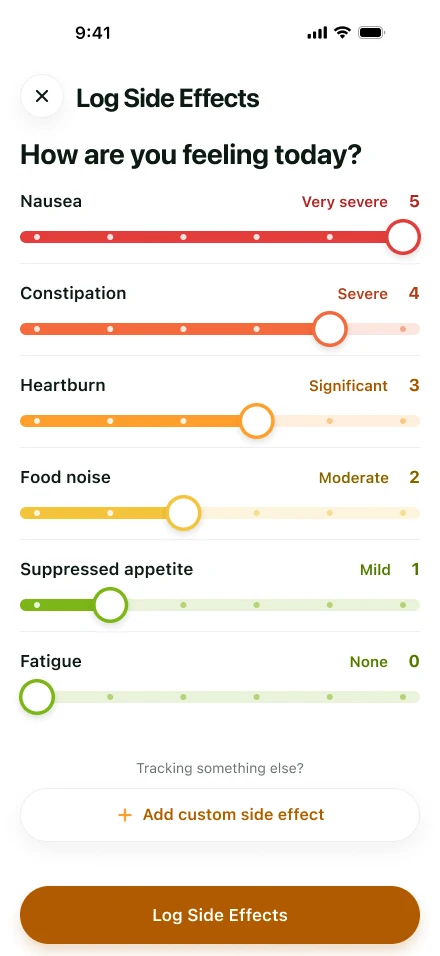
Side effects, by severity 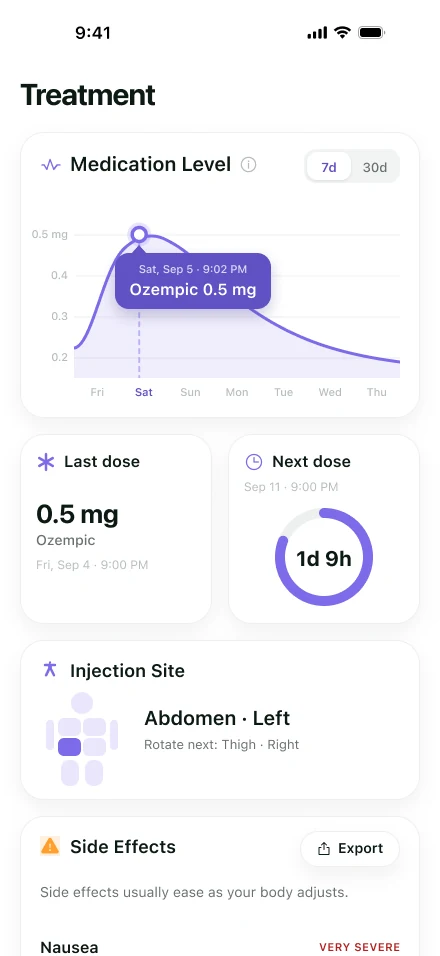
Medication level and next dose 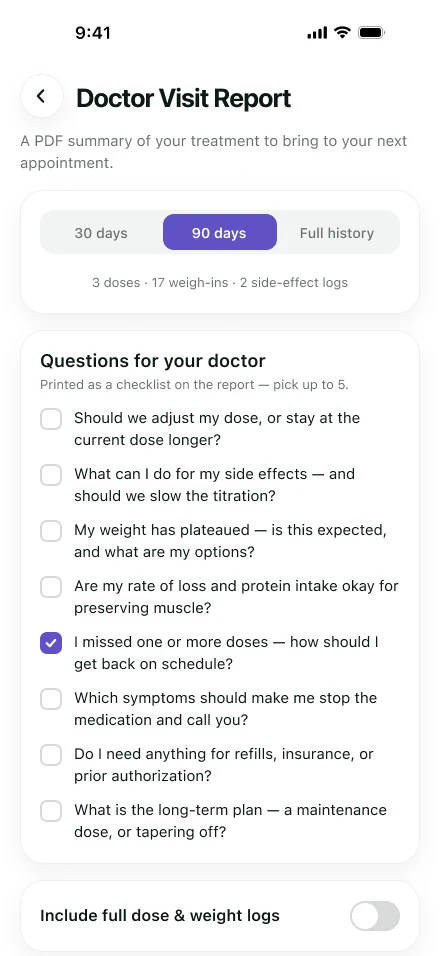
A report for your next appointment
Frequently asked questions
How long does Ozempic nausea last?
The label doesn't give a duration, but it says most nausea, vomiting and diarrhea in the trials happened during dose escalation. If it doesn't settle or keeps you from drinking fluids, tell your prescriber.
Does Ozempic cause low blood sugar on its own?
In the label's monotherapy trial, severe low blood sugar wasn't seen. The risk rises when Ozempic is combined with insulin or a sulfonylurea, and the label says those doses may need to be lowered — a decision for your prescriber.
Are side effects worse on Ozempic 2 mg?
In the trial comparing 1 mg and 2 mg, stomach side effects were reported by 34% of people on 2 mg and 30.8% on 1 mg, and no new safety signals were found. Whether to step up is your prescriber's call.
Does Ozempic cause hair loss?
Alopecia (hair loss) appears in the label's postmarketing reports for semaglutide. Those reports are voluntary, so the label says a frequency can't be reliably estimated.
Sources
- OZEMPIC (semaglutide) injection — Prescribing Information and Medication Guide (revised 05/2026) — U.S. Food and Drug Administration
Keep reading
- Ozempic TrackerTrack your weekly Ozempic (semaglutide) shots, dose steps, injection sites and side effects in one place with Holt, the calm GLP-1 tracker for iPhone.
- Semaglutide Side EffectsSemaglutide side effects across Ozempic, Wegovy, Rybelsus and compounded vials — what's shared, what differs between pill and shot, and FDA's dosing-error warning.
- Mounjaro vs OzempicMounjaro vs Ozempic for type 2 diabetes — what each is approved for, how the dose steps and pens differ, and what the SURPASS-2 head-to-head trial found for HbA1c.
- GLP-1 Side EffectsThe most common GLP-1 side effects for semaglutide and tirzepatide, when they tend to appear, which warning signs need a doctor, and how tracking helps.