
Protein, Fiber & Water Tracker for GLP-1 Users
Track the three nutrients most likely to slip on a GLP-1 — protein, fiber and water — against daily goals, with general reference ranges from primary sources.
Worth remembering
- Protein, fiber and fluids are named priorities in the 2025 joint advisory on GLP-1 nutrition.
- The advisory offers 80–120 g of protein a day as a simple range; your target may differ.
- National Academies reference intakes are 25 g of fiber a day for women and 38 g for men aged 19–50.
- Most water comes from drinks — about 2.2 L a day for women and 3.0 L for men in the National Academies' reference.
- Seeing all three side by side shows which one slips first on your harder days.
It's 6 p.m. You had coffee, a few crackers, half a chicken wrap, and a glass of water you're fairly sure was this morning. You don't feel hungry or thirsty. But if someone asked how much protein, fiber or water you'd had today, you'd be guessing. On a GLP-1, that guess is usually lower than it feels.
Why these three, of all things?
Because they're the ones a quiet appetite quietly cuts. The 2025 joint advisory from four US obesity and nutrition societies describes people on GLP-1 therapy eating too little to meet their needs, and names adequate protein, fiber-rich foods and fluids among its priorities.
Each one has its own reason:
| Nutrient | Why it slips | Why it matters on a GLP-1 |
|---|---|---|
| Protein | Smaller portions, less interest in cooked meals | The advisory links low protein during weight loss with more lean mass loss |
| Fiber | Fewer vegetables, fruit and whole grains when you eat less | Constipation is common, and the advisory pairs fiber with fluids to help |
| Water | Thirst and hunger cues both feel quieter | The Wegovy Medication Guide notes that nausea, vomiting and diarrhea can cause dehydration |
How much protein is a reasonable goal?
The advisory gives ranges to discuss rather than one rule. It notes the general adult recommendation of 0.8 g per kg of body weight a day, and that 1.2–1.6 g per kg has been proposed during active weight reduction. As a simpler option, it suggests 80–120 g a day. It also says intake shouldn't fall very low, and that prolonged very high intakes should be avoided.
Kidney disease and other conditions change what's right, so set your number with your clinician or a dietitian. Our protein calculator gives a starting range for that conversation.
And fiber?
The National Academies' Dietary Reference Intakes set an adequate intake of 14 g of fiber for every 1,000 calories. For adults aged 19–50 that works out to 25 g a day for women and 38 g for men, and 21 g and 30 g after 50.
On a GLP-1, eating fewer calories means those figures can be hard to reach, and jumping straight to them can be uncomfortable. The advisory recommends increasing fiber gradually, from foods, with enough fluids. Our fiber calculator shows the reference amount for your age and sex.
How much water counts?
The National Academies set an adequate intake for total water — from drinks and food combined — of about 2.7 L a day for women and 3.7 L for men. In US survey data, drinks supplied roughly 80% of that: about 2.2 L for women and 3.0 L for men.
Those are reference figures for healthy adults, not prescriptions. Heat, exercise, vomiting and diarrhea all raise needs, and some heart and kidney conditions call for limits. Our water intake calculator gives a general estimate to check with your clinician.
Why track them together?
Because they tend to fall together. A rough day after a shot often means a small breakfast, no lunch and very little to drink — all three lines dip at once. Seeing them side by side shows which slips first for you, and that's the one to plan for.
It also keeps the goal sensible. You're not trying to hit three perfect numbers every day. You're looking at a week and asking whether the basics are mostly covered.
What we'd track
- Protein per day, against a goal. The single most useful number when portions shrink.
- Fiber per day. A low run often lines up with constipation a few days later.
- Water, logged as you go. Memory is unreliable here; small taps through the day are better.
- Shot days alongside. Shows whether the day or two after a dose needs a gentler plan.
Holt's home Summary shows water, protein and fiber against your daily goals, next to calories and activity. Snap a meal photo and Holt estimates its protein, fiber, carbs, fat and calories, or pick from your recent foods, favorites and saved meals. Home-screen widgets let you log water and check nutrition without opening the app.
Track protein, fiber and water in HoltAt your next appointment, the doctor-visit report shows these habits next to your doses and side effects, so your care team can see the pattern rather than hear a guess.
See it in Holt
Real screens from the app — the same places you’ll log, review and share.
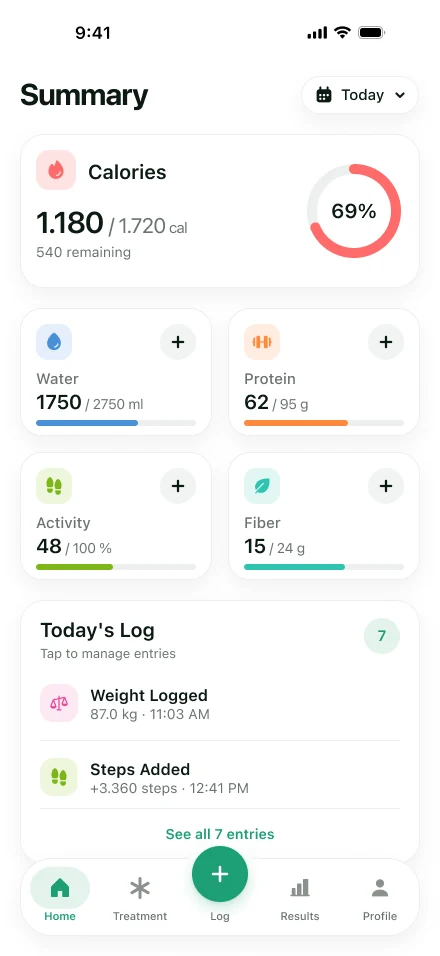
Your day at a glance 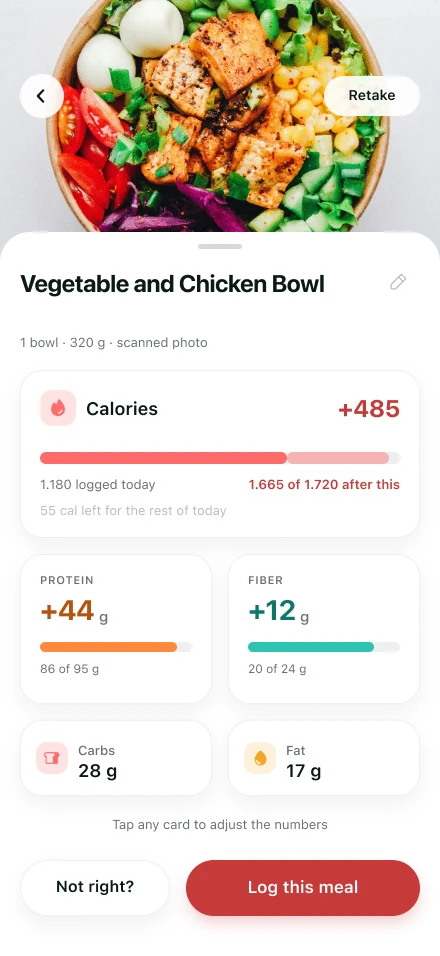
Snap a meal, get the protein 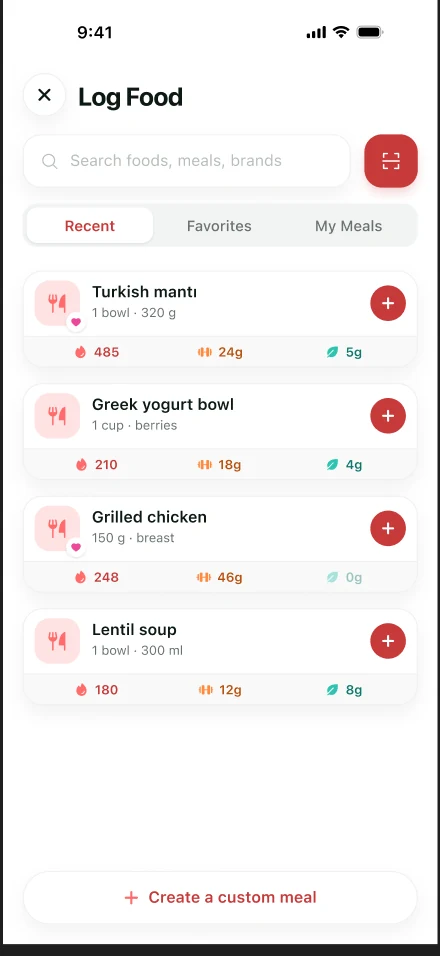
Your food log
Frequently asked questions
Why track these three instead of calories?
On a GLP-1, eating too much is often less of a problem than eating too little of what matters. The joint advisory highlights protein, fiber and fluids specifically, and they're the ones that tend to drop when meals get small.
How much water should I drink on a GLP-1?
The National Academies' reference intake is about 2.7 L of total water a day for women and 3.7 L for men, with roughly 80% usually coming from drinks. Needs rise with heat, exercise, vomiting or diarrhea, and some conditions limit fluids, so check with your clinician.
Will more fiber help with GLP-1 constipation?
It may, but the joint advisory recommends increasing fiber gradually and with enough fluids. If constipation is severe or lasts, tell your prescriber.
Can I trust protein and fiber estimates from a photo?
They're estimates. Portions and hidden ingredients are hard to judge from a picture, so use them to spot patterns across days rather than as exact counts.
Sources
- Nutritional priorities to support GLP-1 therapy for obesity: a joint Advisory from the American College of Lifestyle Medicine, the American Society for Nutrition, the Obesity Medicine Association, and The Obesity Society — Obesity (Silver Spring), 2025
- Dietary Reference Intakes for Energy, Carbohydrate, Fiber, Fat, Fatty Acids, Cholesterol, Protein, and Amino Acids — National Academies of Sciences, Engineering, and Medicine, 2005
- Dietary Reference Intakes for Water, Potassium, Sodium, Chloride, and Sulfate — National Academies of Sciences, Engineering, and Medicine, 2005
- WEGOVY (semaglutide) prescribing information and Medication Guide — DailyMed, U.S. National Library of Medicine
Keep reading
- GLP-1 Food TrackerA GLP-1 food tracker that logs meals from a photo, estimates calories and protein, and shows how what you ate lines up with shot days and side effects.
- GLP-1 Grocery ListA practical GLP-1 grocery list built around protein, fiber, fluids and gentle foods for rough days, based on 2025 nutrition guidance for people on GLP-1 therapy.
- GLP-1 Muscle LossHow much of the weight lost on a GLP-1 is lean mass, what trial body scans showed, who should pay closer attention, and the signs worth tracking at home.
- GLP-1 Side EffectsThe most common GLP-1 side effects for semaglutide and tirzepatide, when they tend to appear, which warning signs need a doctor, and how tracking helps.