
GLP-1 Injection Sites — Stomach, Thigh, Arm and How to Rotate
Where to inject a GLP-1 like Wegovy or Zepbound, what the labels say about rotating sites, and a simple way to keep track of where you injected last.
Worth remembering
- The labels name three areas — stomach (abdomen), thigh and upper arm.
- Rotate with every dose; the same area is fine, the same spot is not.
- The Wegovy pen instructions say to keep stomach shots 2 inches from your belly button.
- The Wegovy label says semaglutide reaches similar levels whichever of the three sites you use.
- Logging the site, down to left or right, is the easiest way to rotate properly.
You've got the pen in one hand and your shirt pulled up with the other, and you pause. Left side or right? Was last week the left? It's a small question, but it's the one the label actually asks you to get right every week.
Where can I inject a GLP-1?
The labels for the weekly GLP-1 injections we checked name the same three areas, all just under the skin:
| Area | What the instructions say |
|---|---|
| Stomach (abdomen) | Wegovy pen and syringe instructions: at least 2 inches from your belly button |
| Thigh | Wegovy pen instructions: the front of the thigh |
| Upper arm | Zepbound label: another person should inject in the back of the upper arm. Wegovy syringe instructions say the same |
These are subcutaneous injections, meaning into the layer just under the skin, not into a muscle or vein. Pens differ between brands, so follow the Instructions for Use that came with yours.
If you take a GLP-1 as a tablet, like the Wegovy pill, none of this applies — but the label has its own rules about taking it on an empty stomach, which are worth tracking just as carefully.
Does it matter which site I choose?
For semaglutide, the Wegovy label says similar levels in the body were reached whether it was injected in the abdomen, thigh or upper arm. It also says the site can be changed without needing a different dose.
So the choice mostly comes down to you. Some people find the stomach easiest to see and reach. Others prefer the thigh because it's simpler to do sitting down. The upper arm is usually a two-person job.
So what does rotating actually mean?
Both the Wegovy and Zepbound Medication Guides say to change your injection site with each injection. The Wegovy pen instructions add that you may inject in the same body area each week, as long as it isn't the same spot.
In practice, that might look like this over four weeks:
- Stomach, left of the belly button
- Stomach, right of the belly button
- Front of the left thigh
- Front of the right thigh
Then back to the start. You don't need a fixed pattern — you just need to know where you went last time so this week is somewhere different.
Are there places I should avoid?
The instructions point you to the areas above and away from the ring right around the belly button. Beyond that, the common-sense rule is to choose skin that looks and feels normal — not bruised, tender, red or scarred — and to skip a spot that's still sore from last time.
If a site stays painful, swollen or red, or you notice a lump that doesn't go away, mention it to your pharmacist or prescriber rather than working around it. They may want to check your technique or take a look.
Why is it so easy to lose track?
Because it's once a week, and a week is long enough to forget. Most people remember roughly where they injected; few remember which side. That's exactly the detail rotation depends on.
Writing it down takes five seconds and removes the guesswork. It also gives you something to point to if a site becomes irritated — you can see whether you've been coming back to the same patch.
What we'd track
- The exact site each week. Area plus side, so next week's choice is obvious.
- Any reaction at the site. Bruising, redness or soreness, and how many days it lasted. Patterns show up over a few weeks.
- Which pen or strength you used. Useful when your dose changes and you're getting used to a new pen.
- How you felt in the days after. The site rarely affects side effects, but noting both in one place helps rule things in or out.
Holt saves the site with every shot and suggests the next spot in your rotation — left arm, upper stomach, outer thigh and so on — so picking a different one takes a glance. Site reactions sit in the same log as your doses and side effects, so a sore patch or a repeated spot is easy to see.
Rotate your sites with HoltIf a site concern comes up at an appointment, the doctor-visit report shows your recent sites and any reactions you noted, so the conversation starts with facts.
See it in Holt
Real screens from the app — the same places you’ll log, review and share.
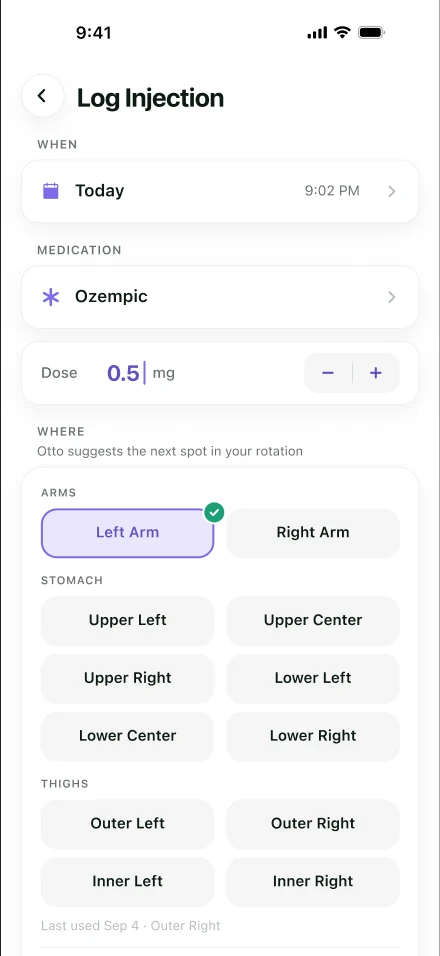
Otto suggests your next site 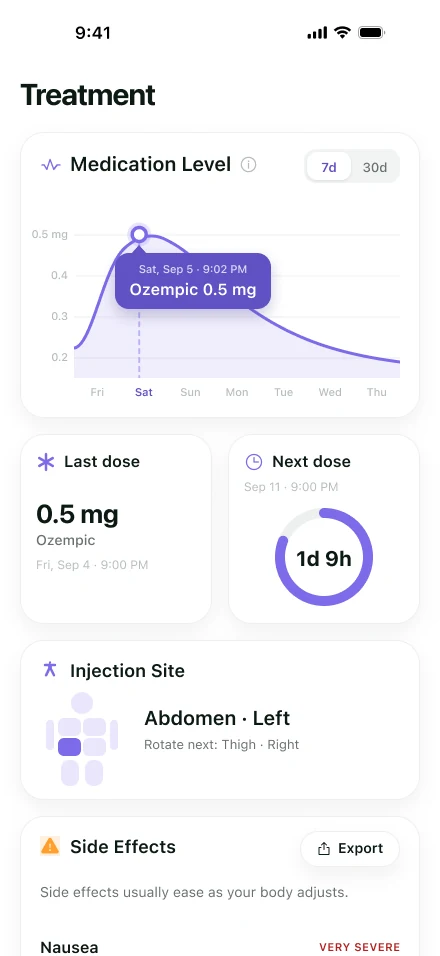
Medication level and next dose 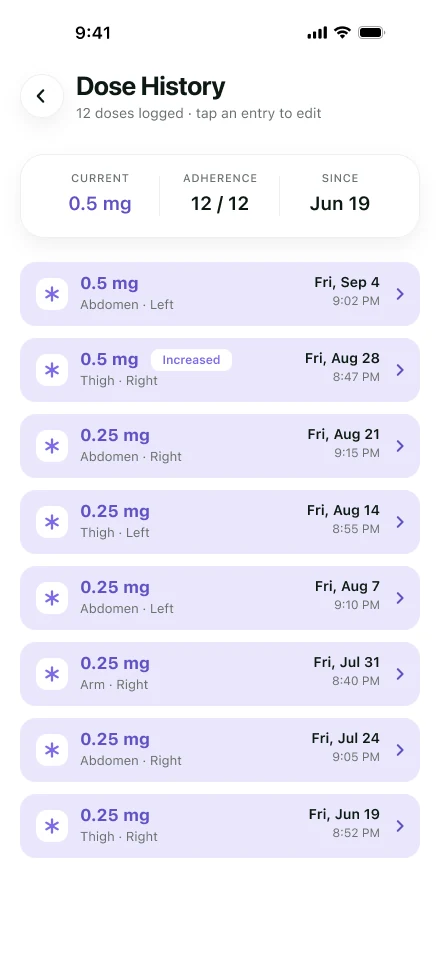
Every dose, every site
Frequently asked questions
Which GLP-1 injection site works best?
The Wegovy label says similar exposure was achieved whether semaglutide was injected in the abdomen, thigh or upper arm, so pick the area that's comfortable and practical for you. If you're on another medication, check its label or ask your pharmacist.
Can I inject in the same place every week?
The same area, yes; the same spot, no. The Wegovy pen instructions say you may use the same body area each week as long as it isn't the same spot each time.
Can I inject in my own upper arm?
The Zepbound label says another person should inject in the back of the upper arm, and the Wegovy prefilled syringe instructions say the same. Follow the instructions that came with your pen.
Does switching sites mean I need a different dose?
No. The Wegovy label says the site can be changed without a dosage change. For anything else about your dose, ask your prescriber.
What if a site is bruised or sore?
Pick a different spot until it settles. If redness, swelling or pain at a site is severe or doesn't go away, let your healthcare provider know.
Sources
- WEGOVY (semaglutide) prescribing information, Medication Guide and Instructions for Use — DailyMed, U.S. National Library of Medicine
- ZEPBOUND (tirzepatide) prescribing information, Medication Guide and Instructions for Use — DailyMed, U.S. National Library of Medicine
Keep reading
- GLP-1 Shot TrackerA GLP-1 shot tracker for iPhone that logs each weekly dose, rotates injection sites, reminds you on shot day and lines up side effects with dose days.
- Wegovy TrackerA calm way to track weekly Wegovy injections, the 4-week dose steps, injection sites and how you feel, with the label's missed-dose rules in plain words.
- Zepbound TrackerTrack weekly Zepbound shots for weight management or sleep apnea — which pen or vial you use, dose steps, storage days and side effects, in one calm iPhone log.
- GLP-1 Side EffectsThe most common GLP-1 side effects for semaglutide and tirzepatide, when they tend to appear, which warning signs need a doctor, and how tracking helps.