
Mounjaro vs Ozempic for Type 2 Diabetes — Labels and SURPASS-2
Mounjaro vs Ozempic for type 2 diabetes — what each is approved for, how the dose steps and pens differ, and what the SURPASS-2 head-to-head trial found for HbA1c.
| Mounjaro | Ozempic | |
|---|---|---|
| Active ingredient | Tirzepatide (GIP and GLP-1) | Semaglutide (GLP-1) |
| Approved uses | Blood sugar control in type 2 diabetes, adults and children 10+ | Blood sugar control in adult type 2 diabetes; lowering heart risk with heart disease; lowering kidney and heart risks with chronic kidney disease |
| Starting dose | 2.5 mg weekly for 4 weeks | 0.25 mg weekly for 4 weeks |
| Maximum dose | 15 mg weekly (10 mg for children) | 2 mg weekly |
| Forms | Single-dose pen or vial, multi-dose vial, KwikPen | Multi-dose pen, single-dose prefilled syringe |
| Missed-dose window | Within 4 days | Within 5 days |
| Changing your shot day | At least 3 days between doses | At least 2 days between doses |
| SURPASS-2 HbA1c change, 40 weeks | −2.01 to −2.30 points (5–15 mg) | −1.86 points (1 mg) |
Worth remembering
- Both are once-weekly injections approved for type 2 diabetes alongside diet and exercise.
- Ozempic's label adds heart and kidney risk-reduction uses in specific adults with type 2 diabetes.
- Mounjaro's label covers children 10 and older as well as adults.
- In SURPASS-2, Mounjaro lowered HbA1c and weight more on average than Ozempic 1 mg.
- Missed-dose windows differ — 4 days for Mounjaro, 5 days for Ozempic.
You have had type 2 diabetes for a few years, metformin is no longer quite enough, and your doctor has put two names on the table. A neighbor swears by Ozempic; a cousin just started Mounjaro. You would like to understand what actually differs before your next appointment — not to pick for yourself, but to ask better questions.
What is each one approved for?
Both are weekly injections used alongside diet and exercise to improve blood sugar in type 2 diabetes. After that, the labels diverge.
Ozempic's label lists two further uses in adults with type 2 diabetes: lowering the risk of major heart events in people with established heart disease, and lowering the risk of kidney decline, kidney failure and heart-related death in people with chronic kidney disease. Mounjaro's label lists blood sugar control only, but for children 10 and older as well as adults.
If heart or kidney disease is part of your history, that difference is worth raising directly with your prescriber.
How do they work differently?
Ozempic is semaglutide, which acts on the GLP-1 receptor. Mounjaro is tirzepatide, which acts on both the GIP and GLP-1 receptors. Both slow how quickly the stomach empties, which is one reason their labels warn that the absorption of other tablets may be affected.
What did SURPASS-2 show?
SURPASS-2 is the head-to-head trial most people mean when they compare these two. It enrolled 1,879 adults with type 2 diabetes already on metformin, and randomized them to Mounjaro 5, 10 or 15 mg or Ozempic 1 mg for 40 weeks. It was open-label and funded by Lilly.
| Result at 40 weeks | Ozempic 1 mg | Mounjaro 5 mg | Mounjaro 10 mg | Mounjaro 15 mg |
|---|---|---|---|---|
| Average HbA1c change | −1.86 | −2.01 | −2.24 | −2.30 |
| Weight difference vs Ozempic | — | −1.9 kg | −3.6 kg | −5.5 kg |
Two things to keep in mind. These are averages, and individual responses varied widely. And the trial used Ozempic's 1 mg dose; the label now allows up to 2 mg, which SURPASS-2 did not test.
How do the dose schedules compare?
Both start low and climb in 4-week steps to limit stomach side effects.
- Mounjaro: 2.5 mg for 4 weeks, then 5 mg; further 2.5 mg steps if more glucose control is needed, at least 4 weeks apart, up to 15 mg in adults.
- Ozempic: 0.25 mg for 4 weeks, then 0.5 mg; then 1 mg and 2 mg if more glucose control is needed, each after at least 4 weeks on the previous dose.
Mounjaro's label says its 2.5 mg starting dose is for beginning treatment, not for glucose control. Ozempic's lists 0.5 mg as its lowest maintenance dose, with 1 mg as the maintenance dose for people with chronic kidney disease. Your prescriber decides when, and whether, to step up.
Are the pens and routines different?
A little. Ozempic comes in multi-dose pens and, on the current label, single-dose prefilled syringes. Mounjaro comes in single-dose pens and vials, multi-dose vials and a four-dose KwikPen.
Both labels list the abdomen, thigh and upper arm, though Mounjaro's says the back of the upper arm should be injected by someone else. Ozempic allows a missed dose within 5 days; Mounjaro within 4. Moving your shot day needs at least 2 days between doses on Ozempic and at least 3 on Mounjaro.
How do side effects compare?
In SURPASS-2, nausea affected 17% to 22% on Mounjaro and 18% on Ozempic; diarrhea 13% to 16% and 12%; vomiting 6% to 10% and 8%. Most cases were mild to moderate. Both labels share similar warnings, including pancreatitis, gallbladder problems, low blood sugar with insulin or sulfonylureas, diabetic retinopathy complications and a boxed warning about thyroid tumors seen in rodents.
What we'd track
On either medicine, these are the notes we would keep for diabetes appointments.
- Every shot, dose and time. The missed-dose window depends on which medicine you use.
- Side effects against dose steps. To see whether stomach symptoms settle after each increase.
- Low glucose episodes. Especially if you also take insulin or a sulfonylurea.
- Meals and protein. Appetite can drop on both; a photo log keeps it honest.
- Weight trend. Useful context for your diabetes team, without daily fuss.
Holt logs shots, sites, side effects, meals and weight on your iPhone, syncs with Apple Health and builds a doctor-visit report. It is free to download, with an optional subscription.
Bring a clearer log to your next diabetes visitSee it in Holt
Real screens from the app — the same places you’ll log, review and share.
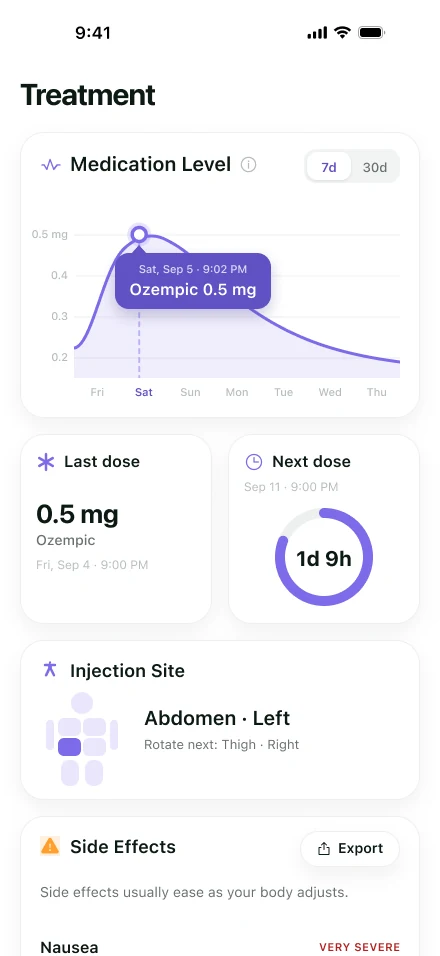
Medication level and next dose 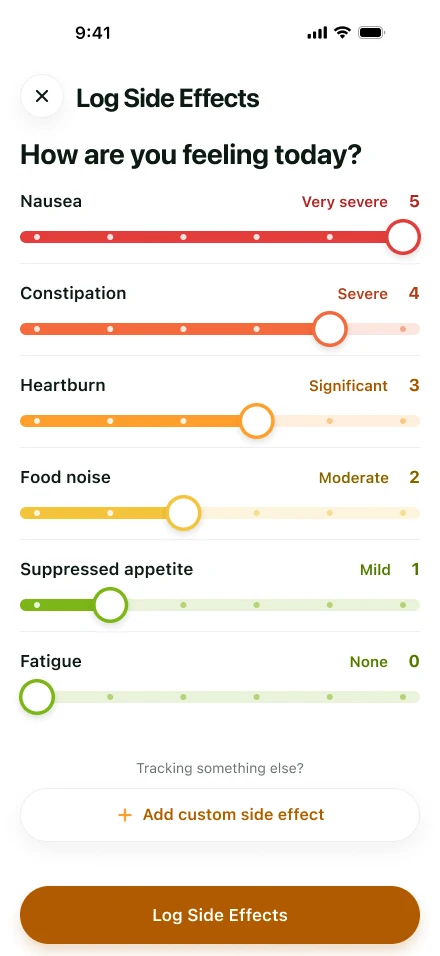
Side effects, by severity 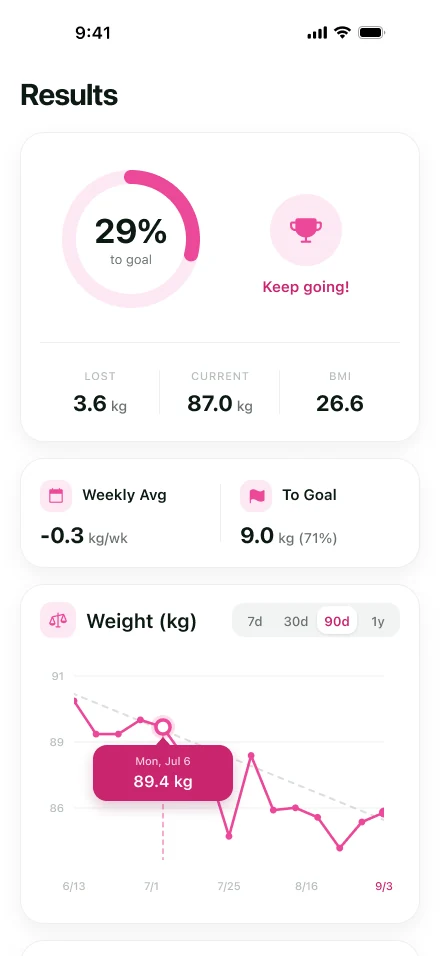
Progress toward your goal
Frequently asked questions
Is Mounjaro better than Ozempic?
In SURPASS-2, Mounjaro produced larger average reductions in HbA1c and weight than Ozempic 1 mg over 40 weeks. That trial did not test Ozempic's 2 mg dose, and Ozempic has heart and kidney outcome approvals that Mounjaro's label does not list, so "better" depends on what you and your prescriber are aiming for.
Can I switch from Ozempic to Mounjaro?
Only your prescriber can make that call and set the starting dose. Neither label gives a conversion between the two medicines.
Are the side effects the same?
They are similar. Both labels list nausea, vomiting, diarrhea, stomach pain and constipation among the most common side effects; Mounjaro's also lists decreased appetite and indigestion.
Which one has more low blood sugar?
In SURPASS-2, readings below 54 mg/dL were uncommon in both groups — 0.2% to 1.7% on Mounjaro and 0.4% on Ozempic. The risk rises for both when combined with insulin or a sulfonylurea.
Sources
- Mounjaro (tirzepatide) injection — Prescribing Information — U.S. Food and Drug Administration
- Ozempic (semaglutide) injection — Prescribing Information — U.S. Food and Drug Administration
- Tirzepatide versus Semaglutide Once Weekly in Patients with Type 2 Diabetes (SURPASS-2) — New England Journal of Medicine
Keep reading
- Mounjaro TrackerA calm way to log weekly Mounjaro shots for type 2 diabetes — dose steps, the 4-day missed-dose window, injection sites and side effects, all on your iPhone.
- Ozempic TrackerTrack your weekly Ozempic (semaglutide) shots, dose steps, injection sites and side effects in one place with Holt, the calm GLP-1 tracker for iPhone.
- Semaglutide vs TirzepatideSemaglutide vs tirzepatide — one hormone target or two, the brands behind each, and what the SURPASS-2 and SURMOUNT-5 head-to-head trials found.
- Mounjaro Side EffectsMounjaro side effects for people with type 2 diabetes — how common nausea and diarrhea were in trials, low blood sugar with insulin, eye checks and when to get help.