
A weight tracker that shows the trend, not the verdict
A weight tracker app for people on a GLP-1. See your trend over 7 days, 30 days, 90 days and a year, your % to goal and weekly average — not just today's number.
Worth remembering
- Daily weight swings with fluids, salt and routine — a single reading says little.
- A weekly average is calmer and more honest than any one weigh-in.
- Weighing a few mornings a week, same conditions, is enough for a clear trend.
- Read weight alongside protein, side effects and dose changes, not on its own.
- Progress on a GLP-1 differs a lot between people; your prescriber is the right person to interpret yours.
Monday morning, you step on the scale and it's up a pound and a half from Friday. You did everything you were meant to. The shot was on time, you ate decently, you walked. For a moment the whole week feels undone — by a number that will probably be gone by Wednesday.
A weight tracker should make that moment smaller, not bigger.
Why does the daily number bounce around so much?
Because body weight on any given morning includes water, salt, the contents of your gut and the timing of your last meal. None of those are fat, and all of them move.
There's a weekly rhythm too. In a 2014 study in Obesity Facts, adults who weighed themselves daily tended to be heaviest early in the week, after the weekend, with weight drifting down through the weekdays. The authors suggested treating those swings as normal rather than as weight gain.
On a GLP-1 there's an extra wrinkle: eating less and sometimes drinking less, or constipation, can shift the scale from day to day independently of any real change.
Why is the trend more honest than today's weigh-in?
A trend smooths out the noise so you can see direction. One reading answers "what did the scale say this morning?" A 30-day line answers the question you actually care about: "where is this heading?"
Different windows answer different questions:
| View | What it's good for |
|---|---|
| 7 days | Spotting a water or salt blip — and seeing it pass |
| 30 days | The month-on-month direction; useful between appointments |
| 90 days | Whether progress has steadied, slowed or picked up, for example across a dose change |
| 1 year | The long view, including plateaus and maintenance |
A weekly average sits between them: calmer than any single day, but still responsive.
How should I weigh myself for a cleaner trend?
- Same conditions each time. Morning, after the bathroom, before eating or drinking, similar clothing.
- A few mornings a week is plenty. More readings make the average steadier; daily is optional, not required.
- Use the same scale. Different scales disagree, and that difference can look like a change.
- Glance at the 30-day view before reacting to any single reading.
- Let the scale write to Apple Health if it can, so you're not typing numbers in.
What should I read alongside the weight?
On a GLP-1, the scale isn't the whole picture. A 2025 joint advisory from four obesity and nutrition societies puts adequate protein, alongside strength activity, among the priorities for preserving muscle during treatment — so a slower drop with good protein can be a better month than a fast one without it. It's also worth reading weight next to your dose history and side effects: a week of nausea can move the scale in ways that don't reflect real progress.
Progress varies a great deal between people and over time. Your prescriber is the right person to tell you what's expected for you.
What we'd track
- Weight a few mornings a week, under the same conditions.
- The weekly average, as your main number.
- Protein most days, so you can see whether you're losing in a way that protects muscle.
- Dose changes and side-effect weeks, to explain bumps in the line.
Here's how Holt shows it. The Results screen has your % to goal, your weekly average and a weight chart you can switch between 7 days, 30 days, 90 days and 1 year, with your full weight history underneath. Weigh-ins can sync from Apple Health along with steps and workouts, and when you've had a good stretch Otto will say so — "Keep going!" — without making a single morning into a judgment.
See your weight trend in HoltWant to know where you stand right now? Our free weight loss percentage calculator works out the same % that Holt shows.
See it in Holt
Real screens from the app — the same places you’ll log, review and share.
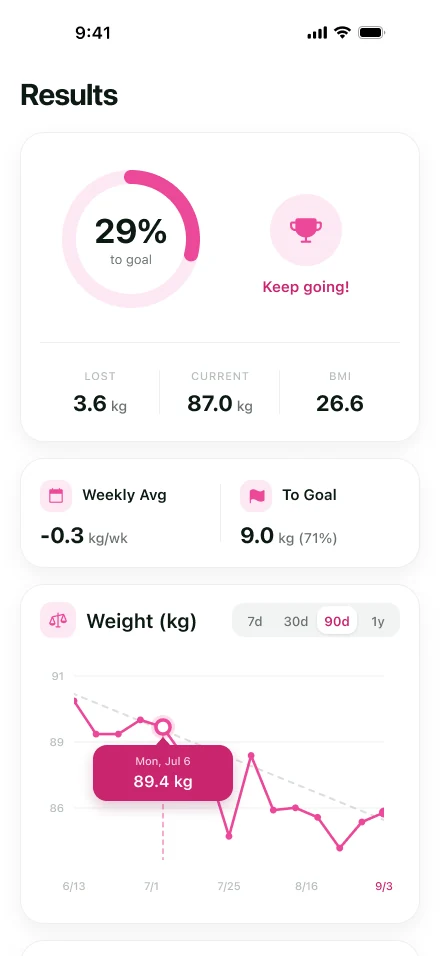
Progress toward your goal 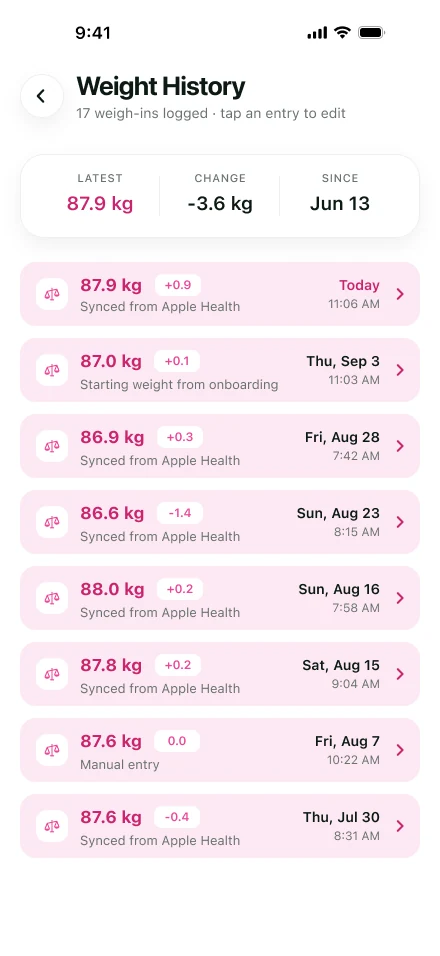
Weight history 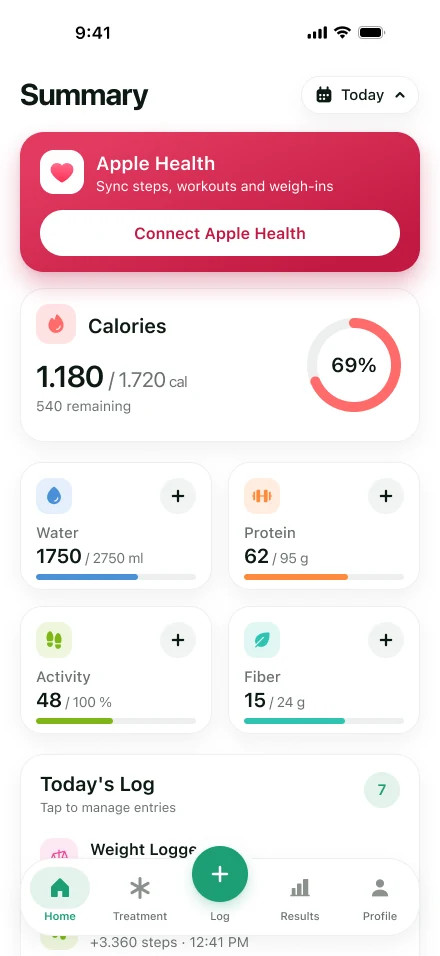
Syncs with Apple Health
Frequently asked questions
How often should I weigh myself on a GLP-1?
There's no single rule. Many people find a few mornings a week, after the bathroom and before breakfast, gives a steady trend without making the number feel like a daily verdict. If weighing makes you anxious, fewer times is fine.
Does Holt sync with my smart scale?
Holt syncs weigh-ins from Apple Health, so if your scale writes to Apple Health, the readings can appear in Holt. You can also log weight by hand.
What does "% to goal" mean?
It's how far you've come from your starting weight toward the goal weight you set, as a percentage. Our free weight loss percentage calculator works it out the same way.
Will Holt tell me how much weight I'll lose?
No. Results on GLP-1 medications vary widely, and Holt doesn't make predictions or promises. It shows the trend from your own weigh-ins.
Why did my weight go up this week when I've been doing everything right?
Short-term rises often come from water, salt, a late meal or less time in the bathroom. Look at the 30-day or 90-day view before drawing conclusions, and raise anything that worries you with your prescriber.
Sources
- Weight rhythms: weight increases during weekends and decreases during weekdays (Orsama et al.) — Obesity Facts, 2014
- Nutritional priorities to support GLP-1 therapy for obesity (joint advisory) — ACLM, ASN, OMA and The Obesity Society, 2025
Keep reading
- GLP-1 Progress TrackerA GLP-1 progress tracker that shows percent to goal, weekly averages and trends, plus strength, habits and how you feel — progress the daily weigh-in misses.
- GLP-1 Food TrackerA GLP-1 food tracker that logs meals from a photo, estimates calories and protein, and shows how what you ate lines up with shot days and side effects.
- GLP-1 Muscle LossHow much of the weight lost on a GLP-1 is lean mass, what trial body scans showed, who should pay closer attention, and the signs worth tracking at home.
- GLP-1 Tracker AppHolt is a GLP-1 tracker app for iPhone. Log shots and pills, meals, protein, side effects, weight and water, and see how your dose day shapes your week.