
GLP-1 Food Tracker — Log Meals, Protein and How Food Sits
A GLP-1 food tracker that logs meals from a photo, estimates calories and protein, and shows how what you ate lines up with shot days and side effects.
Worth remembering
- When appetite drops, the risk shifts from eating too much to eating too little of what matters.
- A 2025 joint advisory highlights protein, fiber, fluids and nutrient-dense foods during GLP-1 therapy.
- Logging how a meal felt afterward helps you spot foods that make nausea or fullness worse.
- Calorie and protein numbers from photos are estimates — useful for trends, not precise counts.
It's two in the afternoon and you realize you've had half a yogurt and some coffee. You're not hungry, which is the point of the medication — but you also have a vague sense that "not hungry" and "well fed" aren't the same thing. That gap is what a food tracker on a GLP-1 is really for.
Why track food if I'm not even hungry?
Because the problem flips. Before, a food log might have been about eating less. On a GLP-1, the 2025 joint advisory from four US obesity and nutrition societies describes people eating so little that protein and nutrients fall short, sometimes going long stretches without food simply because they don't feel like eating.
The advisory links low protein intake during weight loss with loss of lean mass, and recommends nutrient-dense, minimally processed foods with adequate protein, fiber and fluids. A log is the simplest way to see whether your smaller meals still cover those bases.
What's worth logging at each meal?
Less than you might think. Weighing every gram isn't the goal.
| Log this | Why |
|---|---|
| What you ate, roughly | Enough to see patterns, not to audit yourself |
| Protein estimate | The nutrient most likely to slip when meals shrink |
| How it sat afterward | Fullness, nausea or reflux after specific foods |
| Time of day | Shows long gaps and how meals relate to shot day |
A photo plus a one-word note ("heavy", "fine", "queasy") is often enough.
How much protein is enough?
The advisory gives a range to discuss, not a rule. It notes the general adult recommendation is 0.8 g per kg of body weight a day, and that higher intakes of 1.2–1.6 g per kg have been proposed during active weight reduction. As a simpler option, it suggests 80–120 g a day.
It also says intake shouldn't fall very low and that prolonged very high intakes should be avoided. Kidney health and other conditions change what's right for you, so set a target with your prescriber or a registered dietitian and use the log to see how close you get.
Can a food log help with nausea and fullness?
Often, yes. The advisory notes that nausea tends to be worse in the morning or after long gaps without eating, and that vomiting is more likely after large meals. It suggests a small breakfast, small meals every few hours, and going easy on fatty foods while side effects settle.
Those are general patterns. Yours might be different — maybe it's fried food, maybe it's eating late, maybe it's the day after your shot. Logging how each meal sat is how you find out. Once you see "felt awful after the takeout curry, twice" in your own notes, the choice gets easier.
The Wegovy label lists nausea, vomiting, diarrhea and constipation among its most common side effects, and asks you to tell your provider about stomach problems that are severe or won't go away.
Are calorie numbers from a photo accurate?
They're estimates, and we'd rather say so plainly. A photo can't see the tablespoon of oil in the pan or tell a small bowl from a large one with certainty. Scanning a packaged food is usually closer, since the label gives the numbers.
What estimates are good at is trend. If your protein estimate sits well under your target most days for two weeks, that's worth knowing even if any single meal is off by a bit.
What we'd track
- Protein at each meal. It's the most useful single number when portions shrink. Seeing it per meal shows whether one big dinner is carrying the whole day.
- How meals feel afterward. A quick note on fullness or nausea turns your log into a personal list of foods that work and foods that don't.
- Fluids alongside food. The advisory pairs fiber with fluids, and the Wegovy label notes that stomach side effects can lead to dehydration.
- Meals around shot day. Lining meals up against dose days shows whether the day or two after a shot needs a gentler plan.
Holt estimates calories and protein from a photo of your plate or a scan of a packaged food, then places each meal on the same timeline as your shots and side effects. You see at a glance whether the queasy days follow heavy meals, dose days, or both. Water logs from the home-screen widget, and everything can sync with Apple Health.
Snap your next meal in HoltBring the doctor-visit report to your next appointment. A few weeks of protein estimates and symptom notes give your care team something concrete to work with.
See it in Holt
Real screens from the app — the same places you’ll log, review and share.
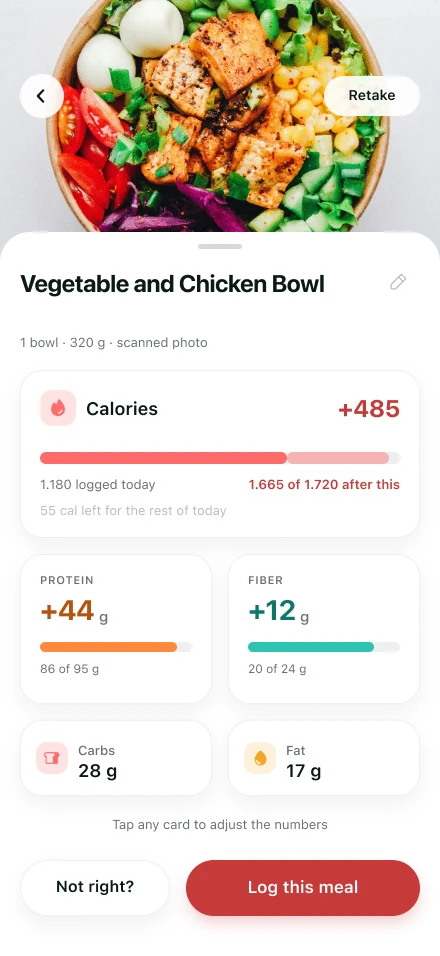
Snap a meal, get the protein 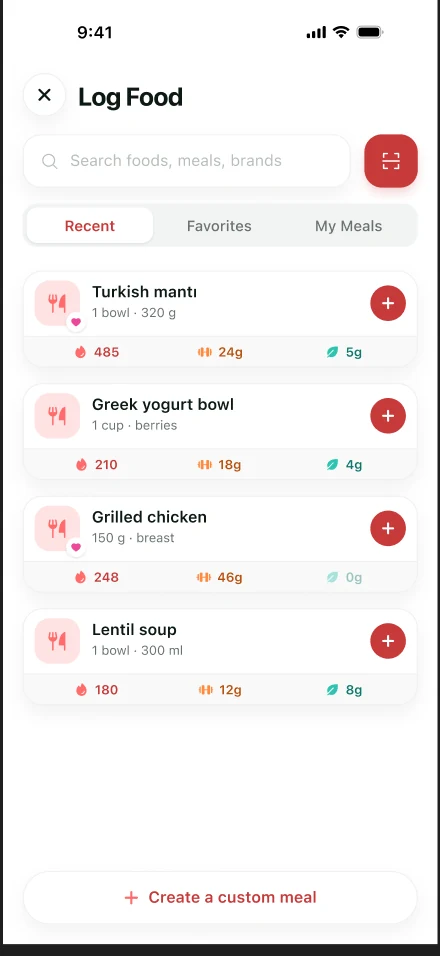
Your food log 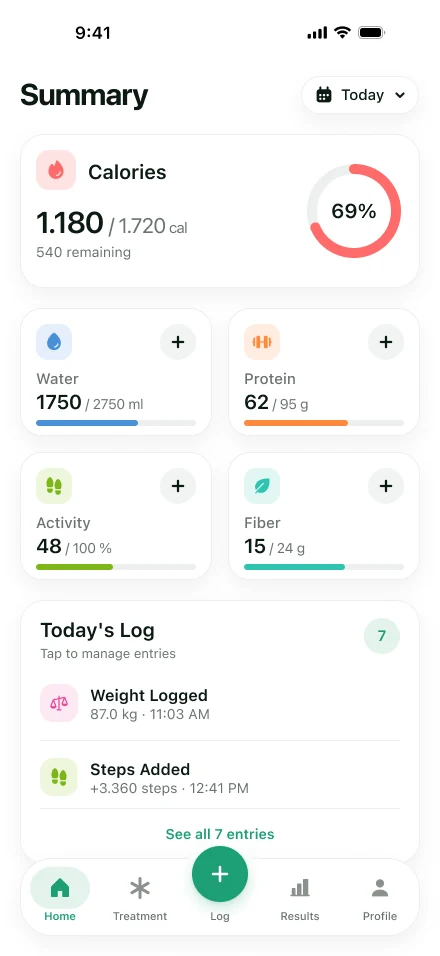
Your day at a glance
Frequently asked questions
How much protein should I eat on a GLP-1?
The 2025 joint advisory notes that 1.2–1.6 g per kg of body weight per day has been proposed during active weight reduction, and offers 80–120 g a day as a simpler range. Your own target depends on your health, so set it with your clinician or a dietitian.
Do I need to count calories on a GLP-1?
Not necessarily. Many people find appetite falls on its own; the more common problem is meals becoming so small that protein and nutrients slip. Ask your care team whether calorie tracking is useful for you.
How accurate are photo-based calorie estimates?
They're estimates. Portion size and hidden ingredients like oil are hard to judge from a photo, so treat the numbers as a guide to patterns over days rather than exact figures.
Which foods make GLP-1 nausea worse?
The advisory notes that fatty foods and large meals are common culprits, and suggests smaller, more frequent meals. Your own triggers may differ, which is why logging how meals feel is useful.
Sources
- Nutritional priorities to support GLP-1 therapy for obesity: a joint Advisory from the American College of Lifestyle Medicine, the American Society for Nutrition, the Obesity Medicine Association, and The Obesity Society — Obesity (Silver Spring), 2025
- WEGOVY (semaglutide) prescribing information and Medication Guide — DailyMed, U.S. National Library of Medicine
Keep reading
- GLP-1 Shot TrackerA GLP-1 shot tracker for iPhone that logs each weekly dose, rotates injection sites, reminds you on shot day and lines up side effects with dose days.
- GLP-1 Side EffectsThe most common GLP-1 side effects for semaglutide and tirzepatide, when they tend to appear, which warning signs need a doctor, and how tracking helps.
- GLP-1 Tracker AppHolt is a GLP-1 tracker app for iPhone. Log shots and pills, meals, protein, side effects, weight and water, and see how your dose day shapes your week.