
Moving Up a GLP-1 Dose — What Dose Escalation Looks Like
Why GLP-1 doses start low and step up every few weeks, what the Wegovy and Zepbound labels say about escalation, and what to note in the days after each step.
Worth remembering
- Starting low and stepping up is designed to reduce stomach side effects.
- Wegovy steps up every 4 weeks; Zepbound steps up by 2.5 mg after at least 4 weeks on a dose.
- The Wegovy label allows delaying a step if a dose isn't tolerated.
- The days right after a step are worth logging closely — that's your prescriber's best evidence.
The new box arrives and the number on it is higher. Four weeks at the starting dose felt manageable — a bit of fullness, one queasy afternoon — and now you're wondering whether the next step will feel the same, or like starting over. That question is the reason dose escalation exists, and the reason it's worth paying attention to.
Why do GLP-1 doses start so low?
Mostly to make the first months easier on your stomach. The Wegovy label says to follow its escalation schedule to reduce the risk of stomach side effects. The starting doses aren't meant to be where you stay; the Zepbound label, for example, says its 2.5 mg starting dose is for beginning treatment and isn't a maintenance dose.
Think of it as a ramp rather than a set of hurdles. Each step gives your body a few weeks to adjust before the next.
So what does the schedule actually look like?
Here's what the two labels describe for the weekly injections. Your prescriber may follow it exactly or adjust it.
| Wegovy (semaglutide injection) | Zepbound (tirzepatide) | |
|---|---|---|
| Starting dose | 0.25 mg weekly for weeks 1–4 | 2.5 mg weekly for 4 weeks |
| How it steps up | 0.5 mg, then 1 mg, then 1.7 mg, each for 4 weeks | In 2.5 mg steps, after at least 4 weeks on the current dose |
| Maintenance | From week 17; the label lists 2.4 mg and a higher 7.2 mg option | 5 mg, 10 mg or 15 mg weekly |
| If a step isn't tolerated | Label says consider delaying escalation for 4 weeks | Pace is set by your prescriber |
Other GLP-1s, including pills, have their own schedules. Your pharmacist can walk you through yours.
What changes at the higher dose?
For many people, the first few days after a step feel a bit like the first weeks did: fuller sooner, less interest in food, and sometimes nausea. Stomach side effects are the most commonly reported reactions on both labels.
The 2025 joint nutrition advisory notes that gradual escalation reduces these symptoms, and that in clinical trials people could stay on a dose for up to 8 weeks before moving on. That's a useful reminder that the 4-week rhythm is a default, not a deadline.
What if the new dose is too much?
Tell your prescriber. The Wegovy label specifically says that if a dose isn't tolerated during escalation, delaying the next step by 4 weeks can be considered. Other options are theirs to weigh with you.
Some things shouldn't wait for your next appointment. The Wegovy Medication Guide says vomiting, diarrhea and nausea can cause dehydration, which can lead to kidney problems, and asks you to tell your provider about stomach problems that are severe or won't go away.
How can I make a step-up week easier?
The advisory's general suggestions for nausea apply here: smaller meals more often, not going long stretches without eating, going easy on fatty foods, and keeping up fluids. Ginger or peppermint tea is mentioned too.
A little planning helps. If you can, avoid stepping up the week of a big event or a long trip. Keep easy, gentle foods in the house for the first couple of days after your first shot at the new dose.
What we'd track
- The date and dose of every step. It's the anchor for everything else. "Moved to 1 mg on the 3rd" makes the rest of the log readable.
- Side effects day by day for the first week after a step. Nausea, appetite, bowel changes and energy, rated simply. This shows whether things settle or linger.
- Fluids and meals in those first days. Low intake is when dehydration risk builds, and it's an easy thing to miss when you're not hungry.
- How the previous step compared. If 0.5 mg settled by day three but 1 mg is still rough on day ten, that comparison is exactly what your prescriber needs.
Holt lines your side effects up against your dose days and marks each step on the timeline, so you can see in one view how each increase felt. Reminders and a lock-screen Live Activity keep shot day steady while the numbers change.
Track your next dose step in HoltBefore your appointment, the doctor-visit report gathers each step and the symptoms that followed it. It's an easier conversation than "I think the last one was worse."
See it in Holt
Real screens from the app — the same places you’ll log, review and share.
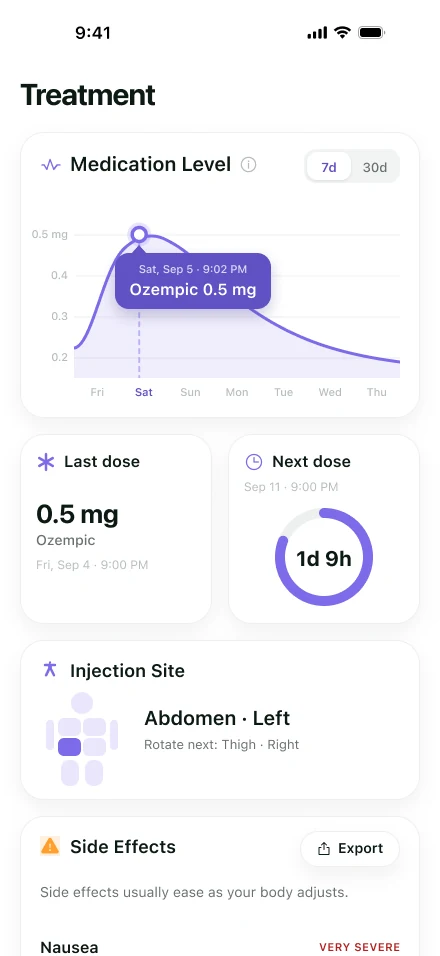
Medication level and next dose 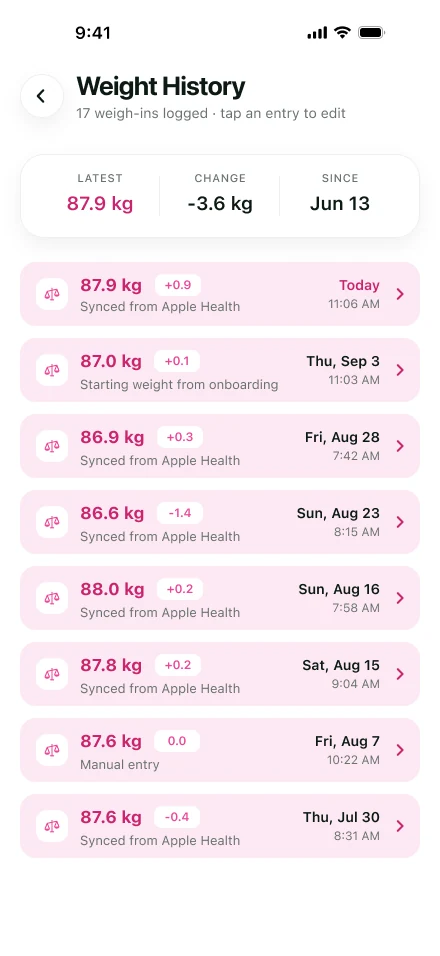
Weight history 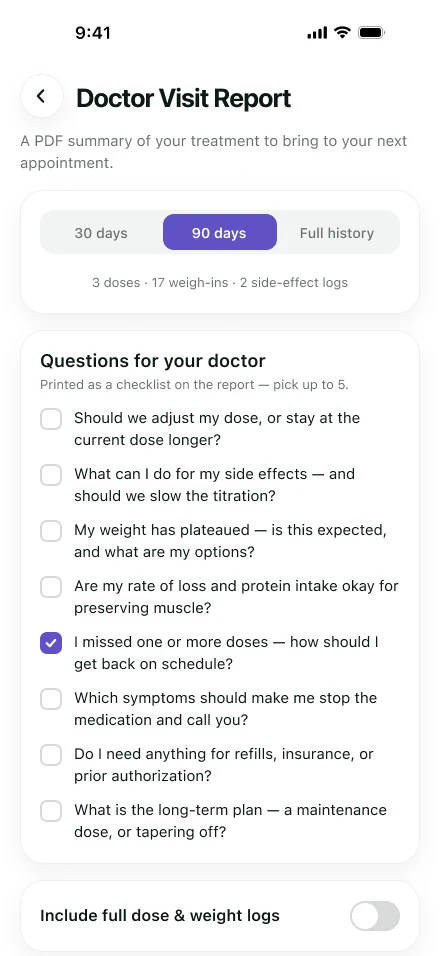
A report for your next appointment
Frequently asked questions
Why don't GLP-1s start at the full dose?
The Wegovy label says its escalation schedule is there to reduce the risk of stomach side effects. Stepping up gradually gives your body time to adjust at each level.
Do I have to move up a dose every 4 weeks?
Not necessarily. The Wegovy label says a prescriber can consider delaying escalation by 4 weeks if a dose isn't tolerated, and the Zepbound label says steps happen after at least 4 weeks. Your prescriber decides the pace with you.
Is it normal to feel worse right after a dose step?
Stomach side effects such as nausea are the most common reactions on these medications, and the escalation schedule exists because of them. Tell your prescriber how you feel, especially if symptoms are severe or don't settle.
Do I have to reach the highest dose?
No. Both labels list more than one maintenance dose, and the right one depends on how you respond and tolerate the medication. That's a conversation for your prescriber.
Sources
- WEGOVY (semaglutide) prescribing information, Medication Guide and Instructions for Use — DailyMed, U.S. National Library of Medicine
- ZEPBOUND (tirzepatide) prescribing information, Medication Guide and Instructions for Use — DailyMed, U.S. National Library of Medicine
- Nutritional priorities to support GLP-1 therapy for obesity: a joint Advisory — Obesity (Silver Spring), 2025
Keep reading
- Wegovy TrackerA calm way to track weekly Wegovy injections, the 4-week dose steps, injection sites and how you feel, with the label's missed-dose rules in plain words.
- Zepbound TrackerTrack weekly Zepbound shots for weight management or sleep apnea — which pen or vial you use, dose steps, storage days and side effects, in one calm iPhone log.
- GLP-1 Side EffectsThe most common GLP-1 side effects for semaglutide and tirzepatide, when they tend to appear, which warning signs need a doctor, and how tracking helps.
- GLP-1 Shot TrackerA GLP-1 shot tracker for iPhone that logs each weekly dose, rotates injection sites, reminds you on shot day and lines up side effects with dose days.