
Zepbound Side Effects — Nausea, Hair Loss, Fatigue and More
Zepbound side effects from the weight-management and sleep apnea trials — how often nausea, hair loss and fatigue came up, what eases with time and when to get help.
Worth remembering
- Nausea was the most common side effect, reported by 25% to 29% of people on Zepbound versus 8% on placebo.
- Stomach side effects were most frequent during dose escalation and decreased over time.
- Hair loss was linked to weight reduction in trials and was reported far more often in women than men.
- Dizziness and low blood pressure showed up more often on Zepbound, especially alongside blood pressure medicines.
- A daily symptom log, lined up with your shot day, is the clearest thing to bring to your prescriber.
It is the second morning after your shot, and you are standing in the shower with a little more hair in your hand than usual. Last week it was the nausea; this week it is this. You start to wonder which of these things are Zepbound, which are just a hard month, and which are worth a call. The label can sort out a good part of that.
What are the most common Zepbound side effects?
The label pools two 72-week weight-management trials and lists side effects that were reported in at least 2% of people on Zepbound and more often than on placebo. Here are the ones that came up most:
| Side effect | Placebo | 5 mg | 10 mg | 15 mg |
|---|---|---|---|---|
| Nausea | 8% | 25% | 29% | 28% |
| Diarrhea | 8% | 19% | 21% | 23% |
| Vomiting | 2% | 8% | 11% | 13% |
| Constipation | 5% | 17% | 14% | 11% |
| Stomach pain | 5% | 9% | 9% | 10% |
| Indigestion | 4% | 9% | 9% | 10% |
| Injection-site reactions | 2% | 6% | 8% | 8% |
| Fatigue | 3% | 5% | 6% | 7% |
| Hair loss | 1% | 5% | 4% | 5% |
| Dizziness | 2% | 4% | 5% | 4% |
The table also lists allergic-type reactions, burping, reflux, gas and bloating at lower rates. Overall, 56% of people on each Zepbound dose had at least one stomach-related side effect, compared with 30% on placebo, and 1.9% to 4.3% stopped because of them.
Do the stomach symptoms settle?
For most people in the trials, yes. The label says most nausea, vomiting and diarrhea happened during dose escalation and decreased over time. That is why the schedule moves slowly — 2.5 mg for 4 weeks, then 2.5 mg steps at least 4 weeks apart.
Constipation is the odd one out: it was actually most common at 5 mg. If it is lasting, it is worth raising with your prescriber rather than waiting it out.
What about hair loss?
The label says hair loss on Zepbound was associated with weight reduction. It was much more common in women than men — 7.1% versus 0.5% on Zepbound in the pooled trials — and no one on Zepbound stopped the medicine because of it.
Knowing it is on the label does not make it less upsetting. It does make it a reasonable, ordinary thing to bring up at your next appointment.
Why might I feel dizzy?
The label reports low blood pressure in 1.6% of people on Zepbound versus 0.1% on placebo, and more often in people also taking blood pressure medicine. It also notes that low blood pressure showed up alongside stomach side effects and dehydration. Standing up slowly is sensible; a log of dizzy spells is more useful still.
Which serious risks does the label warn about?
These are less common, but they are the reason for the warning block below.
- Severe stomach problems, and Zepbound is not recommended with severe gastroparesis.
- Kidney injury from dehydration, mostly after vomiting or diarrhea.
- Gallbladder disease, including gallstones and inflammation.
- Acute pancreatitis.
- Serious allergic reactions, including anaphylaxis and swelling.
- Breathing in stomach contents under anesthesia — tell anyone planning a procedure that you take Zepbound.
The label also carries a boxed warning about thyroid C-cell tumors seen in rats. It is unknown whether this applies to people, and Zepbound is not for anyone with a personal or family history of medullary thyroid carcinoma or MEN 2.
If you take oral birth control, the label advises switching to a non-oral method or adding a barrier method for 4 weeks after starting and after each dose increase.
What we'd track
For Zepbound side effects, these are the notes we would keep, and why.
- A daily stomach rating. Nausea, constipation and reflux on a 1–5 scale show whether things fade after each dose step.
- Water. Dehydration links several of the label's serious warnings; a running total makes gaps obvious.
- Energy and dizziness. Short notes help separate a tired week from a pattern.
- Hair shedding, with the date it began. Useful context next to your weight trend.
- Injection site and any reaction. Redness, itching or bruising, so you can see whether one spot is the problem.
Holt shows your side effects against your shot days, keeps a water count and a weight trend synced with Apple Health, and puts it all into a doctor-visit report on your iPhone. It is free to download, with an optional subscription.
Log Zepbound side effects with HoltSee it in Holt
Real screens from the app — the same places you’ll log, review and share.
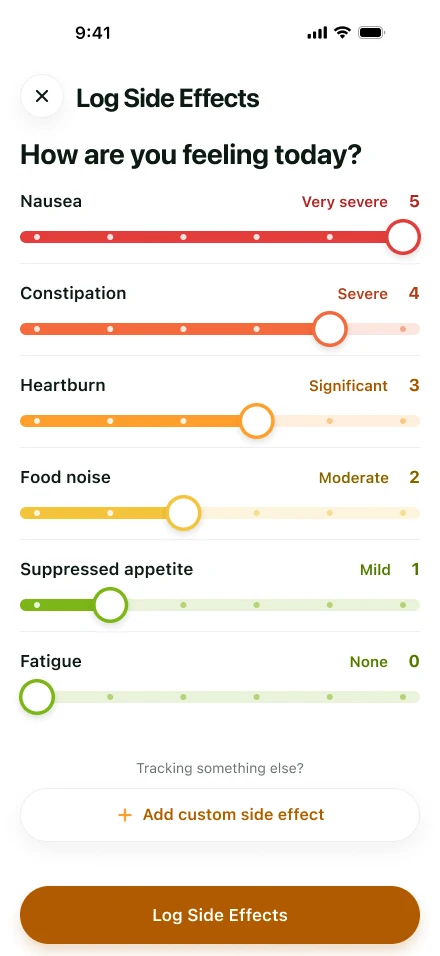
Side effects, by severity 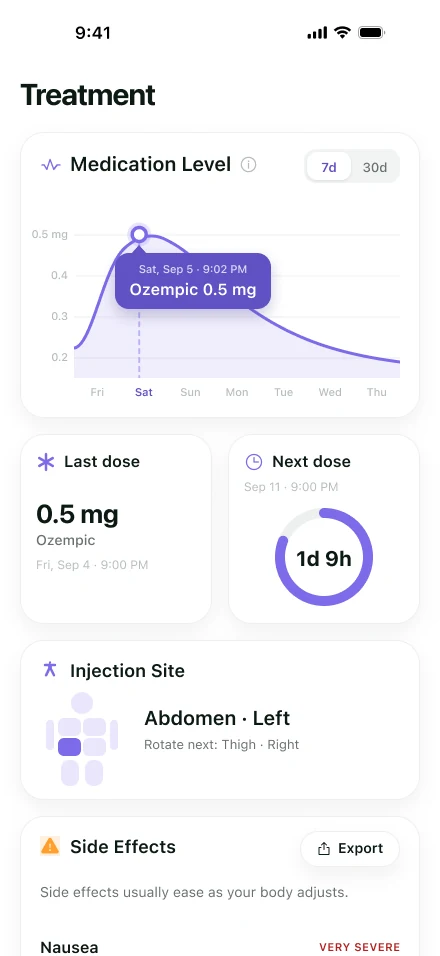
Medication level and next dose 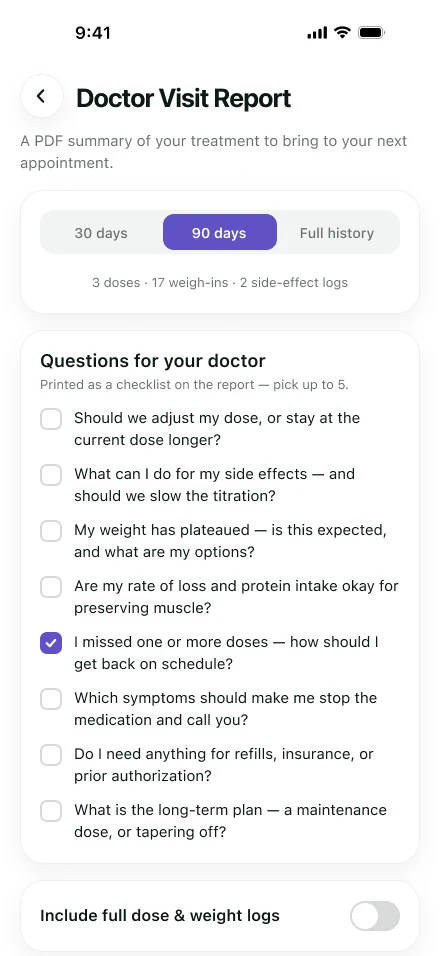
A report for your next appointment
Frequently asked questions
Does Zepbound cause hair loss?
Hair loss appears in the label at 4% to 5% on Zepbound versus 1% on placebo, and the label says it was associated with weight reduction. It was reported in 7.1% of women and 0.5% of men on Zepbound in the pooled trials.
Why do I feel tired on Zepbound?
Fatigue, including weakness and low energy, was reported by 5% to 7% of people on Zepbound versus 3% on placebo. Eating very little and losing fluids can contribute, so mention it to your prescriber if it persists.
Are side effects different if I take Zepbound for sleep apnea?
Not in any major way, according to the label. In its two sleep apnea studies, side effects at 10 mg or 15 mg were similar to those seen in the weight-management trials, and the same warnings apply whatever the reason you take Zepbound.
Can Zepbound cause low blood sugar if I don't have diabetes?
The label says low blood sugar has been associated with Zepbound and GLP-1 medicines in adults without type 2 diabetes, and asks prescribers to explain the signs to everyone. The risk is higher with insulin or a sulfonylurea.
Sources
- Zepbound (tirzepatide) injection — Prescribing Information — U.S. Food and Drug Administration
Keep reading
- Zepbound TrackerTrack weekly Zepbound shots for weight management or sleep apnea — which pen or vial you use, dose steps, storage days and side effects, in one calm iPhone log.
- Tirzepatide Side EffectsTirzepatide side effects across Mounjaro and Zepbound, how they compared with semaglutide head to head, and what the FDA says about compounded versions.
- Wegovy Side EffectsWegovy side effects at the 2.4 mg maintenance dose — stomach symptoms, fatigue, hair loss, skin sensations, gallbladder and heart rate — from the FDA label.
- GLP-1 Side EffectsThe most common GLP-1 side effects for semaglutide and tirzepatide, when they tend to appear, which warning signs need a doctor, and how tracking helps.