
GLP-1 and Menopause — What's Known About Weight, Muscle and Bone
GLP-1s don't treat menopause, but many people start one around midlife. What the labels and research say about weight, muscle, bone and hormone therapy.
Worth remembering
- GLP-1s don't treat menopause symptoms; talk to your clinician separately about those.
- Weight loss on a GLP-1 includes some lean mass, which matters more as muscle and bone naturally decline with age.
- A 2025 joint advisory recommends strength training at least three times a week alongside GLP-1 therapy.
- Studies linking hormone therapy to more weight loss are small and observational.
You're 52, sleeping badly, and the waistband that fit in spring doesn't now. Your clinician mentions a GLP-1, and you have two questions at once: will it help with this, and does it do anything about the rest of what menopause is doing to you? The answers are different, and it helps to keep them apart.
Does a GLP-1 treat menopause?
No. GLP-1 medications are approved for uses like long-term weight management and type 2 diabetes, depending on the medication. Menopause and its symptoms — hot flashes, night sweats, sleep changes, vaginal dryness — aren't among them, and we didn't find good trial evidence that GLP-1s relieve those symptoms.
That doesn't make the timing a coincidence. Many people's weight and body shape change around midlife, and that's often when a GLP-1 conversation starts. It just means the menopause side of things needs its own conversation with your clinician.
Why does muscle matter more at this stage?
Because weight loss isn't only fat. The 2025 joint advisory from four US obesity and nutrition societies describes body-composition results from the STEP 1 trial of semaglutide: of the weight lost, about 62% was fat and 38% was lean mass. The authors estimate that muscle itself makes up around a fifth of total weight lost.
Muscle tends to decline with age anyway, so losing some of it during treatment is worth planning around. The advisory's answer is practical: adequate protein and regular strength training.
And what about bone?
The advisory notes that rapid, substantial weight loss is associated with bone loss. It also points to one randomized trial in which people on a GLP-1 who exercised kept their bone density steady over a year, while those on the medication alone lost some.
Bone health is a common concern after menopause, so it's reasonable to ask your clinician whether a bone density check or other steps make sense for you before or during treatment.
What does strength training need to look like?
The advisory recommends prescribing GLP-1s alongside a structured exercise plan: strength training at least three times a week, plus at least 150 minutes a week of moderate aerobic activity like brisk walking. It says resistance training is better established for keeping lean mass than aerobic exercise alone, and that plans should match your current fitness.
You don't need a gym membership to start. Bodyweight exercises, resistance bands or a pair of dumbbells at home all count. A physical therapist or trainer can help if you have joint problems or haven't lifted before.
Does hormone therapy change how a GLP-1 works?
We don't know for sure. A 2024 study in the journal Menopause looked back at the records of 106 postmenopausal women on semaglutide and found that the small group also using hormone therapy lost more weight on average. The authors said larger studies are needed to confirm it.
These studies can't show that hormone therapy caused the difference — the women on it may differ in other ways. Hormone therapy has its own benefits and risks and isn't something to start for weight. Whether it's right for you is a separate question for your clinician.
What we'd track
- Weight trend alongside strength sessions. A slower scale week paired with three good workouts is a different story than one without them.
- Protein at meals. The advisory gives ranges to discuss with your clinician; a photo log shows how close you are without weighing everything.
- Doses and side effects. Seeing how nausea or fatigue line up with shot days helps your prescriber judge each dose step.
- Menopause symptoms separately. Hot flashes, sleep, mood. Keeping them in view helps you and your clinician tell what's the medication and what isn't.
Holt keeps weight trend, meals with protein estimates, doses and side effects together, and syncs with Apple Health. The doctor-visit report puts it on one page for your appointment.
Track weight, protein and doses in HoltBring your symptom notes too. A clinician who can see the medication and the menopause picture side by side is better placed to help with both.
See it in Holt
Real screens from the app — the same places you’ll log, review and share.
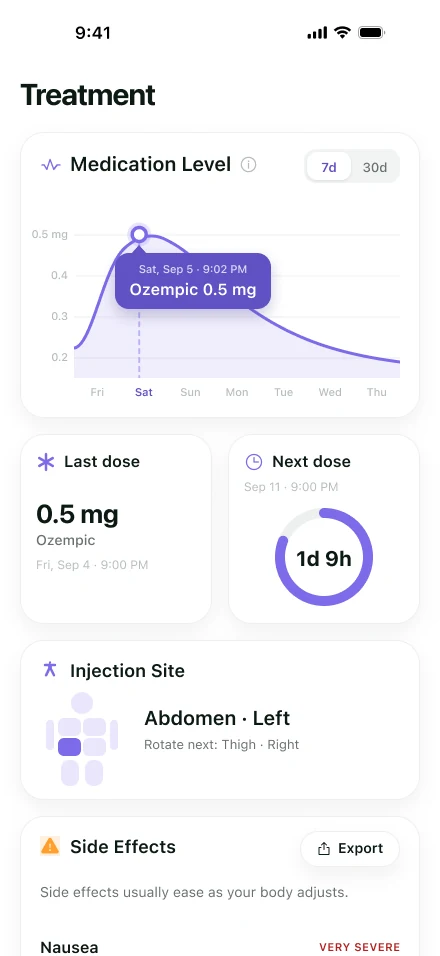
Medication level and next dose 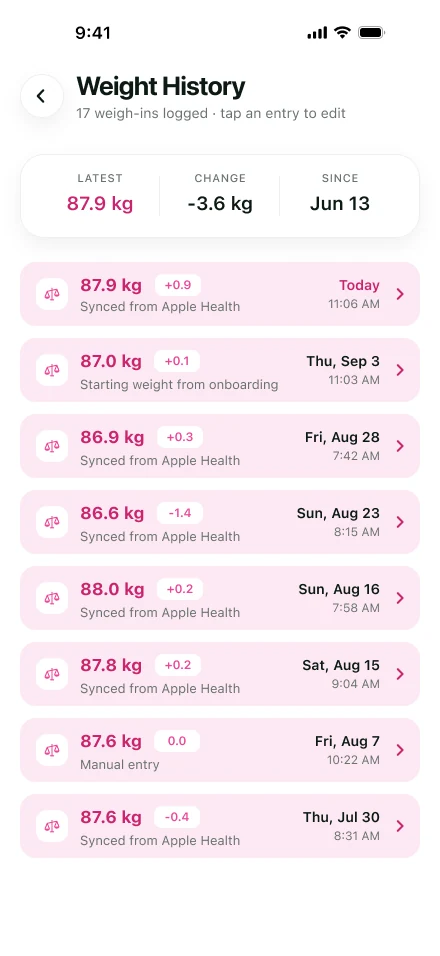
Weight history 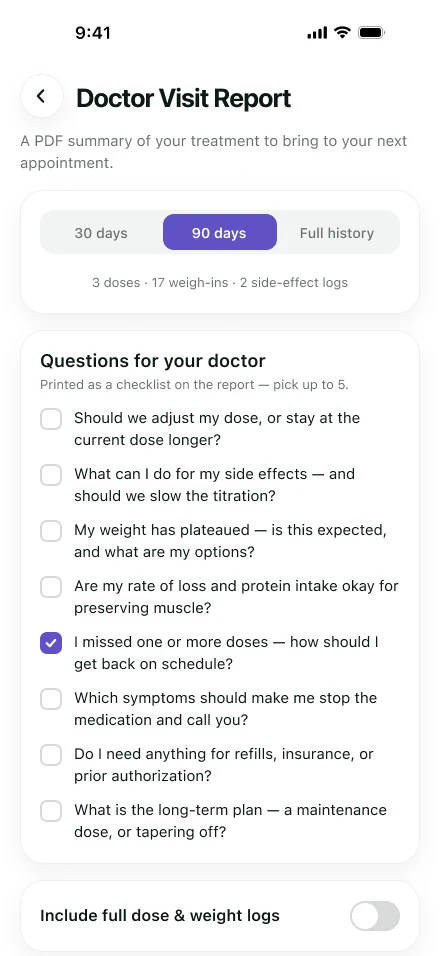
A report for your next appointment
Frequently asked questions
Will a GLP-1 help with hot flashes or night sweats?
The labels don't list menopause symptoms among what these medications treat, and we didn't find good trial evidence that they do. Ask your clinician about treatments designed for those symptoms.
Can I take a GLP-1 and hormone therapy at the same time?
That's a question for your prescriber, who knows your full history. Some observational studies have looked at people taking both, but they don't tell you whether the combination is right for you.
Do GLP-1s cause bone loss?
The 2025 joint advisory notes that rapid, substantial weight loss is linked with bone loss, and that one trial found exercise alongside GLP-1 therapy helped preserve bone density. Ask your clinician whether bone health checks make sense for you.
Is weight loss slower after menopause on a GLP-1?
We couldn't find strong evidence to answer that either way. Your prescriber can tell you what to expect for your situation.
Sources
- Nutritional priorities to support GLP-1 therapy for obesity: a joint Advisory from the American College of Lifestyle Medicine, the American Society for Nutrition, the Obesity Medicine Association, and The Obesity Society — Obesity (Silver Spring), 2025
- Weight loss response to semaglutide in postmenopausal women with and without hormone therapy use (Hurtado et al.) — Menopause, 2024
- WEGOVY (semaglutide) prescribing information — DailyMed, U.S. National Library of Medicine
- ZEPBOUND (tirzepatide) prescribing information — DailyMed, U.S. National Library of Medicine
Keep reading
- GLP-1 Tracker AppHolt is a GLP-1 tracker app for iPhone. Log shots and pills, meals, protein, side effects, weight and water, and see how your dose day shapes your week.
- GLP-1 for PCOSGLP-1 medications aren't approved to treat PCOS. Here's what trials and guidelines say about weight and metabolic effects, what's still unknown, and what to track.
- GLP-1 Side EffectsThe most common GLP-1 side effects for semaglutide and tirzepatide, when they tend to appear, which warning signs need a doctor, and how tracking helps.
- Wegovy vs ZepboundWegovy vs Zepbound for weight management — how their approvals, dose schedules, pens, vials and tablets differ, and what the SURMOUNT-5 head-to-head trial found.