
Zepbound injection sites, by pen and vial
Where to inject Zepbound according to its Instructions for Use for the pen, vials and KwikPen, what to avoid, and an easy way to rotate sites every week.
Worth remembering
- Stomach and thigh you can do yourself; the back of the upper arm is for someone else to inject.
- Rotate every week — same area is fine, same spot is not.
- The KwikPen instructions say to keep stomach injections at least 2 inches from the belly button.
- The vial instructions list skin to avoid, and say to use a new syringe and needle every time.
- The label says tirzepatide reaches similar levels whether injected in the abdomen, thigh or upper arm.
Your Zepbound arrived as a vial this time, not the pen you were trained on. There's a syringe, a fresh needle, and a leaflet that looks longer than the pen one. Before you draw up the dose, you want to know one thing: does anything change about where it goes?
Mostly no. But the vial leaflet adds a few details worth knowing, and the KwikPen has its own note about the belly button.
Where does the Zepbound label say to inject?
The label and every Instructions for Use (IFU) point to the same three areas, all under the skin (subcutaneous):
| Area | Who can inject | Detail from the instructions |
|---|---|---|
| Stomach (abdomen) | You or another person | KwikPen IFU: at least 2 inches from the belly button |
| Thigh | You or another person | — |
| Back of the upper arm | Another person | Pen and KwikPen IFUs: another person should give this one |
The label also says similar exposure was achieved whether tirzepatide was injected in the abdomen, thigh or upper arm. So the choice is about comfort and reach rather than how well the medicine works.
What's different with a vial?
Zepbound comes as single-dose pens, single-dose vials, multiple-dose vials and the multi-dose KwikPen. The areas are the same across all of them, but the vial instructions (single-dose and multiple-dose) add some specifics:
- Skin to avoid. Don't inject where the skin has pits, is thickened or has lumps, or where it's tender, bruised, scaly or hard — and not into scars or damaged skin.
- Not where other medicines go. Don't inject Zepbound into a site you use for other medicines.
- A new syringe and needle every time, to prevent infections and blocked needles. The Medication Guide says the same for vials, and the KwikPen IFU says to use a new pen needle for each injection.
Those skin rules are sensible whatever form you use. If anything here doesn't match the leaflet in your box, follow your leaflet — labels are updated over time.
What does "rotate" mean for Zepbound?
The Medication Guide says to change (rotate) your injection site with each weekly injection, and that you may use the same area of your body as long as you choose a different site in that area. It also says not to use the same site for each injection.
A simple four-week pattern if you inject yourself:
- Stomach, left side, 2+ inches from the belly button
- Stomach, right side
- Front of the left thigh
- Front of the right thigh
If someone helps you on some weeks, add the backs of the upper arms to the loop. There's no required order — what matters is knowing where you went last.
When should I mention a site to my doctor?
The Zepbound label lists injection site reactions among its common side effects, so a little redness or a small bruise isn't unusual. If a spot stays painful, swollen or red, or you find a lump that doesn't go away, use a different area and let your healthcare provider know — they may want to check your technique.
What we'd track
- The site every week, down to side and position. "Stomach, lower left" makes next week's choice obvious.
- Which form you used — pen, vial or KwikPen — especially after a switch.
- Any reaction at the site and how many days it lasted.
- Who injected, if someone else does your arm. It explains why the arm only shows up some weeks.
Holt's Log Injection screen lets you pick arms, stomach or thighs; left or right; upper, lower, inner or outer — and Otto suggests the next spot in your rotation. The Treatment screen keeps an injection-site card with "Rotate next", and Dose History shows each dose with its strength and site, so a repeated patch is easy to spot.
Rotate your Zepbound sites with HoltFor the bigger picture — dose steps, storage and side effects — see our Zepbound tracker page, or the general injection sites guide if you're comparing medications.
See it in Holt
Real screens from the app — the same places you’ll log, review and share.
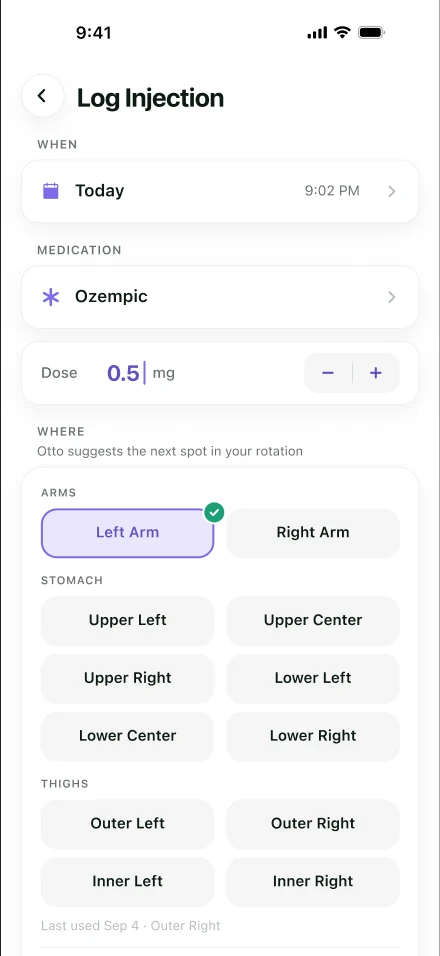
Otto suggests your next site 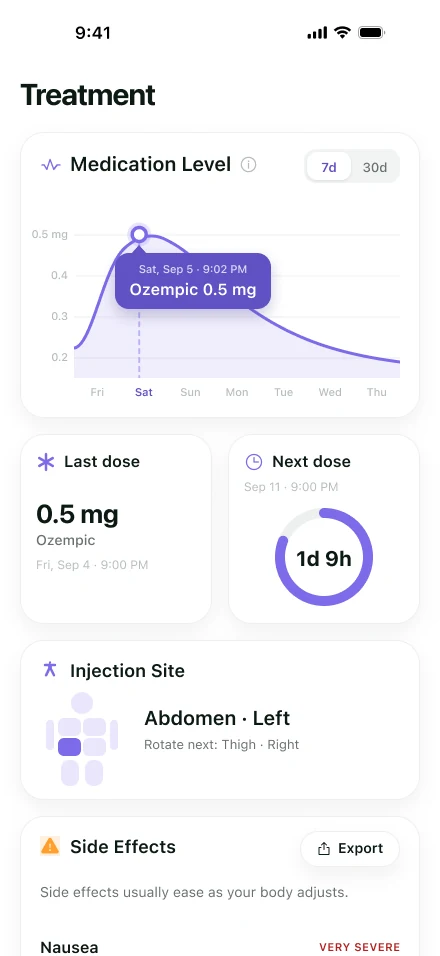
Medication level and next dose 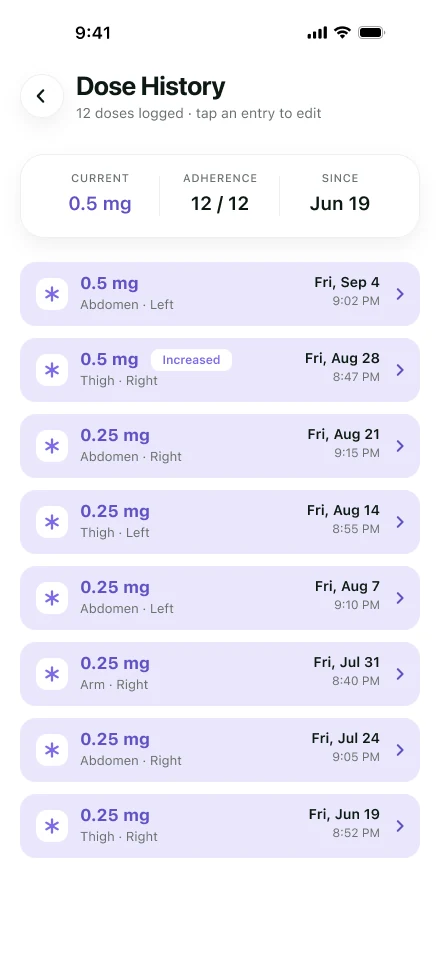
Every dose, every site
Frequently asked questions
Is one Zepbound injection site better than another?
The Zepbound label says similar exposure was achieved whether tirzepatide was injected in the abdomen, thigh or upper arm. Choose what's comfortable and practical — your healthcare provider can help you decide.
Can I inject Zepbound in my own arm?
The pen and KwikPen instructions say another person should give the injection in the back of your upper arm, and the vial instructions list the upper arm only for someone else. On your own, use your stomach or thigh.
Do the rules differ between the Zepbound pen and vials?
The areas are the same. The vial instructions add a list of skin to avoid, say not to use a site you use for other medicines, and say to use a new syringe and needle for every injection.
Can I inject in the same spot two weeks in a row?
No. The Medication Guide says not to use the same site for each injection. You can stay in the same area, as long as the spot within it changes.
What if a site stays red or lumpy?
Use a different area and tell your healthcare provider if it doesn't settle. If you have swelling of the face, lips, tongue or throat, or trouble breathing, get medical help right away.
Sources
- ZEPBOUND (tirzepatide) prescribing information, Medication Guide and Instructions for Use (single-dose pen, single-dose vial, multiple-dose vial, KwikPen) — DailyMed, U.S. National Library of Medicine
- Zepbound (tirzepatide) injection — Prescribing Information — U.S. Food and Drug Administration
Keep reading
- Zepbound TrackerTrack weekly Zepbound shots for weight management or sleep apnea — which pen or vial you use, dose steps, storage days and side effects, in one calm iPhone log.
- GLP-1 Injection SitesWhere to inject a GLP-1 like Wegovy or Zepbound, what the labels say about rotating sites, and a simple way to keep track of where you injected last.
- Zepbound Side EffectsZepbound side effects from the weight-management and sleep apnea trials — how often nausea, hair loss and fatigue came up, what eases with time and when to get help.
- Injection Tracker AppAn injection tracker app for iPhone that reminds you on shot day, shows a lock-screen Live Activity and suggests your next site so the weekly routine runs itself.