
Switching From Ozempic to Mounjaro — Labels, Questions, What to Log
Moving from Ozempic to Mounjaro for type 2 diabetes? What both labels say about starting doses, why your prescriber plans the change, and what to log through it.
Worth remembering
- Ozempic and Mounjaro are different molecules; the labels don't give an equivalent dose.
- Mounjaro's 2.5 mg starting dose is for initiation, not for glycemic control.
- Both labels warn about low blood sugar when combined with insulin or sulfonylureas.
- Mounjaro adds a contraception note that Ozempic doesn't have.
- Side effects, glucose readings and weight across the switch are the record your prescriber needs.
Your A1C came back and your doctor says, "Let's try Mounjaro." You've been on Ozempic long enough to know your shot day by heart and roughly how the day after feels. Now there's a new pen, a new number on the box, and a quiet worry about whether your blood sugar will hold steady while you change.
That worry is reasonable. It's also exactly what a planned switch is designed to handle.
Why do people switch from Ozempic to Mounjaro?
A 2020 review of switching between GLP-1 medicines describes the usual reasons: blood sugar or weight goals not being met, side effects, a specific approved benefit, preference, and cost or coverage. It was written before tirzepatide arrived, but the reasons translate.
For Ozempic to Mounjaro, the most common driver is results. In the SURPASS-2 trial of adults with type 2 diabetes on metformin, all three Mounjaro doses lowered HbA1c more on average than Ozempic 1 mg over 40 weeks. That's a group average, and the trial didn't study people switching from one to the other.
Can't I just take the "same" dose of Mounjaro?
There isn't a same dose. Ozempic is semaglutide, which acts on the GLP-1 receptor. Mounjaro is tirzepatide, which acts on both the GIP and GLP-1 receptors. The labels describe each medicine on its own and give no conversion.
What do the labels say about starting each one?
| Ozempic (semaglutide) | Mounjaro (tirzepatide) | |
|---|---|---|
| Standard start | 0.25 mg weekly for 4 weeks | 2.5 mg weekly for 4 weeks |
| What the start dose is for | Getting started; then 0.5 mg | Initiation only, "not intended for glycemic control" |
| How it steps up | To 1 mg, then 2 mg, after at least 4 weeks on each, if more control is needed | 2.5 mg steps after at least 4 weeks, if more control is needed |
| Maximum | 2 mg weekly | 15 mg weekly in adults |
| Missed dose | Within 5 days, otherwise skip | Within 4 days, otherwise skip |
Both labels say the gradual escalation is there to reduce stomach side effects.
Why might my prescriber start me low?
Because a new molecule is new to your stomach, even if the old one had settled. The 2020 review notes that moving straight to a higher dose of a new GLP-1 medicine can bring nausea and stomach upset, and that people who weren't tolerating their current dose should start the new one at its lowest dose.
The trade-off is that Mounjaro's starting dose isn't meant to control blood sugar. Your prescriber weighs that against side effects, your other medicines and your recent readings. Ask how they're balancing it for you, and what glucose numbers should prompt a call.
What else changes with Mounjaro?
Low blood sugar risk with other medicines. Both labels say that combining these medicines with insulin or a sulfonylurea raises the risk of hypoglycemia, and that lowering those doses may be considered. Ask whether your other diabetes medicines need adjusting.
Contraception. The Mounjaro label says it may make oral hormonal birth control less effective, especially after the first dose. It advises switching to a non-oral method, or adding a barrier method, for 4 weeks after starting and for 4 weeks after each dose increase. The Ozempic label has no such advice, so this is new.
The pen and the routine. New device, new instructions, slightly different missed-dose window. Read the Instructions for Use before your first shot, even if injecting feels routine.
What should I ask before the switch?
- When do I take my last Ozempic dose and my first Mounjaro dose?
- What dose will I start on, and how will we decide on the next step?
- How often should I check my glucose in the first weeks?
- Do my insulin or other diabetes medicines need to change?
- Which side effects mean I should call rather than wait?
What we'd track
- Last Ozempic and first Mounjaro dose. Dates and strengths. It's the line everything else is compared against.
- Side effects for the first weeks. Nausea, constipation, heartburn and fatigue, rated daily, especially in the days after each shot.
- Glucose readings, if you check them. Your prescriber needs to see how the starting dose is doing on blood sugar, not just how it feels.
- Appetite and meals. Changes in hunger show up quickly, and low intake can matter if you're also on insulin.
- Weight trend. Weekly, not daily, across both medicines.
When your prescriber switches you, change the medication in Holt to Mounjaro. Your Ozempic doses stay in your dose history, with strength, site and date, so both medicines sit in one record. Side effects line up against dose days, and weight syncs with Apple Health.
Log your switch to Mounjaro in HoltKeep your glucose readings in your meter's app or logbook, and bring them to your follow-up alongside Holt's doctor-visit report. Together they show how the new medicine is going from both sides.
See it in Holt
Real screens from the app — the same places you’ll log, review and share.
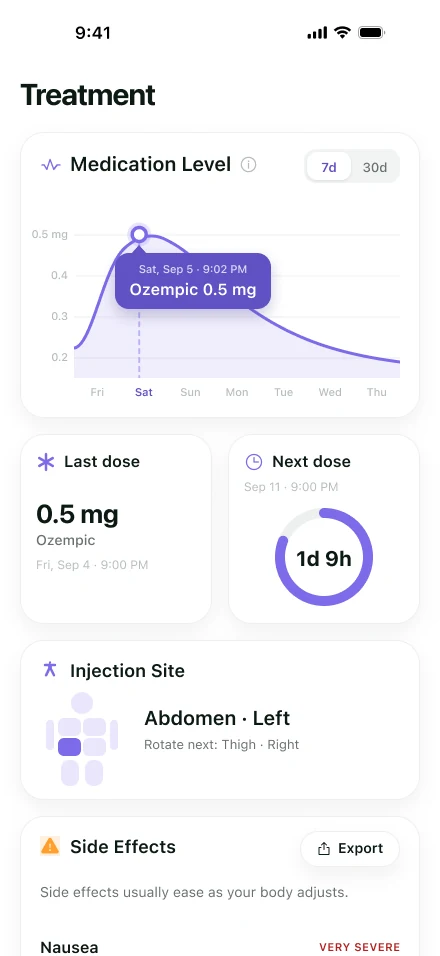
Medication level and next dose 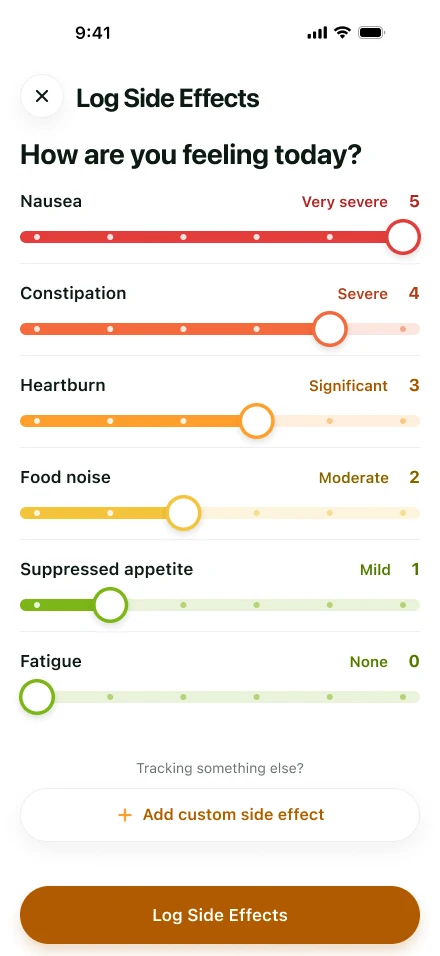
Side effects, by severity 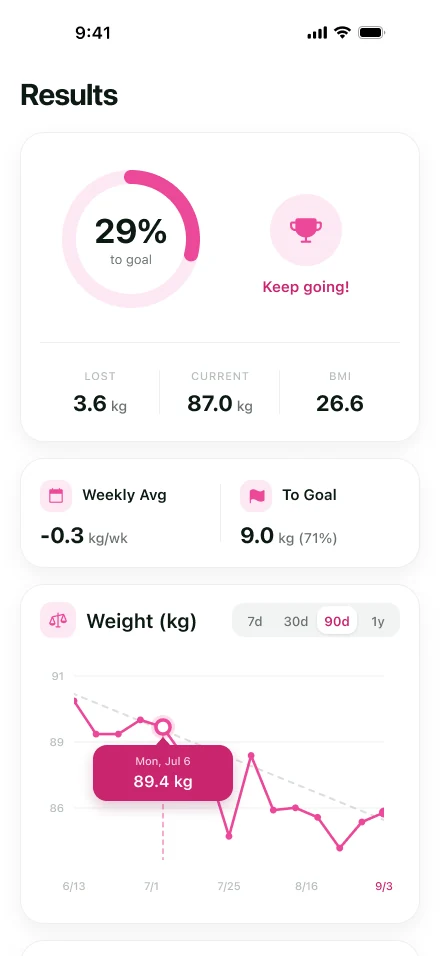
Progress toward your goal
Frequently asked questions
What Mounjaro dose matches my Ozempic dose?
There's no official conversion. The two labels describe each medicine on its own, and your prescriber chooses your starting dose and pace.
Will my blood sugar go up while I'm on the starting dose?
The Mounjaro label says 2.5 mg is for starting treatment and isn't intended for glycemic control, so ask your prescriber what to expect and how often to check your glucose during the change.
Do I need to change my insulin when I switch?
Only your prescriber can tell you. Both labels say low blood sugar is more likely with insulin or sulfonylureas, and that lowering those doses may be considered.
Is the missed-dose rule the same?
No. Ozempic allows a missed dose within 5 days; Mounjaro within 4 days. After that, both say skip it and take the next dose on your usual day.
How do I keep my Ozempic history when I switch to Mounjaro?
In Holt, change your medication when your prescriber switches you. Your earlier Ozempic doses stay in your dose history, so the doctor-visit report shows both medicines.
Sources
- Ozempic (semaglutide) injection — Prescribing Information — U.S. Food and Drug Administration
- Mounjaro (tirzepatide) injection — Prescribing Information — U.S. Food and Drug Administration
- Tirzepatide versus Semaglutide Once Weekly in Patients with Type 2 Diabetes (SURPASS-2) — New England Journal of Medicine
- Switching Between Glucagon-Like Peptide-1 Receptor Agonists: Rationale and Practical Guidance (Almandoz et al.) — Clinical Diabetes, 2020
Keep reading
- Mounjaro vs OzempicMounjaro vs Ozempic for type 2 diabetes — what each is approved for, how the dose steps and pens differ, and what the SURPASS-2 head-to-head trial found for HbA1c.
- Mounjaro TrackerA calm way to log weekly Mounjaro shots for type 2 diabetes — dose steps, the 4-day missed-dose window, injection sites and side effects, all on your iPhone.
- Ozempic TrackerTrack your weekly Ozempic (semaglutide) shots, dose steps, injection sites and side effects in one place with Holt, the calm GLP-1 tracker for iPhone.
- Mounjaro Side EffectsMounjaro side effects for people with type 2 diabetes — how common nausea and diarrhea were in trials, low blood sugar with insulin, eye checks and when to get help.