
Tirzepatide Tracker — Mounjaro, Zepbound and Compounded Doses
How to track tirzepatide, the dual GIP/GLP-1 medicine behind Mounjaro and Zepbound, and what to write down if your tirzepatide comes from a compounding pharmacy.
Worth remembering
- Tirzepatide activates two hormone receptors, GIP and GLP-1; semaglutide activates only GLP-1.
- Mounjaro and Zepbound share the same molecule, strengths and weekly rhythm, but have different approvals.
- The FDA says compounded drugs are not reviewed for safety, effectiveness or quality before they are sold.
- The FDA has received reports of dosing errors with compounded GLP-1 injections, so write down the concentration and dose your pharmacist gave you.
- Your prescriber and pharmacist decide the dose; a tracker just keeps the record straight.
You searched for "tirzepatide" rather than a brand name, and that usually means one of three things. You are comparing Mounjaro and Zepbound, you have heard it works differently from semaglutide, or the vial in your fridge came from a compounding pharmacy and has no brand on it at all. This page is for all three.
What makes tirzepatide different from other GLP-1 medicines?
Most medicines in this family, like semaglutide, act on one hormone receptor: GLP-1. Tirzepatide acts on two. Its labels describe it as a GIP receptor and GLP-1 receptor agonist — GIP being glucose-dependent insulinotropic polypeptide, another gut hormone involved in blood sugar and appetite.
The Zepbound label puts it carefully: GLP-1 is a known regulator of appetite, and studies in animals suggest GIP may add to that effect. Both receptors are found in brain areas involved in appetite. What that means in daily life varies from person to person, which is why your own record tends to be more useful than any general explanation.
Mounjaro or Zepbound — what actually differs?
Same molecule, same maker, different approvals.
| Mounjaro | Zepbound | |
|---|---|---|
| Approved for | Type 2 diabetes (adults and children 10+) | Weight management; moderate to severe obstructive sleep apnea with obesity (adults) |
| Starting dose | 2.5 mg weekly for 4 weeks | 2.5 mg weekly for 4 weeks |
| Steps | 2.5 mg, at least 4 weeks apart | 2.5 mg, at least 4 weeks apart |
| Maximum | 15 mg (10 mg for children) | 15 mg |
| Forms | Single-dose pen or vial, multi-dose vial, KwikPen | Single-dose pen or vial, multi-dose vial, KwikPen |
Both labels share the same missed-dose rule — take it within 4 days (96 hours), otherwise skip it — and the same 3-day minimum gap if you move your shot day. The label's half-life for tirzepatide is about 5 days, which is part of why it is a once-weekly medicine.
What about compounded tirzepatide?
Compounded tirzepatide is made by a pharmacy rather than by Lilly, and it is not the same as an FDA-approved product. The FDA is direct about this: compounded drugs are not FDA approved, and the agency does not review them for safety, effectiveness or quality before they are sold.
During the national shortage, the FDA allowed some compounding of tirzepatide. On December 19, 2024 it decided the shortage was resolved, and its compounding page sets out that the grace period for state-licensed pharmacies has ended and that outsourcing facilities had until March 19, 2025.
The FDA has also received reports of dosing errors with compounded GLP-1 injections — people drawing up the wrong amount, and in some cases miscalculations by health care professionals. As of May 31, 2026, the FDA listed more than 730 adverse event reports for compounded tirzepatide, and notes that this likely undercounts what has happened, because many pharmacies are not required to report.
What should I write down if my vial is compounded?
More than you would for a branded pen. Compounded products can differ in strength from one pharmacy — or one refill — to the next. A clear record makes it much easier for your prescriber or pharmacist to spot a mismatch.
What we'd track
Whichever tirzepatide you use, these are the things we would log.
- Each weekly dose in milligrams, and the product name. Mounjaro, Zepbound or the compounding pharmacy — it changes which label applies.
- For vials, the concentration and the volume you drew. Write it exactly as your pharmacy label and pharmacist instructed; Holt records what you log and never chooses a dose.
- The injection site. Both labels ask you to rotate with every dose.
- Side effects by day. Stomach symptoms often cluster after a dose step; a timeline shows whether they settle.
- Meals, protein and water. Appetite can drop sharply, and dehydration is one of the label's concerns.
Holt keeps all of this on your iPhone, reminds you on shot day with a Live Activity and turns it into a report for your appointment. It is free to download, with an optional subscription.
Keep a clear tirzepatide log with HoltSee it in Holt
Real screens from the app — the same places you’ll log, review and share.
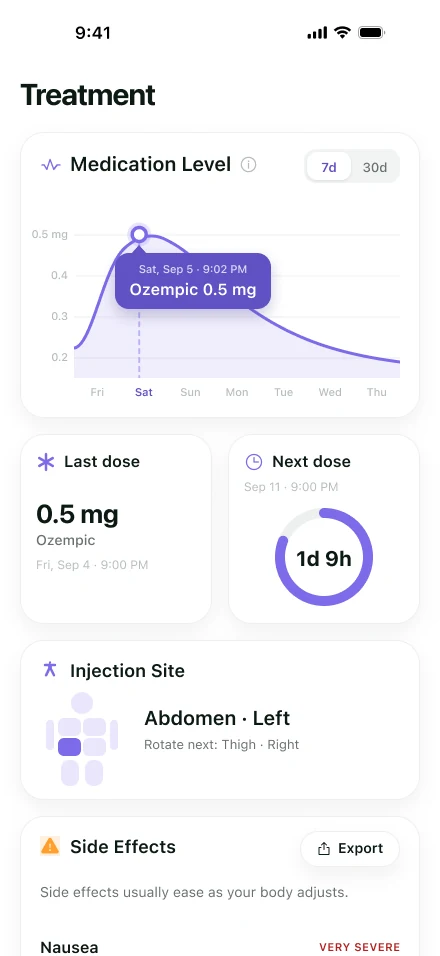
Medication level and next dose 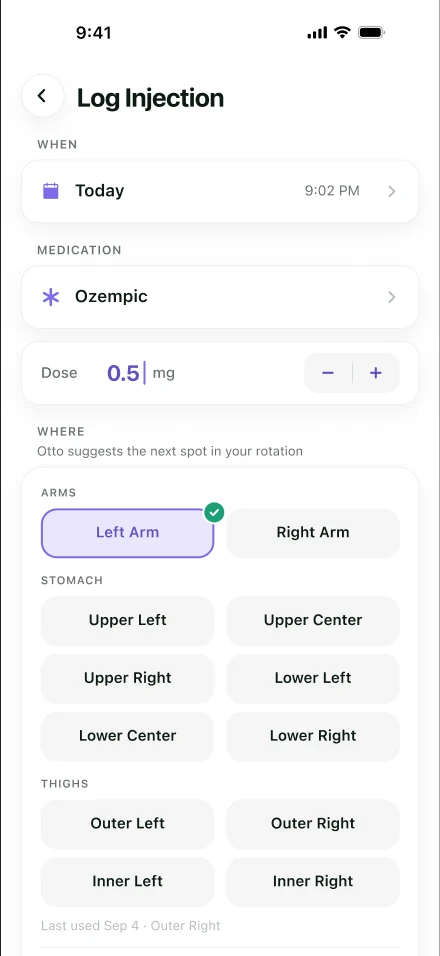
Otto suggests your next site 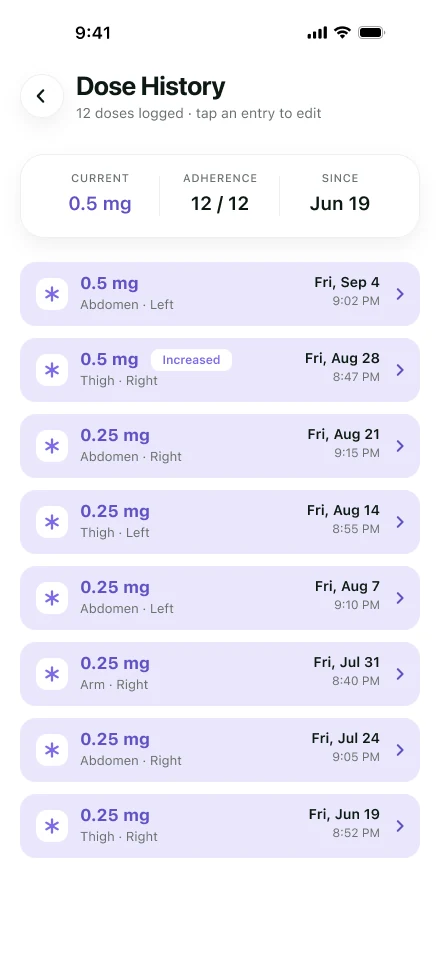
Every dose, every site
Frequently asked questions
Is tirzepatide the same as Mounjaro?
Tirzepatide is the active ingredient in Mounjaro and in Zepbound. The brand tells you which approval and which label apply to your prescription.
Is compounded tirzepatide FDA approved?
No. The FDA says compounded drugs are not FDA approved, and the agency does not review them for safety, effectiveness or quality before marketing.
Is there still a tirzepatide shortage?
The FDA decided on December 19, 2024 that the tirzepatide injection shortage was resolved, and it set deadlines in early 2025 for compounders that had been relying on the shortage. Ask your prescriber or pharmacist what that means for your own prescription.
How do I log a compounded dose in Holt?
Enter the dose in milligrams exactly as your prescription states, and note the vial concentration printed on your pharmacy label. If anything about the label or the amount to draw is unclear, your pharmacist's instructions are the ones to follow.
Sources
- Zepbound (tirzepatide) injection — Prescribing Information — U.S. Food and Drug Administration
- Mounjaro (tirzepatide) injection — Prescribing Information — U.S. Food and Drug Administration
- FDA's concerns with unapproved GLP-1 drugs used for weight loss — U.S. Food and Drug Administration
- FDA clarifies policies for compounders as national GLP-1 supply begins to stabilize — U.S. Food and Drug Administration
Keep reading
- Mounjaro TrackerA calm way to log weekly Mounjaro shots for type 2 diabetes — dose steps, the 4-day missed-dose window, injection sites and side effects, all on your iPhone.
- Zepbound TrackerTrack weekly Zepbound shots for weight management or sleep apnea — which pen or vial you use, dose steps, storage days and side effects, in one calm iPhone log.
- Semaglutide vs TirzepatideSemaglutide vs tirzepatide — one hormone target or two, the brands behind each, and what the SURPASS-2 and SURMOUNT-5 head-to-head trials found.
- Tirzepatide Side EffectsTirzepatide side effects across Mounjaro and Zepbound, how they compared with semaglutide head to head, and what the FDA says about compounded versions.