
Semaglutide to Tirzepatide — What Changes When You Switch
Switching from semaglutide to tirzepatide? Why there's no dose conversion, what the labels say about restarting, the routine changes, and what to track.
Worth remembering
- Semaglutide and tirzepatide act on different receptors, and no label converts one dose to the other.
- Tirzepatide labels start at 2.5 mg weekly and step up in 2.5 mg increments after at least 4 weeks.
- The Wegovy and Zepbound labels advise against combining them with another GLP-1 medicine, so the handover is planned.
- Tirzepatide labels add an oral contraceptive warning for 4 weeks after starting and after each step.
- The first weeks on the new medicine are when side effect and appetite notes matter most.
You've been on semaglutide for months. You know which day the nausea shows up, which foods sit badly, and roughly where your appetite lands by Thursday. Now your prescriber is suggesting tirzepatide, and part of you wonders whether all of that learning is about to reset.
Some of it will. Knowing which parts helps.
Why would a prescriber suggest tirzepatide?
Usually because of results, side effects, cost or coverage. A 2020 review of switching between GLP-1 medicines lists those, plus specific approved uses and personal preference, as the common reasons — and it's a well-trodden path. A 2026 study of nearly 127,000 US adults without diabetes found about one in five who started a GLP-1 switched to a different one within a year. People who switched were more likely to still be on treatment at 12 months, although the study can't say switching caused that.
Head-to-head trials have found larger average reductions in weight and HbA1c with tirzepatide. We compare them in detail in semaglutide vs tirzepatide. Averages don't predict your own response, and neither trial studied switching.
Why isn't there a simple conversion?
Because they don't work on the body in the same way. Semaglutide acts on the GLP-1 receptor; tirzepatide acts on both the GIP and GLP-1 receptors. Milligrams of one don't map onto milligrams of the other, and none of the four labels offers a conversion.
That's also why you'll find different numbers in different places online. A chart isn't a label, and it isn't your prescriber.
What do the tirzepatide labels say about starting?
Both the Mounjaro and Zepbound labels describe the same opening:
- Start at 2.5 mg once weekly for 4 weeks. The labels say this dose is for starting treatment, not a maintenance dose.
- Then 5 mg, with further increases in 2.5 mg steps after at least 4 weeks on the current dose.
- Maximum 15 mg weekly in adults.
- Why so gradual: to reduce the risk of stomach side effects.
Many prescribers use a low start after a switch even if you were on a high semaglutide dose. The 2020 review notes that jumping straight to a higher dose of a new GLP-1 medicine can cause nausea and stomach upset. And the Wegovy label itself suggests that after two or more missed doses, restarting the escalation may reduce stomach side effects — a reminder that even the same molecule can feel new after a gap.
What changes in my routine?
The pen isn't the only thing that's different.
| Semaglutide (Ozempic, Wegovy) | Tirzepatide (Mounjaro, Zepbound) | |
|---|---|---|
| Receptors | GLP-1 | GIP and GLP-1 |
| Missed dose | Ozempic: within 5 days. Wegovy injection: if next dose is more than 2 days away | Within 4 days, otherwise skip |
| Oral birth control note | Not in the labels | Use a non-oral or added barrier method for 4 weeks after starting and after each increase |
| Using with another GLP-1 | Wegovy label: not recommended | Zepbound label: not recommended |
The contraception row matters if you take the pill. The tirzepatide labels say the effect on oral contraceptives is largest after the first dose and fades over time, which is why the advice repeats at each step.
What should I ask before switching?
- When do I take my last semaglutide dose and my first tirzepatide dose?
- Which dose will I start on, and how will we decide when to step up?
- I use oral birth control — what should I do during the first weeks?
- What side effects should make me call you?
- If you're on insulin or a sulfonylurea: do those doses need to change?
What we'd track
- The handover. Date and strength of your last semaglutide dose and first tirzepatide dose.
- Side effects through the first month. Nausea, constipation, heartburn, fatigue, suppressed appetite. Compare them with how semaglutide's early weeks went.
- Food noise and appetite. Whether the quiet you had on semaglutide holds at the new starting dose, and how it shifts at each step.
- Weight trend across both. One continuous weekly line tells you more than a fresh start.
- Each dose step date. So the contraception window and side-effect patterns are easy to read back.
When your prescriber switches you, change the medication in Holt. Your semaglutide doses stay in your dose history, with strength, site and date, so months of the old medicine and the first weeks of the new one sit in one record. Side-effect severity sliders sit against dose days, and the weight chart runs through the switch.
Track your switch to tirzepatide in HoltAt the follow-up, the doctor-visit report shows the old medicine and the new one on one page. That before-and-after view is exactly what your prescriber needs to judge the next step.
See it in Holt
Real screens from the app — the same places you’ll log, review and share.
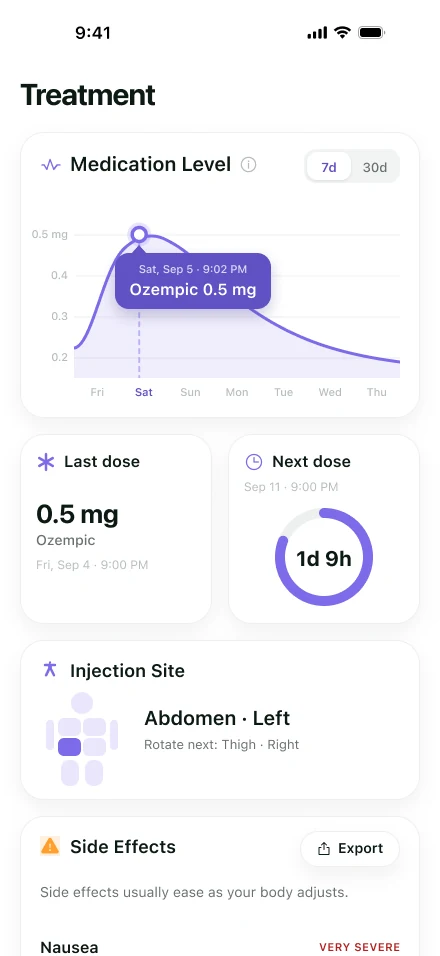
Medication level and next dose 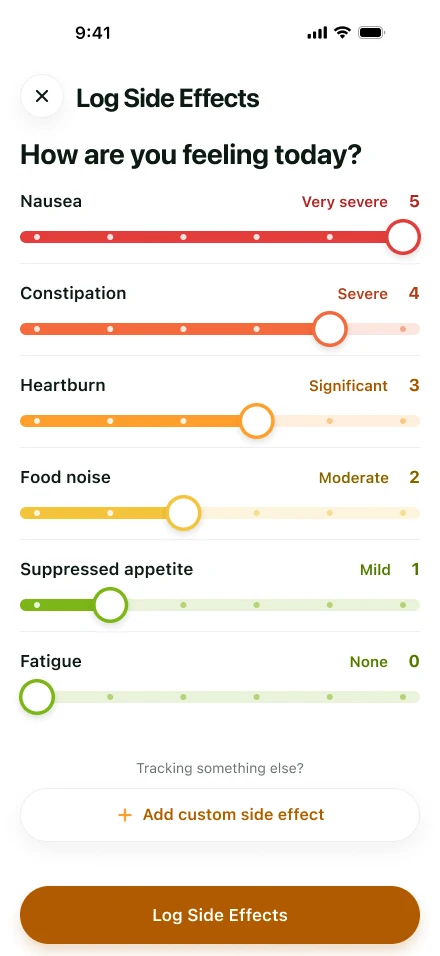
Side effects, by severity 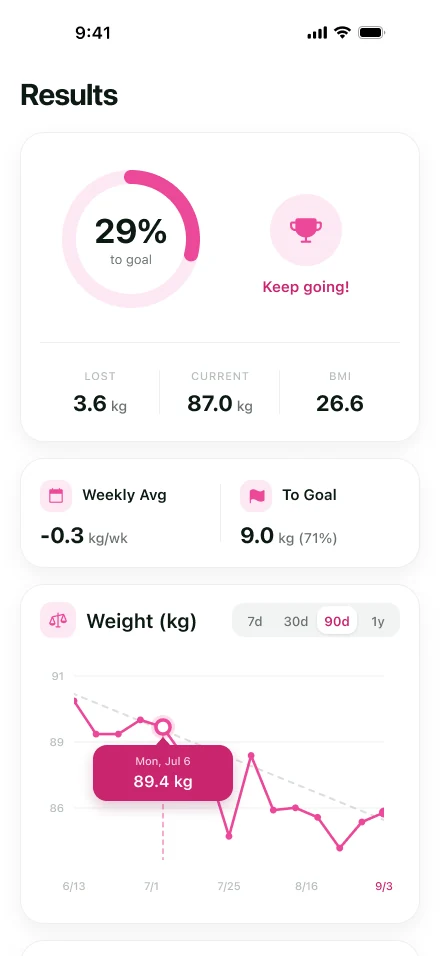
Progress toward your goal
Frequently asked questions
Is there a semaglutide-to-tirzepatide conversion chart?
Not an official one. The FDA labels don't include one, and the head-to-head trials didn't study switching. Charts online are not label guidance; your prescriber decides your dose.
Will the side effects be worse on tirzepatide?
There's no way to know in advance for one person. Stomach side effects are the most common on both, and they're most frequent while the dose is being increased, which is why prescribers often start low.
Does switching from Wegovy to Zepbound work the same way as Ozempic to Mounjaro?
The molecule change is the same, but the brands have different approvals and doses. We cover each in its own guide.
Will I lose ground on weight while I restart?
Some people notice appetite returning on lower doses. Tell your prescriber how you're doing; it's part of how they judge when to step up.
How do I keep my semaglutide history when I switch to tirzepatide?
In Holt, change your medication when your prescriber switches you. Your earlier semaglutide doses stay in your dose history, so the doctor-visit report shows both medicines.
Sources
- Zepbound (tirzepatide) injection — Prescribing Information — U.S. Food and Drug Administration
- Mounjaro (tirzepatide) injection — Prescribing Information — U.S. Food and Drug Administration
- Wegovy (semaglutide) injection and tablets — Prescribing Information — U.S. Food and Drug Administration
- Ozempic (semaglutide) injection — Prescribing Information — U.S. Food and Drug Administration
- Glucagon-Like Peptide-1 Receptor Agonist Switching and Treatment Persistence in Adults Without Diabetes (Xie et al.) — JAMA Network Open, 2026
- Switching Between Glucagon-Like Peptide-1 Receptor Agonists: Rationale and Practical Guidance (Almandoz et al.) — Clinical Diabetes, 2020
Keep reading
- Semaglutide vs TirzepatideSemaglutide vs tirzepatide — one hormone target or two, the brands behind each, and what the SURPASS-2 and SURMOUNT-5 head-to-head trials found.
- Tirzepatide TrackerHow to track tirzepatide, the dual GIP/GLP-1 medicine behind Mounjaro and Zepbound, and what to write down if your tirzepatide comes from a compounding pharmacy.
- Switching Zepbound to WegovyWhy people move from Zepbound to Wegovy, what both labels say about starting and stepping up, why your prescriber plans the switch, and what to log during it.
- Switching Ozempic to MounjaroMoving from Ozempic to Mounjaro for type 2 diabetes? What both labels say about starting doses, why your prescriber plans the change, and what to log through it.