
Semaglutide Side Effects — Pill vs. Shot, and Compounded Doses
Semaglutide side effects across Ozempic, Wegovy, Rybelsus and compounded vials — what's shared, what differs between pill and shot, and FDA's dosing-error warning.
Worth remembering
- All approved semaglutide products share the same core stomach side effects and the same boxed warning about thyroid C-cell tumors.
- Higher doses generally came with more stomach side effects in the labels' trials.
- The pill and the shot have a similar side-effect list; the Rybelsus label also lists decreased appetite among its most common effects.
- FDA says compounded semaglutide isn't FDA-approved, and it has reports of hospitalizations possibly linked to dosing errors.
- Severe nausea, severe vomiting and very low blood sugar are the label's listed signs of taking too much.
Maybe you started on a compounded vial from an online clinic, then moved to the Wegovy pill when your insurance changed. Or maybe you've taken Rybelsus for years and your doctor just mentioned Ozempic. Either way, you're asking the same question. If it's all semaglutide, should I expect the same side effects?
Mostly, yes. But "mostly" hides a few useful details, and one serious caveat about compounded products.
What do all semaglutide products have in common?
Ozempic, Wegovy (injection and tablets) and Rybelsus all contain semaglutide, and their FDA labels share a recognizable core:
- Common side effects centered on the stomach and gut, including nausea, diarrhea, vomiting, constipation and stomach pain.
- The same serious warnings. These include pancreatitis, gallbladder disease, low blood sugar when combined with insulin or a sulfonylurea, kidney problems from dehydration, severe stomach problems, serious allergic reactions, diabetic eye complications, and food or liquid entering the lungs during anesthesia.
- The same boxed warning about thyroid C-cell tumors seen in rodents. It's not known whether this applies to people.
Each label also uses a slow dose climb, and says the reason is to reduce stomach side effects.
Do side effects go up with the dose?
In the labels' own trials, generally yes. Nausea is the clearest example:
| Product and dose | Who was studied | Nausea (drug vs. placebo) |
|---|---|---|
| Rybelsus 7 mg / 14 mg daily | Type 2 diabetes | 11% / 20% vs. 6% |
| Ozempic 0.5 mg / 1 mg weekly | Type 2 diabetes | 15.8% / 20.3% vs. 6.1% |
| Wegovy 2.4 mg weekly | Obesity or overweight | 44% vs. 16% |
The labels themselves warn that rates from different trials can't be compared directly, because the people, doses and trial designs differ. Treat the table as a sense of direction, not a ranking.
Pill or shot — is one easier?
The labels don't say so. The Wegovy label says the types and frequency of common side effects with the 25 mg daily tablet were similar to those seen with the 2.4 mg weekly injection. The Rybelsus label lists nausea, stomach pain, diarrhea, decreased appetite, vomiting and constipation as its most common effects.
What does differ is the routine. Daily tablets come with strict morning rules: an empty stomach, up to 4 ounces of water, and a 30-minute wait before food, drinks or other oral medicines. Weekly shots don't. Neither label promises that one form is gentler.
What's different about compounded semaglutide?
FDA is direct about this. Compounded drugs are not FDA-approved, and FDA doesn't review them for safety, effectiveness or quality before they're sold. That means there's no compounded-semaglutide label with its own side-effect table.
What FDA has highlighted instead is a specific source of harm. It has received reports of adverse events, some needing hospitalization, that may be related to dosing errors with compounded injectable semaglutide. These include patients measuring the wrong dose, some health professionals miscalculating doses, and doses higher, more frequent or faster to climb than the approved labels allow. FDA also says salt forms such as semaglutide sodium and semaglutide acetate are different active ingredients from the approved drugs and shouldn't be used in compounding.
The Wegovy Medication Guide describes what too much semaglutide can look like: severe nausea, severe vomiting and severe low blood sugar.
Can I take two semaglutide products together?
The Wegovy label says using it with other semaglutide-containing products, or with any other GLP-1 medicine, is not recommended. If you're switching forms, the labels describe specific handovers. Your prescriber will tell you which one applies.
What we'd track
When you've been on more than one form of semaglutide, the most useful log is one that keeps them straight:
- Product, form and strength for every dose. "Rybelsus 7 mg tablet" and "compounded vial, 20 units" are very different entries.
- For vials, the mg dose and the units drawn. Both, exactly as your prescriber or pharmacy wrote them.
- Side effects by date. So a change in symptoms can be matched to a change in product or dose.
- Switch dates. The last dose of the old form and the first dose of the new one.
- Fluids and food on rough days. The labels connect vomiting and diarrhea to dehydration.
Holt logs shots and pills in one timeline, and lines side effects up against dose days. For vials, the units to draw come from your pharmacy label and your pharmacist's instructions; Holt records the dose exactly as you log it.
Keep every semaglutide dose in one timelineFor brand-specific detail, see Ozempic side effects and Wegovy side effects.
See it in Holt
Real screens from the app — the same places you’ll log, review and share.
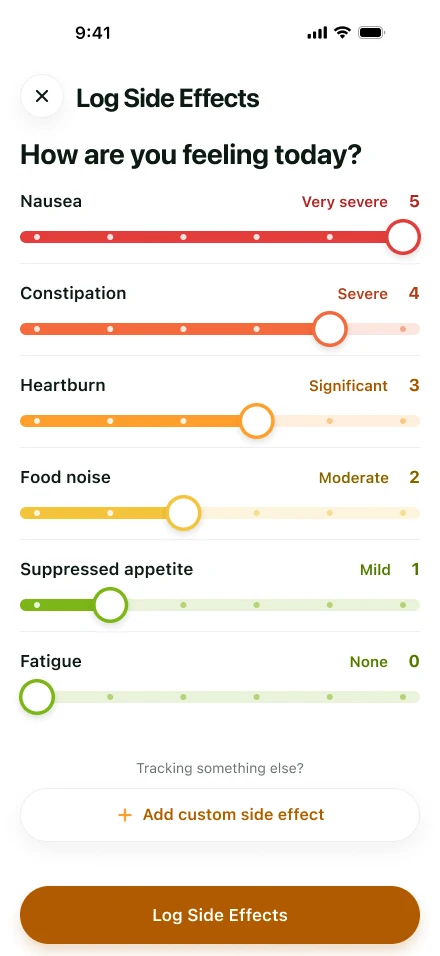
Side effects, by severity 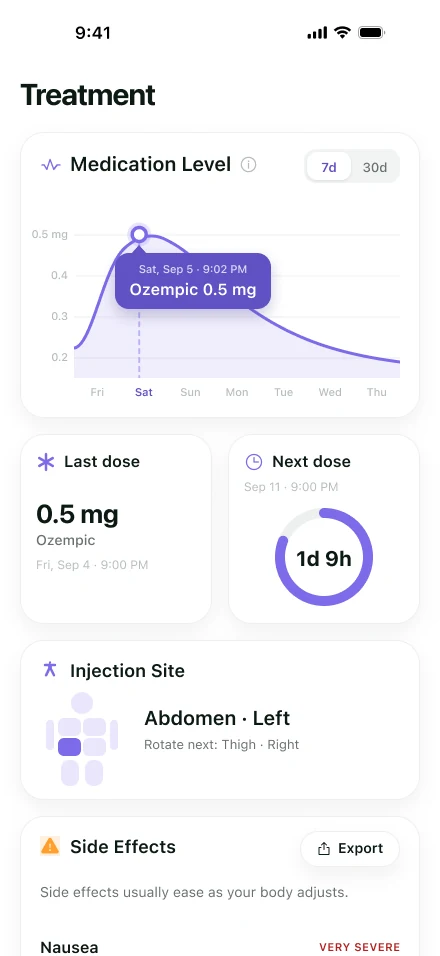
Medication level and next dose 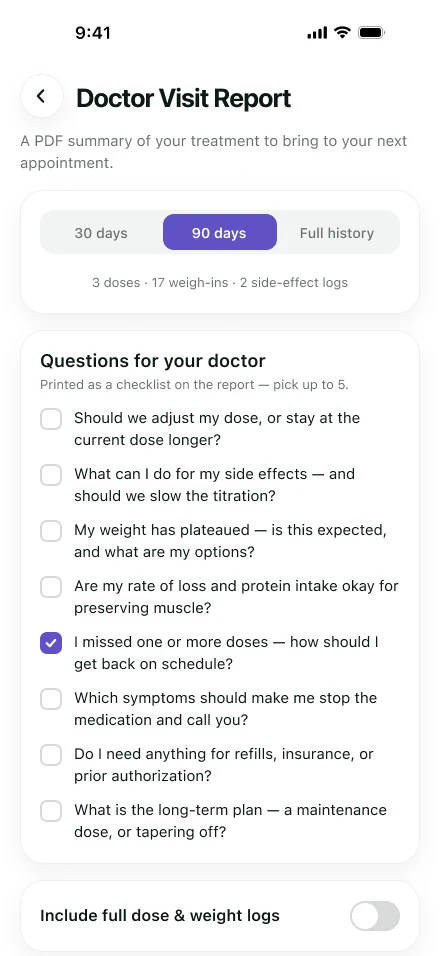
A report for your next appointment
Frequently asked questions
Is the Wegovy pill gentler on the stomach than the injection?
The Wegovy label says the types and frequency of common side effects with the 25 mg tablet were similar to those seen with the 2.4 mg injection. There's no label claim that one is gentler.
Does compounded semaglutide have more side effects?
FDA doesn't review compounded drugs for safety, effectiveness or quality, so there's no label to compare against. FDA has specifically flagged dosing errors with compounded injections, and says salt forms such as semaglutide sodium or acetate shouldn't be used in compounding.
What should I do if I think I took too much semaglutide?
The Wegovy Medication Guide says to call your healthcare provider or Poison Help at 1-800-222-1222, or go to the nearest emergency room right away. It lists severe nausea, severe vomiting and severe low blood sugar as possible effects.
Do semaglutide side effects depend on the brand?
The ingredient is the same, so the core list is shared. The rates differ between labels because the doses, the people studied and the trial designs differ, and the labels caution against comparing rates directly across trials.
Sources
- OZEMPIC (semaglutide) injection — Prescribing Information (revised 05/2026) — U.S. Food and Drug Administration
- WEGOVY (semaglutide) injection and tablets — Prescribing Information and Medication Guide (revised 06/2026) — U.S. Food and Drug Administration
- RYBELSUS (semaglutide) tablets — Prescribing Information (revised 10/2025) — U.S. Food and Drug Administration
- FDA's concerns with unapproved GLP-1 drugs used for weight loss — U.S. Food and Drug Administration
Keep reading
- Semaglutide TrackerHow to track semaglutide whether it comes as a weekly pen, a daily tablet or a compounded vial — what each one's rules ask you to log, and why units aren't mg.
- Ozempic Side EffectsWhat the Ozempic label says about side effects in type 2 diabetes — stomach symptoms by dose, low blood sugar with insulin or sulfonylureas, eyes, and when to call.
- Wegovy Side EffectsWegovy side effects at the 2.4 mg maintenance dose — stomach symptoms, fatigue, hair loss, skin sensations, gallbladder and heart rate — from the FDA label.
- Semaglutide vs TirzepatideSemaglutide vs tirzepatide — one hormone target or two, the brands behind each, and what the SURPASS-2 and SURMOUNT-5 head-to-head trials found.