
GLP-1 and Perimenopause — Cycles, Contraception and What to Track
Starting a GLP-1 while still having periods in your 40s? What the labels say about pregnancy and the pill, which bleeding to report, and how to tell symptoms apart.
Worth remembering
- Perimenopause usually starts in the mid-40s; ovulation still happens some months, so pregnancy is still possible.
- Tirzepatide labels advise a non-oral or added barrier method for 4 weeks after starting and after each dose step if you use the pill.
- Semaglutide labels say to stop at least 2 months before a planned pregnancy.
- GLP-1 labels don't list hot flashes or period changes, so new or unusual bleeding still needs checking.
- Fatigue and sleep changes can come from either the medication or perimenopause; a log helps sort them out.
You're 46. Your periods have gone from clockwork to something closer to weather — a short cycle, then a long one, then one that's heavier than you remember. You're sleeping worse, and your prescriber has just suggested a GLP-1. You leave with a pen and one half-formed question: does any of this interact?
Some of it does, in practical ways worth knowing before you start.
What is perimenopause, and why does it matter here?
Perimenopause is the stretch before menopause when hormone levels and cycles start to change. ACOG says it usually begins in the mid-40s and may run from about 45 to 55, though timing varies. Menopause itself is defined as a year without periods.
The detail that matters most for a GLP-1 is this: during perimenopause, ACOG notes, the ovaries may release an egg some months and not others. Irregular periods don't mean you can't get pregnant.
GLP-1 medications don't treat perimenopause. They're approved for uses like type 2 diabetes and weight management. We cover the later stage, including muscle and bone, in GLP-1 and menopause.
Does a GLP-1 affect birth control?
It depends on the medicine.
The tirzepatide labels (Mounjaro and Zepbound) say tirzepatide may make oral hormonal contraceptives less effective, because it slows stomach emptying. The effect is largest after the first dose and fades over time. They advise switching to a non-oral method, or adding a barrier method, for 4 weeks after starting and for 4 weeks after each dose increase. Contraceptives that aren't taken by mouth shouldn't be affected, the labels say.
The semaglutide labels (Ozempic, Wegovy) don't carry the same advice. Your pharmacist can tell you what applies to your combination.
What if pregnancy is still a possibility?
The Wegovy and Ozempic labels both say to stop at least 2 months before a planned pregnancy, because semaglutide stays in the body for a long time. The Zepbound label says weight loss offers no benefit during pregnancy and may harm the baby, and to stop Zepbound when a pregnancy is recognized.
If pregnancy is something you want, or something you'd want to avoid at all costs, say so at the first appointment. It shapes the plan.
How do I tell side effects from perimenopause symptoms?
This is where it gets tangled. Fatigue is listed on the Wegovy and Zepbound labels. Poor sleep, low energy and mood shifts are also common in perimenopause. Nausea and appetite changes are classic GLP-1 effects but can overlap with other things going on.
The labels don't list hot flashes or period changes as side effects. That doesn't settle whether GLP-1s ever affect cycles — we look at what's known in periods, hot flashes and fatigue on a GLP-1 — but it does mean bleeding changes shouldn't just be blamed on the pen.
What about hormone therapy and other pills?
All four labels say these medicines delay stomach emptying, which has the potential to affect how oral medicines are absorbed, and advise caution or monitoring when they're taken together. If you take hormone therapy, the pill, thyroid medicine or anything else by mouth, make sure your prescriber has the full list. Whether hormone therapy is right for you is its own conversation.
What we'd track
- Cycle dates and flow. In whichever period tracker you already use. Changes are normal in perimenopause, but your record helps your clinician spot what isn't.
- Dose days and dose steps. Especially if you're on tirzepatide and the pill — each step restarts the 4-week contraception window.
- Side effects with severity. Fatigue, nausea and appetite, so you can see whether they follow your shot days or your cycle.
- Sleep and hot flashes as custom notes. Not because the medicine causes them, but so you can see what doesn't line up with dosing.
- Weight trend. Weekly, alongside the rest.
Holt keeps doses, side-effect severity sliders and custom side effects on one timeline, lined up against dose days. Apple Health sync brings in steps, workouts and weigh-ins.
Track doses and symptoms together in HoltThe doctor-visit report puts it on one page. Bring your cycle notes next to it, and your clinician can see both stories at once.
See it in Holt
Real screens from the app — the same places you’ll log, review and share.
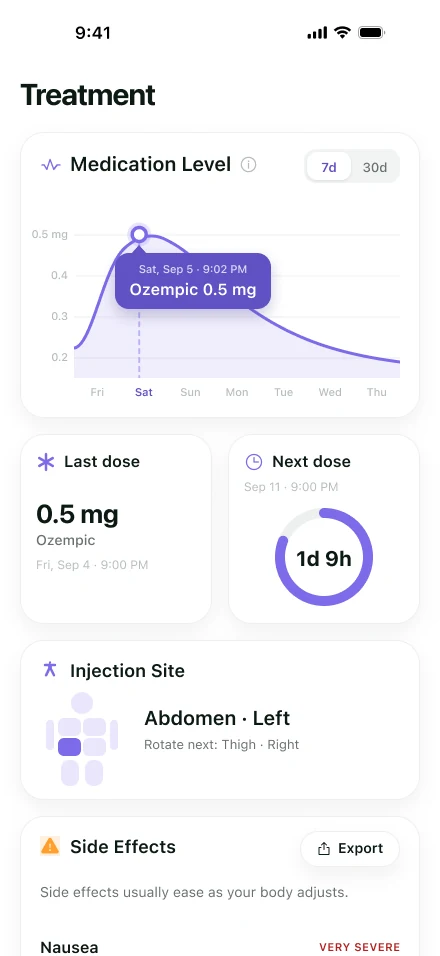
Medication level and next dose 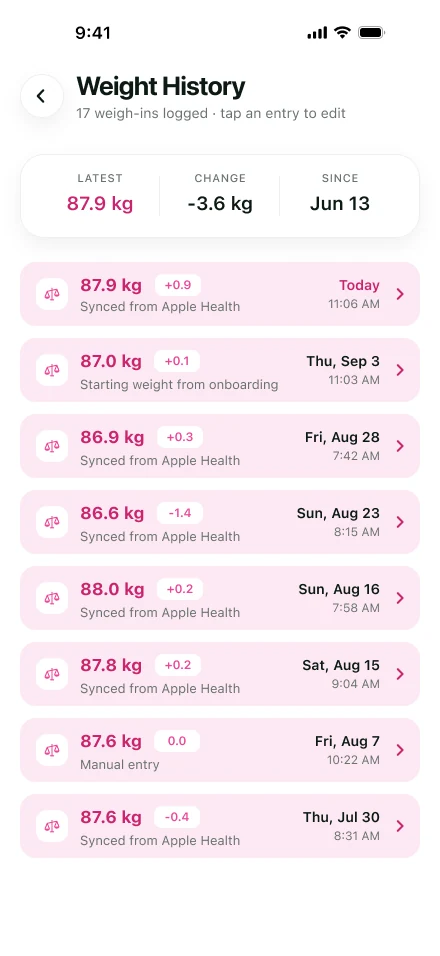
Weight history 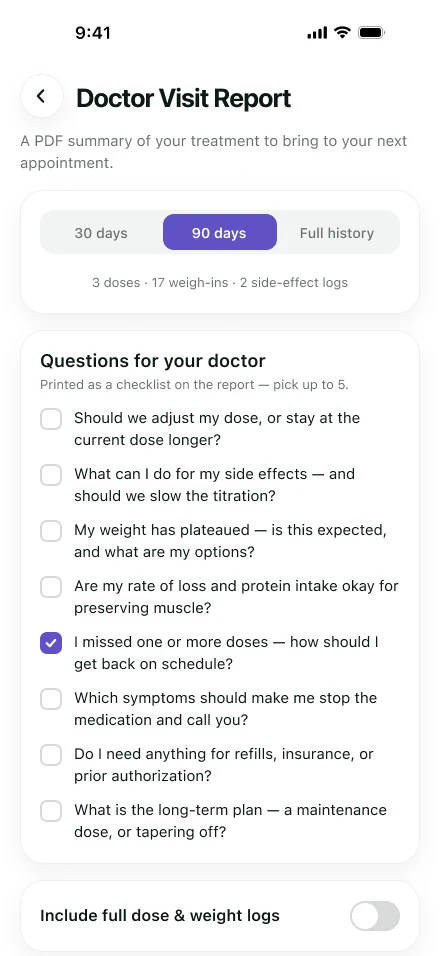
A report for your next appointment
Frequently asked questions
Do I still need contraception in perimenopause on a GLP-1?
Ask your clinician, but pregnancy can still happen while you're having periods, even irregular ones. ACOG notes the ovaries may still release an egg some months during perimenopause.
Will a GLP-1 make my periods irregular?
Periods often become irregular in perimenopause anyway. The labels don't list menstrual changes, and the evidence on GLP-1s and periods is limited, so report changes that worry you.
Does a GLP-1 help with perimenopause symptoms?
The labels don't list perimenopause or menopause symptoms among what these medications treat. Ask your clinician about options designed for those symptoms.
Is it safe to take hormone therapy with a GLP-1?
That's for your prescriber, who knows your history. If any of your hormone medicines are pills, mention it — the labels say GLP-1s slow stomach emptying and may affect how oral medicines are absorbed.
Sources
- Perimenopausal Bleeding and Bleeding After Menopause (FAQ) — American College of Obstetricians and Gynecologists
- Zepbound (tirzepatide) injection — Prescribing Information — U.S. Food and Drug Administration
- Mounjaro (tirzepatide) injection — Prescribing Information — U.S. Food and Drug Administration
- Wegovy (semaglutide) injection and tablets — Prescribing Information — U.S. Food and Drug Administration
- Ozempic (semaglutide) injection — Prescribing Information — U.S. Food and Drug Administration
Keep reading
- GLP-1 and MenopauseGLP-1s don't treat menopause, but many people start one around midlife. What the labels and research say about weight, muscle, bone and hormone therapy.
- Periods, Hot Flashes & FatigueCan a GLP-1 change your period, cause hot flashes or make you tired? What the labels list, what adverse-event reports suggest, what's unknown, and what to log.
- GLP-1 for PCOSGLP-1 medications aren't approved to treat PCOS. Here's what trials and guidelines say about weight and metabolic effects, what's still unknown, and what to track.
- GLP-1 Side EffectsThe most common GLP-1 side effects for semaglutide and tirzepatide, when they tend to appear, which warning signs need a doctor, and how tracking helps.