
GLP-1 Progress Tracker — Track More Than the Number on the Scale
A GLP-1 progress tracker that shows percent to goal, weekly averages and trends, plus strength, habits and how you feel — progress the daily weigh-in misses.
Worth remembering
- A weekly average smooths out the day-to-day swings that make single weigh-ins misleading.
- Percent to goal keeps a long treatment in proportion; the right goal is one you set with your clinician.
- Strength and function tests show changes the scale can't, according to the 2025 joint advisory.
- Habits and side effects are progress too — they're what your prescriber needs to judge each dose step.
Monday morning, the scale says you're up a little from Friday. Nothing has changed — same meals, same shot day — but the number has a way of coloring the whole week. That's the problem with treating one reading as the score. On a GLP-1, progress is a slow line over months, and most of it doesn't show up on any single morning.
Why isn't one weigh-in a good measure?
Because body weight moves for reasons that have nothing to do with fat. Fluid, salt, a late meal, constipation — a common GLP-1 side effect — and the time of day can all nudge it. A single reading mixes all of that together.
A weekly average does a lot of quiet work here. It doesn't change what happened, but it shows the direction without the noise. If you weigh yourself daily, the average is the number to watch. If daily weigh-ins make you anxious, weekly at the same time and in the same conditions works too.
What does "percent to goal" tell me?
It puts a long treatment in proportion. GLP-1 medications for weight management, such as Wegovy and Zepbound, are labeled for chronic weight management alongside a reduced-calorie diet and increased physical activity. Seeing "40% of the way" is often steadier than counting kilograms.
The goal itself matters more than the math. Set it with your prescriber, based on your health rather than a number from social media. Our free weight loss percentage calculator shows the calculation if you'd like to check it.
What progress doesn't show on the scale?
Quite a lot, and some of it matters more for your long-term health.
| Signal | Why it counts |
|---|---|
| Strength and function | The 2025 joint advisory suggests sit-to-stand, stair-climb and timed up-and-go tests to check muscle function |
| Protein, water and fiber habits | The advisory names these as priorities when appetite drops |
| Activity | It recommends strength training at least three times a week and at least 150 minutes of moderate aerobic activity |
| Side effects settling | Fewer rough days after each dose step is real progress, and useful for your prescriber |
| How you feel | Energy, sleep, how clothes fit, how you feel about food |
How should I read a plateau?
Calmly, and over weeks rather than days. A flat week or two is common and often reverses on its own. A trend that's been flat for longer, especially if your eating or side effects have changed, is worth raising at your next appointment.
What we wouldn't do is change your dose, skip a shot or cut food sharply in response. Dosing decisions belong with your prescriber, and eating much less can make it harder to get enough protein.
Which chart range should I look at?
Different ranges answer different questions:
- 7 days: did this week go roughly as usual?
- 30 days: is the direction holding after the last dose step?
- 90 days: the honest view of how treatment is going
- 1 year: the long-term story, plateaus and all
Looking only at the shortest range tends to make good progress feel like no progress.
What we'd track
- Weight, as a weekly average. The direction matters more than any single reading.
- Percent to your goal. A calmer way to see the whole picture.
- A monthly strength check. Chair stands in 30 seconds is enough.
- Daily habits. Protein, water, fiber and activity against your goals.
- Side effects and how you feel. A note on energy and a quick rating on harder days.
Holt's Results screen shows your percent to goal, weekly average and a weight chart across 7 days, 30 days, 90 days or a year, with your full weight history below. Weigh-ins can sync from Apple Health, so a smart scale fills it in for you. The home Summary keeps daily habits in view, and side effects line up against your dose days. Otto marks the milestones along the way.
See your trend in HoltBefore an appointment, the doctor-visit report turns 30 days, 90 days or your full history into a PDF — weight trend, doses and side effects together — with suggested questions to ask.
See it in Holt
Real screens from the app — the same places you’ll log, review and share.
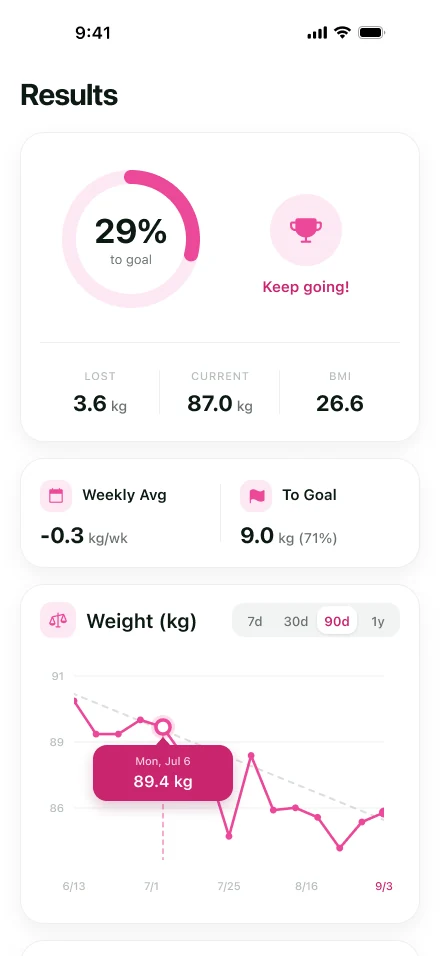
Progress toward your goal 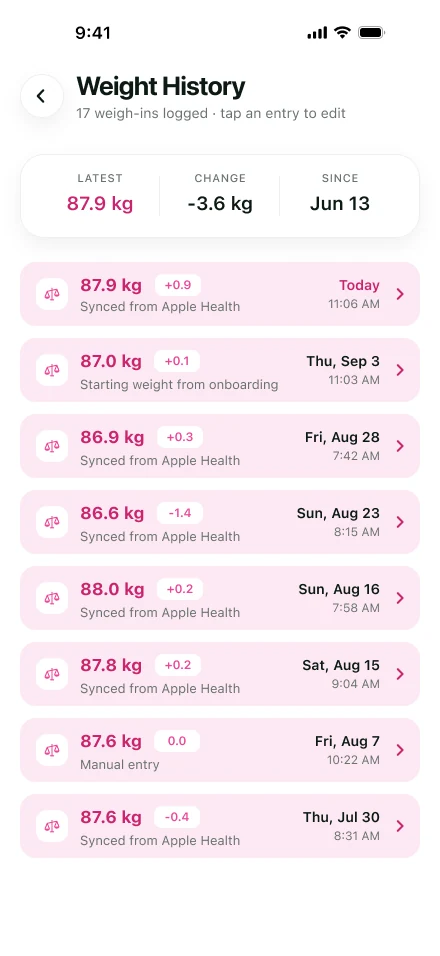
Weight history 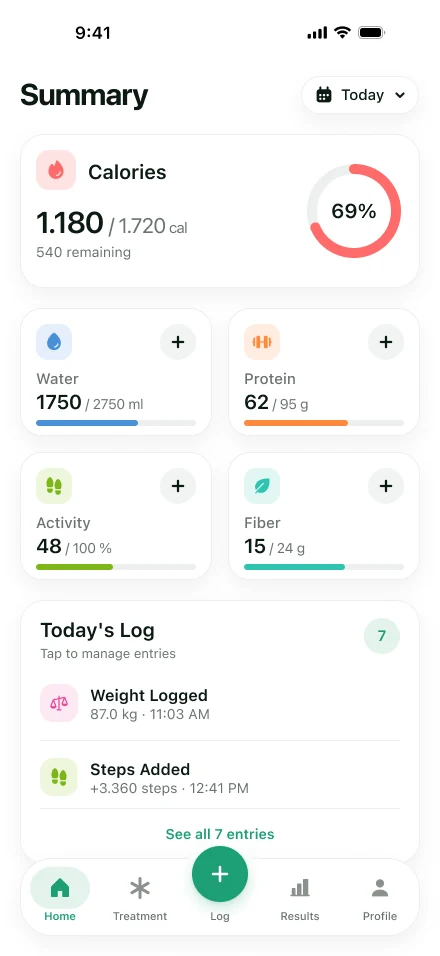
Your day at a glance
Frequently asked questions
How often should I weigh myself on a GLP-1?
There's no single rule. Some people prefer daily weigh-ins averaged over the week; others prefer once a week at the same time. Pick whichever keeps you calm and consistent, and look at the trend.
How fast should I lose weight on a GLP-1?
It varies a lot between people, medications and doses, and we won't put a number on it. Your prescriber can tell you what's expected for your treatment and when to review it.
Why has my weight stopped going down?
Plateaus happen for many reasons, from water shifts to changes in eating or activity. If your trend has been flat for several weeks, it's worth raising with your prescriber rather than changing anything on your own.
What counts as progress if the scale isn't moving?
Strength, energy, how clothes fit, steadier eating habits and fewer side effects all count. The joint advisory specifically suggests tracking muscle strength and function during GLP-1 therapy.
Sources
- Nutritional priorities to support GLP-1 therapy for obesity: a joint Advisory from the American College of Lifestyle Medicine, the American Society for Nutrition, the Obesity Medicine Association, and The Obesity Society — Obesity (Silver Spring), 2025
- WEGOVY (semaglutide) prescribing information and Medication Guide — DailyMed, U.S. National Library of Medicine
- ZEPBOUND (tirzepatide) prescribing information — DailyMed, U.S. National Library of Medicine
Keep reading
- Weight Loss Tracker AppA weight tracker app for people on a GLP-1. See your trend over 7 days, 30 days, 90 days and a year, your % to goal and weekly average — not just today's number.
- GLP-1 Muscle LossHow much of the weight lost on a GLP-1 is lean mass, what trial body scans showed, who should pay closer attention, and the signs worth tracking at home.
- GLP-1 Tracker AppHolt is a GLP-1 tracker app for iPhone. Log shots and pills, meals, protein, side effects, weight and water, and see how your dose day shapes your week.
- Moving Up a DoseWhy GLP-1 doses start low and step up every few weeks, what the Wegovy and Zepbound labels say about escalation, and what to note in the days after each step.