
GLP-1 Side Effects — What's Common, What's Serious, What to Track
The most common GLP-1 side effects for semaglutide and tirzepatide, when they tend to appear, which warning signs need a doctor, and how tracking helps.
Worth remembering
- Gastrointestinal side effects are the most common, and often ease as your body adjusts to a dose.
- They tend to cluster around starting the medication and each dose increase.
- The labels list serious but less common risks, including pancreatitis, gallbladder problems and kidney problems from dehydration.
- Logging symptoms next to your doses makes patterns visible and conversations with your prescriber more productive.
It's the second evening after your first dose step. Dinner looked good an hour ago; now half a plate feels like a mistake, and there's a low, seasick hum that wasn't there last week. Is this normal? Is it the dose? Will it pass?
For most people on a GLP-1, the honest answer is: probably, very likely, and usually. Here's how to tell the difference between "adjusting" and "call someone".
Which side effects are most common?
Across the prescribing information for semaglutide (Ozempic, Wegovy) and tirzepatide (Mounjaro, Zepbound), the most frequently reported side effects are gastrointestinal:
- Nausea, especially early on and after dose increases
- Diarrhea and vomiting
- Constipation
- Abdominal pain, indigestion and bloating
- Decreased appetite — expected, but worth watching so you still eat enough
- Fatigue
These medications slow how quickly your stomach empties and quiet appetite signals. That's how they work, and it's also why your gut notices first.
Why do they cluster around dose changes?
Doses go up gradually — usually every four weeks — so your body can adjust. Side effects tend to peak in the first days after starting or stepping up, then ease. That rhythm is the most useful thing you can learn about your own body, because it tells you whether a symptom is familiar adjustment or something new.
What helps with the everyday ones?
General approaches from clinical nutrition guidance — check with your own care team:
- Eat smaller amounts and stop at the first sign of fullness; it arrives sooner now.
- Go gently with very fatty, fried or rich food, which often makes nausea worse.
- Keep sipping fluids, especially with vomiting or diarrhea.
- Put protein and fiber first in the smaller portions you do eat, adding fiber gradually if you're constipated.
Which side effects need a doctor?
These are less common, but the labels list them and they need prompt attention:
- Pancreatitis — severe, persistent abdominal pain that may spread to your back, with or without vomiting
- Gallbladder problems — pain in the upper right abdomen, fever, yellowing of the skin or eyes
- Kidney problems — dehydration from vomiting or diarrhea can affect kidney function
- Low blood sugar — mainly when combined with insulin or a sulfonylurea
- Serious allergic reactions — swelling of the face, lips or throat; trouble breathing
- Thyroid C-cell tumors — the labels carry a boxed warning; report a lump in your neck, trouble swallowing or a hoarse voice
What we'd track
A short record you keep beats a perfect one you abandon. For each symptom:
- What it was, and how strong — mild, moderate or severe is enough.
- When it started relative to your last dose — hours or days.
- How long it lasted.
- What you'd eaten and drunk that day.
- What helped, if anything did.
Holt lines every entry up against your dose days and dose steps, so "it got worse after I went up" is something you can see, not something you have to remember.
Log side effects against your doses in HoltSee it in Holt
Real screens from the app — the same places you’ll log, review and share.
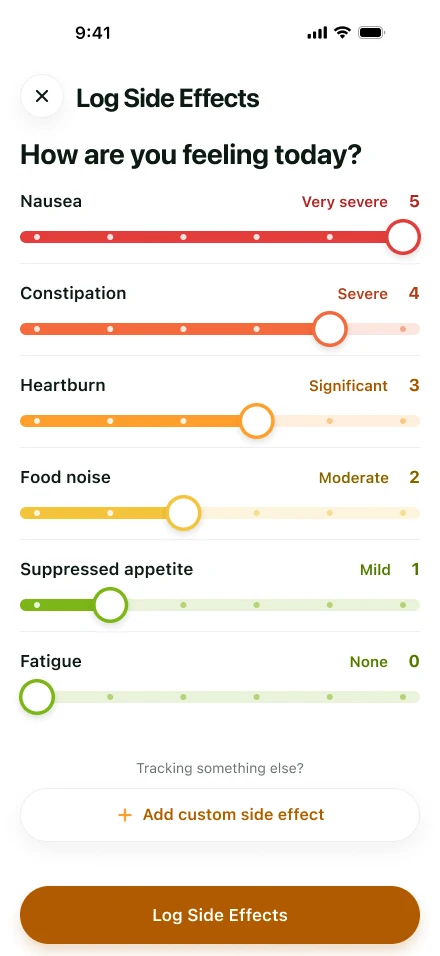
Side effects, by severity 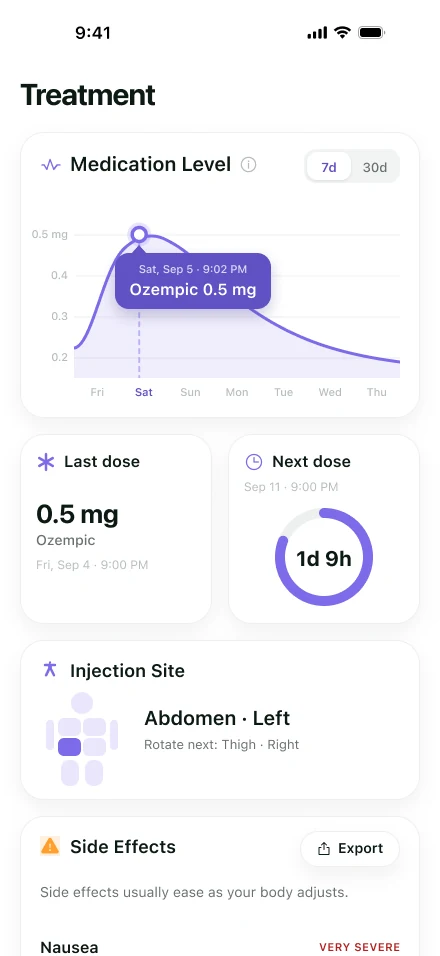
Medication level and next dose 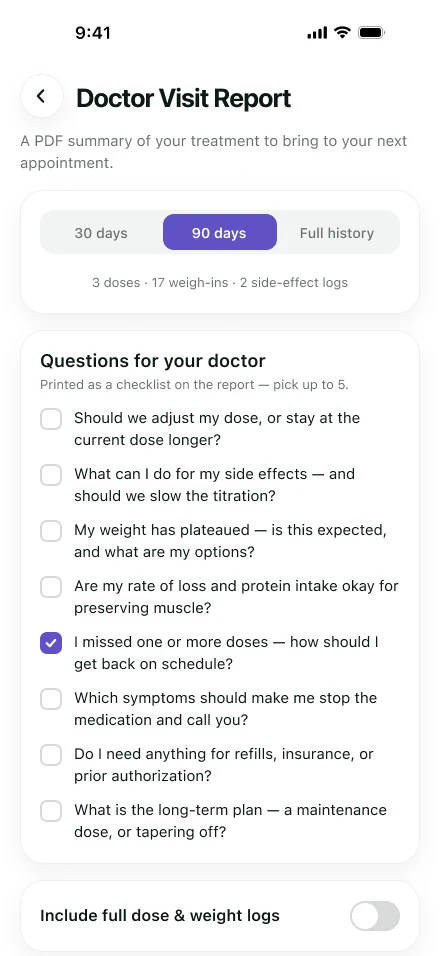
A report for your next appointment
Frequently asked questions
How long do GLP-1 side effects last?
For many people, gastrointestinal side effects are most noticeable in the days after starting or increasing a dose and ease over the following weeks. Everyone is different — if side effects are severe or don't settle, talk to your prescriber.
Are side effects worse at higher doses?
In clinical trials reported in the prescribing information, gastrointestinal side effects were generally more common with dose escalation. That's one reason doses are increased gradually.
Should I stop my GLP-1 if I feel sick?
Don't stop or change your medication without speaking to your prescriber. They can advise whether to stay at your current dose longer, adjust it, or check for something else.
What should I write down about side effects?
The symptom, how severe it was, when it started relative to your last dose, how long it lasted, and anything that helped. That's exactly what makes a pattern visible.
Sources
- OZEMPIC (semaglutide) injection — Full Prescribing Information — U.S. Food and Drug Administration
- WEGOVY (semaglutide) — Full Prescribing Information — U.S. Food and Drug Administration
- ZEPBOUND (tirzepatide) — Full Prescribing Information — U.S. Food and Drug Administration
- Nutritional priorities to support GLP-1 therapy for obesity (joint advisory) — ACLM, ASN, OMA and The Obesity Society, 2025
Keep reading
- Ozempic Side EffectsWhat the Ozempic label says about side effects in type 2 diabetes — stomach symptoms by dose, low blood sugar with insulin or sulfonylureas, eyes, and when to call.
- Wegovy Side EffectsWegovy side effects at the 2.4 mg maintenance dose — stomach symptoms, fatigue, hair loss, skin sensations, gallbladder and heart rate — from the FDA label.
- Mounjaro Side EffectsMounjaro side effects for people with type 2 diabetes — how common nausea and diarrhea were in trials, low blood sugar with insulin, eye checks and when to get help.
- Zepbound Side EffectsZepbound side effects from the weight-management and sleep apnea trials — how often nausea, hair loss and fatigue came up, what eases with time and when to get help.