
Lifestyle
Alcohol on Ozempic or Zepbound — What the Labels and Research Say
Can you drink on Ozempic, Wegovy or Zepbound? What the labels do and don't say, what early research shows about GLP-1s and alcohol cravings, and what to note.
There's a wedding on Saturday, and your shot day is Thursday. Someone will hand you a glass of champagne at some point, and you're wondering whether that's a problem, or whether you'll even want it. Plenty of people on a GLP-1 say their relationship with a drink has changed. It's worth knowing what's actually written down before the evening comes.
Does the label say you can't drink on Ozempic or Zepbound?
No. We read the current US prescribing information for Ozempic, Wegovy and Zepbound, and none of them gives advice about drinking alcohol. The only alcohol mentioned is the alcohol swab in the injection instructions and, for Zepbound, benzyl alcohol listed as an ingredient in the multi-dose pens and vials.
That silence isn't permission, though. The labels describe how the medication behaves. Whether alcohol is a good idea for you depends on your health, how much you drink and what else you take. That's a question for your prescriber, and it's a reasonable one to bring up at any appointment.
So why do people say to be careful?
Because a few of the labels' warnings overlap with known effects of alcohol. Neither of the points below comes from the label alone, so we've kept apart what the label says and what other sources add.
| What the label warns about | What alcohol is known to do |
|---|---|
| Low blood sugar when a GLP-1 is used with insulin or a sulfonylurea | The NIDDK says alcohol makes blood sugar harder to keep steady and can hide the first symptoms of a low |
| Acute pancreatitis has been seen with GLP-1 medications | The NIDDK lists heavy alcohol use as a cause of both acute and chronic pancreatitis |
| Kidney problems from dehydration, mostly in people losing fluids through vomiting or diarrhea | The NIAAA says alcohol increases urination and fluid loss |
| Stomach side effects such as nausea are the most common reactions | The NIAAA says alcohol directly irritates the stomach lining |
None of this means a drink will cause any of these problems. It means the risks point the same way, which is why many prescribers ask about alcohol. If you take insulin or a sulfonylurea, or you've had pancreatitis before, that conversation matters more.
Do GLP-1s really reduce alcohol cravings?
Maybe. The research is early, and the honest answer is that nobody knows yet how strong or reliable the effect is.
- A small trial with semaglutide. In a 2025 JAMA Psychiatry trial, 48 adults with alcohol use disorder took low-dose semaglutide or placebo for nine weeks. Those on semaglutide drank less in a lab drinking session, had fewer drinks on the days they drank and reported less craving. It did not change how many days they drank. The authors call it initial evidence that justifies larger trials.
- A mixed result with an older GLP-1. A 2022 trial of exenatide in 127 people with alcohol use disorder found no overall reduction in heavy drinking days. An exploratory look at participants with a BMI over 30 did show a reduction, but the authors call that preliminary.
- Health-record studies. A 2024 analysis of records from more than 83,000 people with obesity found semaglutide was linked with a lower rate of new and recurring alcohol use disorder diagnoses than other weight-loss medicines. Studies like this show an association. They can't prove the medication caused it.
No GLP-1 is approved to treat alcohol use disorder. If you're worried about your drinking, tell your prescriber. There are treatments that are approved and proven.
What do people notice when they drink on a GLP-1?
People describe a range of things: wanting a drink less, feeling full after half a glass, or feeling sicker the next day than they used to. Some notice nothing different. The labels don't describe any of this, so treat other people's stories as stories.
Your own pattern is more useful. If you notice that a drink two days after your shot feels very different from one five days after, that's worth writing down. So is a night when your stomach was fine with food but not with wine. Patterns like these are easier to talk through with your prescriber than a vague "drinking feels weird now."
It's also easy to forget that drinks count toward the day. They add calories with no protein, and on a day when your appetite is already small, they can take the place of a meal. Our guide to food noise on a GLP-1 covers the wider question of how cravings change.
What we'd track
- Drinks, plainly. What and roughly how much, on the day you had them. Memory rounds down.
- Side effects the next day. Nausea, heartburn or fatigue, and how bad they were, so you can compare with days you didn't drink.
- Where it fell in your dose week. A drink the day after your shot may feel very different from one six days later.
- Water. Especially on nights out and the morning after, since alcohol and stomach side effects both cost you fluids.
- Cravings, if they change. A short note like "didn't finish the glass" helps you notice a shift over months.
Holt keeps your doses, side effects and food log on one timeline. You can add a drink as a custom food, log side effects with severity sliders and see them lined up against your dose days, and log water in a tap from the home-screen widget.
See how side effects line up with your dose days in HoltIf alcohol is on your list of questions for the next appointment, the Doctor Visit Report puts your doses, side effects and trends in one PDF, along with suggested questions to ask. A broader view of what to track sits on our GLP-1 progress tracker page.
See it in Holt
Real screens from the app — the same places you’ll log, review and share.
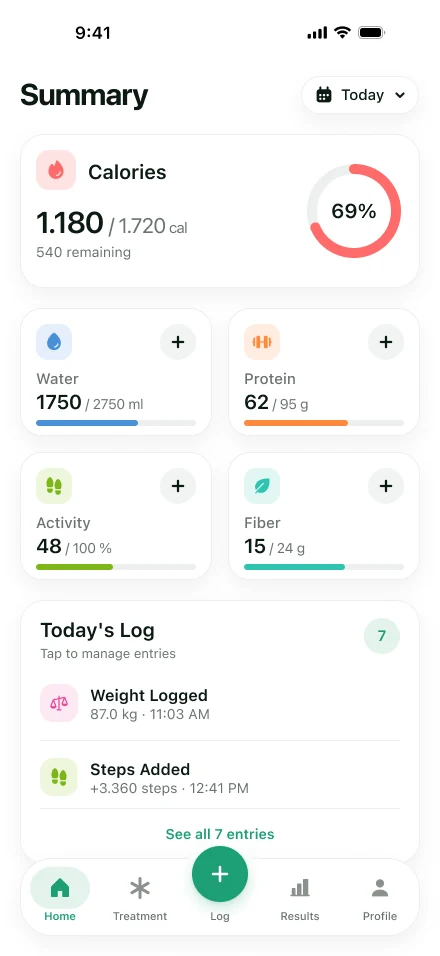
Your day at a glance 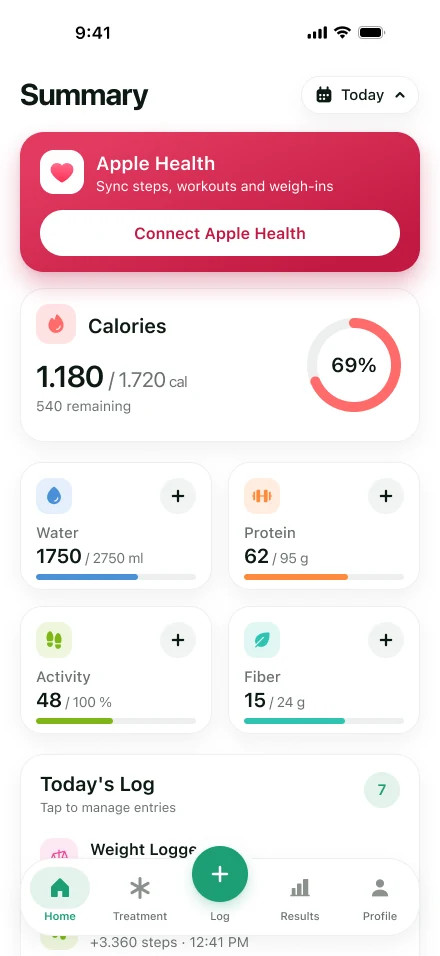
Syncs with Apple Health 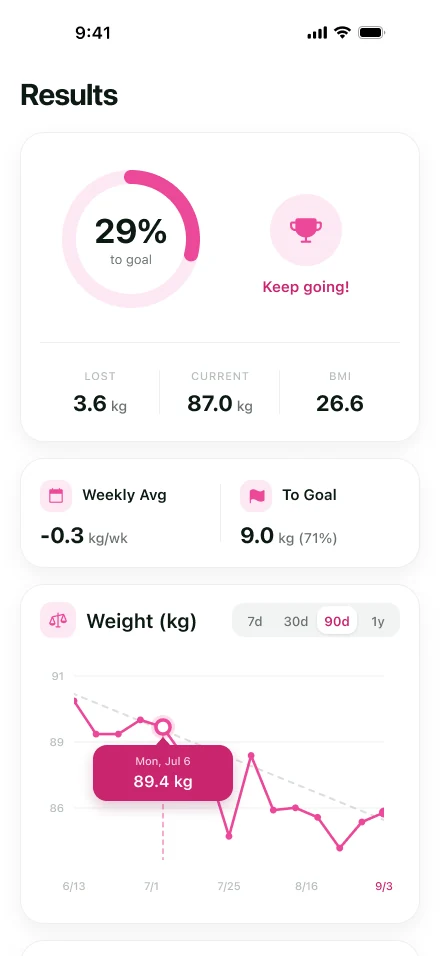
Progress toward your goal
Frequently asked questions
Do the Ozempic, Wegovy or Zepbound labels say not to drink alcohol?
The current US prescribing information for all three doesn't give any advice about drinking alcohol. That isn't the same as saying it's fine for you, so ask your prescriber how alcohol fits with your health and your other medicines.
Can drinking on a GLP-1 cause low blood sugar?
The labels warn that GLP-1s taken with insulin or a sulfonylurea can raise the risk of low blood sugar. Separately, the NIDDK says alcohol makes blood sugar harder to keep steady and can mask the early signs of a low. If you take diabetes medicines, ask your prescriber about alcohol specifically.
Do GLP-1s reduce alcohol cravings?
Possibly, but it isn't proven. A small 2025 trial of semaglutide in 48 adults with alcohol use disorder found less craving and fewer drinks per drinking day, and larger health-record studies point the same way. No GLP-1 is approved to treat alcohol use disorder.
Why do some people feel worse after drinking on a GLP-1?
The labels don't explain it. Alcohol irritates the stomach and makes you lose fluids, and GLP-1s already commonly cause nausea and other stomach side effects, so the two can stack up. Write down what you notice and tell your prescriber.
Sources
- OZEMPIC (semaglutide) prescribing information and Medication Guide — DailyMed, U.S. National Library of Medicine
- WEGOVY (semaglutide) prescribing information and Medication Guide — DailyMed, U.S. National Library of Medicine
- ZEPBOUND (tirzepatide) prescribing information and Medication Guide — DailyMed, U.S. National Library of Medicine
- Once-Weekly Semaglutide in Adults With Alcohol Use Disorder: A Randomized Clinical Trial — JAMA Psychiatry, 2025
- Exenatide once weekly for alcohol use disorder investigated in a randomized, placebo-controlled clinical trial — JCI Insight, 2022
- Associations of semaglutide with incidence and recurrence of alcohol use disorder in real-world population — Nature Communications, 2024
- Symptoms & Causes of Pancreatitis — National Institute of Diabetes and Digestive and Kidney Diseases
- Low Blood Glucose (Hypoglycemia) — National Institute of Diabetes and Digestive and Kidney Diseases
- Hangovers — National Institute on Alcohol Abuse and Alcoholism
Keep reading
 Lifestyle
Traveling With GLP-1 Pens — Storage, Flying and Shot Day
Flying with Ozempic, Wegovy, Mounjaro or Zepbound? What each label says about storage out of the fridge, what TSA allows, and how shot day works across time zones.
- Lifestyle
Staying Hydrated on a GLP-1 — Why It Matters and How to Keep Up
GLP-1 labels warn that vomiting and diarrhea can lead to dehydration and kidney problems. Why fluids slip when appetite drops, and simple ways to keep up.
- Lifestyle
Strength Training on a GLP-1 — Protecting Muscle as You Lose Weight
Weight lost on a GLP-1 includes some lean mass. What the research shows, what a 2025 joint advisory recommends for strength training, and how to start.