
Lifestyle
Staying Hydrated on a GLP-1 — Why It Matters and How to Keep Up
GLP-1 labels warn that vomiting and diarrhea can lead to dehydration and kidney problems. Why fluids slip when appetite drops, and simple ways to keep up.
You get to 4 p.m. and realize the glass of water you poured at breakfast is still sitting on your desk, barely touched. You haven't felt thirsty. You haven't felt hungry either. On a GLP-1, that quiet day can matter more than it looks.
Why do the labels care about fluids?
Because stomach side effects can take fluid with them. The Wegovy and Zepbound Medication Guides both say diarrhea, nausea and vomiting may cause a loss of fluids, which can lead to kidney problems. The Wegovy guide puts it simply: it's important to drink fluids to help reduce your chance of dehydration.
The prescribing information goes further for clinicians. Both labels describe reports of acute kidney injury in people whose stomach side effects led to dehydration, and ask prescribers to monitor kidney function in people reporting those symptoms. The Wegovy label asks prescribers to tell patients to take precautions against fluid loss and to report persistent nausea, vomiting or diarrhea promptly.
The 2025 joint advisory from four US obesity and nutrition societies echoes this: efforts should be made to prevent dehydration, especially in people at risk of kidney problems.
Why is it so easy to drink less?
A few reasons tend to add up:
- You're eating less. Some of your everyday fluid comes from food, like soup, fruit and yogurt. Smaller meals mean less of it.
- You feel full. When your stomach feels full, a big glass of water is the last thing you want.
- Thirst cues can be quiet. Without hunger nudging you toward a meal and a drink, long stretches pass unnoticed.
- Side effects use it up. Vomiting and diarrhea lose fluid faster than you might replace it.
None of this is a personal failing. It's a habit that the medication quietly disrupts, and it usually needs a deliberate replacement.
What actually helps?
Small, steady, and visible beats occasional and heroic.
| Habit | Why it works |
|---|---|
| A glass with each small meal | Ties drinking to something you already do |
| A bottle you can see | Out of sight really is out of mind |
| Sipping rather than gulping | Easier when you feel full |
| Fluids from food | Soup, yogurt, fruit and smoothies all count |
| Extra on side-effect days | Replaces what vomiting or diarrhea takes |
The advisory also pairs fluids with fiber as a first step against constipation, another common GLP-1 side effect. Drinking enough tends to make several things easier at once.
Plain water is fine, but you don't need to stick to it. Tea, milk, broth and flavored water all contribute. The advisory suggests minimizing alcohol, which can make nausea and reflux worse.
How do I know if I'm not drinking enough?
The GLP-1 labels don't give a checklist of dehydration signs, and we won't make one up. If you're unsure whether something you're feeling is dehydration, your pharmacist or prescriber can help you work it out.
What the labels are clear about is the situation to watch: ongoing vomiting, diarrhea or nausea, especially if you're struggling to keep fluids down. That's when to contact your provider rather than wait.
Does hydration matter more after a dose step?
Possibly. Stomach side effects are the reason doses start low and step up gradually, so the days after an increase are when many people notice them most. That's a sensible time to be more deliberate about fluids — and to note how you're doing so you can tell your prescriber.
What we'd track
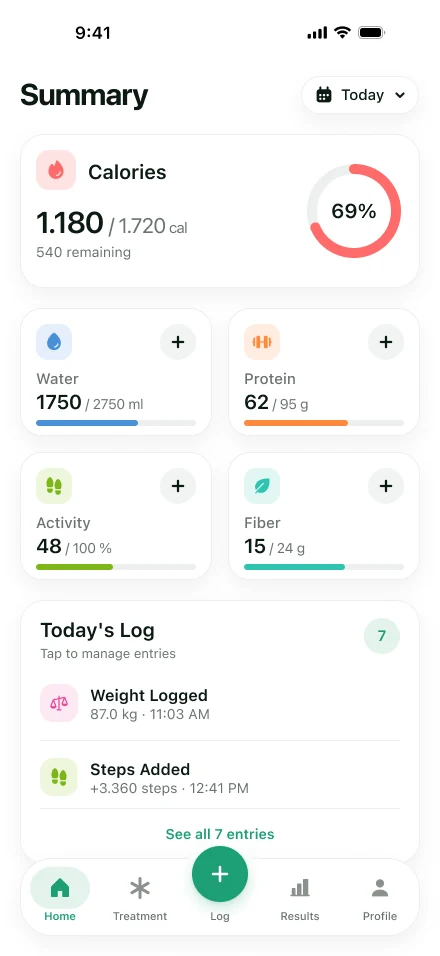
- Glasses of water through the day. A quick tally shows whether a "fine" day was actually a very dry one.
- Vomiting or diarrhea episodes. These are the times fluid loss matters most, and the details help your prescriber.
- Dose days and dose steps. If dry, queasy days cluster after increases, that pattern is worth sharing.
- How you feel. Headache, lightheadedness or tiredness, logged alongside water, can show a link over time.
Holt's home-screen widget logs a glass of water in one tap, without opening the app. Water sits on the same timeline as your shots and side effects, and it can sync with Apple Health.
Add the Holt water widget to your home screenIt's a small habit, but it's one of the few side-effect risks you can do something about every day.
See it in Holt
Real screens from the app — the same places you’ll log, review and share.
Your day at a glance 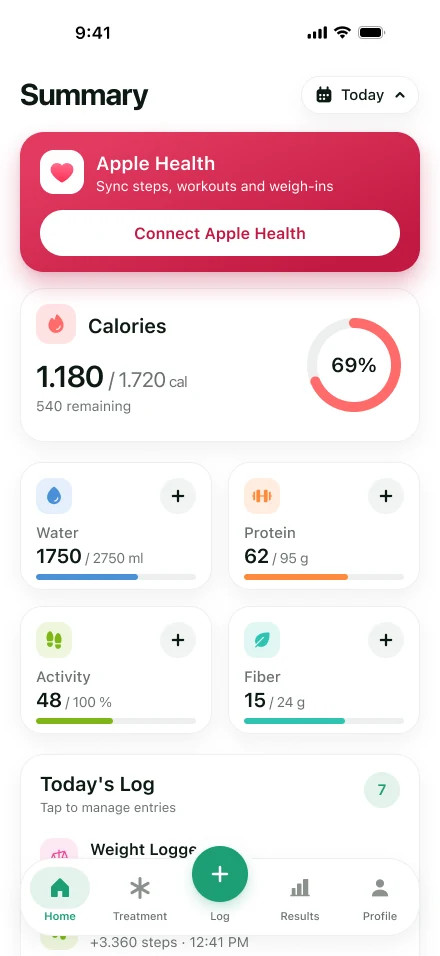
Syncs with Apple Health 
Progress toward your goal
Frequently asked questions
How much water should I drink on a GLP-1?
The labels and the 2025 joint nutrition advisory don't set a specific amount; they ask you to drink fluids to avoid dehydration. Your needs depend on your size, activity, climate and health, so ask your prescriber if you want a number.
Why does dehydration matter on a GLP-1?
The Wegovy and Zepbound Medication Guides say diarrhea, nausea and vomiting can cause a loss of fluids that may lead to kidney problems. Drinking fluids helps reduce that risk.
Do other drinks count, or only water?
Most fluids contribute, and foods with high water content such as soup and fruit help too. The advisory suggests minimizing alcohol, which can make nausea and reflux worse.
When should I call my doctor about dehydration?
If you can't keep fluids down, or vomiting, diarrhea or nausea is severe or won't go away, contact your healthcare provider promptly. The labels ask prescribers to monitor kidney function in people with these symptoms.
Sources
- WEGOVY (semaglutide) prescribing information and Medication Guide — DailyMed, U.S. National Library of Medicine
- ZEPBOUND (tirzepatide) prescribing information and Medication Guide — DailyMed, U.S. National Library of Medicine
- Nutritional priorities to support GLP-1 therapy for obesity: a joint Advisory from the American College of Lifestyle Medicine, the American Society for Nutrition, the Obesity Medicine Association, and The Obesity Society — Obesity (Silver Spring), 2025
Keep reading
 Lifestyle
Strength Training on a GLP-1 — Protecting Muscle as You Lose Weight
Weight lost on a GLP-1 includes some lean mass. What the research shows, what a 2025 joint advisory recommends for strength training, and how to start.
 Nutrition
Eating Enough Protein on a GLP-1 When You're Not Hungry
GLP-1 medications quiet your appetite, which makes protein easy to miss. Why protein matters during GLP-1 therapy and simple ways to fit it in.
 Side effects
GLP-1 Constipation — Why It Happens and What Helps
Constipation is one of the most common GLP-1 side effects. What the labels report, the gentle fixes nutrition guidance suggests, and when to call your doctor.