
Side effects
GLP-1 Constipation — Why It Happens and What Helps
Constipation is one of the most common GLP-1 side effects. What the labels report, the gentle fixes nutrition guidance suggests, and when to call your doctor.
It's day four. You've been eating less, drinking less without really noticing, and now there's that heavy, stuck feeling that makes it hard to want lunch at all. Nobody mentions this one in the success stories, but it's one of the most common things people on a GLP-1 deal with — and usually one of the most fixable.
How common is it, really?
Common enough that it's on the label's short list. In the main Wegovy trials, constipation was reported by 24% of people on the 2.4 mg dose, against 11% on placebo. The Zepbound label reports 11–17% across its doses, against 5% on placebo.
| Medication (label) | Constipation on medication | On placebo |
|---|---|---|
| Wegovy 2.4 mg injection | 24% | 11% |
| Zepbound, across doses | 11–17% | 5% |
These aren't head-to-head figures — they come from different trials with different people — so don't read them as one medication being better than the other.
Why does a GLP-1 cause constipation?
A few things tend to stack up. GLP-1 medications slow how quickly food leaves your stomach. You're probably eating less, which means less bulk and often less fiber. And when you're not hungry, it's easy to drink less too.
The 2025 joint advisory from four US obesity and nutrition societies points out that constipation is common with weight loss in general, and recommends managing it proactively rather than waiting for it to become a problem. It also notes that high-protein or high-fat meals can slow digestion further — useful to know when you're also being told to prioritize protein.
What helps first?
The advisory starts with food and fluids, and so would we.
- Drink enough. Low fluid intake is one of the easiest causes to miss. Keeping water within reach is half the battle.
- Add fiber gradually. Both soluble fiber (oats, beans, fruit) and insoluble fiber (whole grains, vegetables) help. The advisory specifically mentions prunes and other dried fruits.
- Increase slowly. The advisory says to build fiber up gradually, not all at once.
- Move a little. Walking is a gentle, common-sense habit that many people find helps keep things regular.
If you're leaning heavily on protein shakes and lean meat to hit a protein goal, check that fiber hasn't dropped out of the picture. A handful of berries or a spoon of chia in the shake is an easy addition.
What if food changes aren't enough?
The advisory lists options a clinician might suggest: magnesium (it names magnesium citrate), fiber supplements, polyethylene glycol 3350, or stool softeners. These are widely available without a prescription, but they're not right for everyone, and what suits you depends on your health and your other medicines.
So ask your pharmacist or prescriber which, if any, fits you. They'll also want to know what else you take. The advisory notes that ondansetron, a common anti-nausea medicine, can make constipation worse.
Does it get better over time?
For many people it eases once their body adjusts and they've found a routine that works, but the labels don't give a timeline, and we won't guess one. It can also return after a dose step.
That's the real reason to keep notes. If constipation shows up three days after each increase and fades a week later, that pattern is useful to you and your prescriber. If it's constant and getting worse, that's a different conversation.
What we'd track
- Bowel movements, simply. A tap for "went today" is enough. It's the only way to know whether "a few days" is actually three or six.
- Water. The single easiest factor to fix, and the easiest to forget when you're not thirsty.
- Fiber-containing foods. A meal photo shows quickly whether vegetables, fruit and whole grains are making it onto your plate.
- Dose days and dose steps. Lining symptoms up against shots shows whether constipation follows a pattern.
- Anything you try. Prunes, a supplement your pharmacist suggested, an extra walk — and whether it helped.
Holt lets you log side effects like constipation in a couple of taps and shows them against your dose days, so patterns are visible without scrolling through notes. Water logs from the home-screen widget, and meal photos give you a rough picture of what's on your plate.
Line up side effects with dose days in HoltThe doctor-visit report summarizes side effects alongside your doses, which makes "how have things been?" an easier question to answer.
See it in Holt
Real screens from the app — the same places you’ll log, review and share.
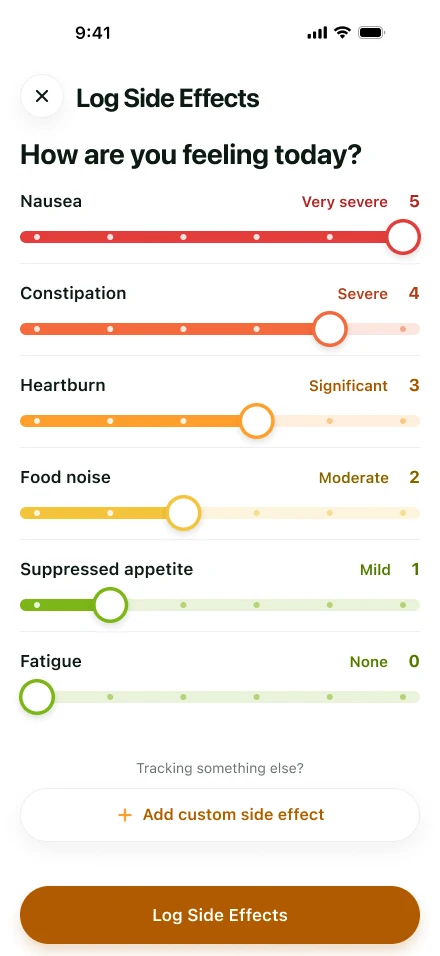
Side effects, by severity 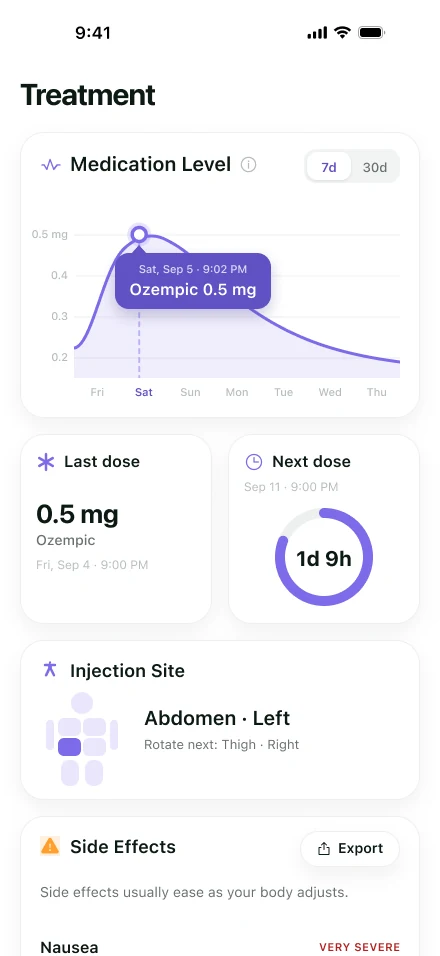
Medication level and next dose 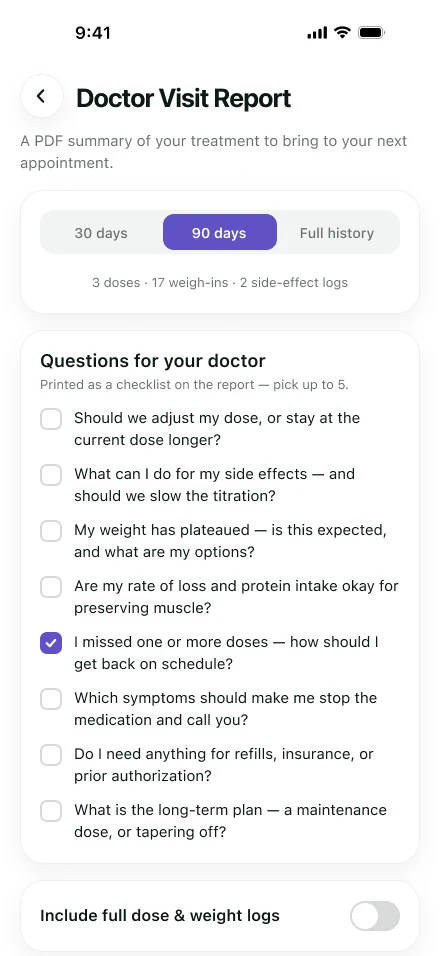
A report for your next appointment
Frequently asked questions
How common is constipation on a GLP-1?
In the Wegovy label's main trials, 24% of people on the 2.4 mg dose reported constipation, compared with 11% on placebo. The Zepbound label reports 11–17% across doses, compared with 5% on placebo.
Can I take a laxative on a GLP-1?
The 2025 joint nutrition advisory lists options such as magnesium, fiber supplements, polyethylene glycol and stool softeners when food changes aren't enough. Check with your pharmacist or prescriber first, since what suits you depends on your health and other medicines.
Does constipation mean my dose is too high?
Not necessarily — it's common at many doses. But it's worth telling your prescriber, especially after a dose step, so they can factor it into decisions about your dose.
Can anti-nausea medicine make constipation worse?
The advisory notes that ondansetron, a common anti-nausea medicine, can worsen constipation. If you're taking something for nausea, mention any constipation to your prescriber.
Sources
- WEGOVY (semaglutide) prescribing information and Medication Guide — DailyMed, U.S. National Library of Medicine
- ZEPBOUND (tirzepatide) prescribing information and Medication Guide — DailyMed, U.S. National Library of Medicine
- Nutritional priorities to support GLP-1 therapy for obesity: a joint Advisory from the American College of Lifestyle Medicine, the American Society for Nutrition, the Obesity Medicine Association, and The Obesity Society — Obesity (Silver Spring), 2025
- Symptoms & Causes of Constipation — National Institute of Diabetes and Digestive and Kidney Diseases
Keep reading
 Nutrition
Eating Enough Protein on a GLP-1 When You're Not Hungry
GLP-1 medications quiet your appetite, which makes protein easy to miss. Why protein matters during GLP-1 therapy and simple ways to fit it in.
 Lifestyle
Staying Hydrated on a GLP-1 — Why It Matters and How to Keep Up
GLP-1 labels warn that vomiting and diarrhea can lead to dehydration and kidney problems. Why fluids slip when appetite drops, and simple ways to keep up.
- Lifestyle
Strength Training on a GLP-1 — Protecting Muscle as You Lose Weight
Weight lost on a GLP-1 includes some lean mass. What the research shows, what a 2025 joint advisory recommends for strength training, and how to start.