
Lifestyle
Strength Training on a GLP-1 — Protecting Muscle as You Lose Weight
Weight lost on a GLP-1 includes some lean mass. What the research shows, what a 2025 joint advisory recommends for strength training, and how to start.
The scale has moved for six weeks straight, and then you notice something else: the grocery bags feel heavier than they used to, and getting up from the floor takes a hand on the sofa. It's a small thing, but it's a reasonable worry. When you lose weight, how much of it is muscle?
Does a GLP-1 cause muscle loss?
Weight loss of almost any kind includes some lean mass, and GLP-1s are no exception. The 2025 joint advisory from four US obesity and nutrition societies describes body-composition results from the STEP 1 trial of semaglutide: of the average weight lost, about 62% was fat and 38% was lean mass.
Lean mass isn't the same as muscle — it also includes water, organs and other tissue. The advisory's authors estimate that muscle itself accounts for around 20% of total weight lost. That's not a reason to avoid treatment. It's a reason to plan for it.
What does the guidance actually recommend?
The advisory is clear that GLP-1 therapy should come with a structured exercise program. Its targets:
| What | How much |
|---|---|
| Strength training | At least three times a week |
| Moderate aerobic activity | At least 150 minutes a week |
It says resistance training, or a mix of resistance and aerobic work, is well established for preserving lean mass, while aerobic exercise alone has a smaller effect. It also notes that rapid, substantial weight loss is linked with bone loss, and that in one trial, people on a GLP-1 who also exercised kept their bone density steady over a year.
The other half of the picture is protein. The advisory pairs strength training with adequate protein intake, and offers ranges to discuss with your clinician rather than a single rule.
I've never lifted anything. Where do I start?
Smaller than you think. The advisory says plans should match your current fitness, and that testing your one-rep maximum isn't recommended unless you're already well trained. An exercise physiologist or strength trainer can help you build something that fits.
A simple start might cover these movement patterns, two or three sets each:
- Squat — sitting down to and standing up from a chair
- Push — wall push-ups, then countertop, then floor
- Pull — resistance band rows
- Hinge — glute bridges on the floor
- Carry — walking with a bag or dumbbell in each hand
Bodyweight, resistance bands and a pair of dumbbells cover a lot of ground. If you have joint problems, heart conditions or other health concerns, check with your clinician before starting.
How do I train around side effects?
Some days you'll feel great. Others, especially in the days after a shot or a dose step, you may feel full, tired or a bit queasy. Stomach side effects are the most common reactions on GLP-1 labels.
A few habits help:
- Plan lighter sessions for your harder days. If you know the day after your shot is rough, put training elsewhere in the week.
- Eat something small first. Training on an empty stomach is harder when appetite is low; a little protein beforehand can help.
- Keep fluids up. The Wegovy Medication Guide notes that vomiting, diarrhea and nausea can cause dehydration. Sweating adds to that.
- Stop if something's wrong. Dizziness, chest pain or feeling faint during exercise means stop and seek medical advice.
How do I know it's working?
The scale won't tell you much about muscle. Better signs are practical ones: lifting a heavier weight than last month, doing more repetitions, climbing stairs more easily, getting up from the floor without help.
Writing those down matters, because progress in strength is slow enough to be invisible day to day. A note that says "8 chair squats" in week one and "15" in week six tells a clearer story than any number on the scale.
What we'd track
- Strength sessions. Date and what you did. Three a week is the advisory's target, and a log shows whether you're getting there.
- One or two simple benchmarks. Chair squats in a minute, or the weight you carry for a set distance. Recheck monthly.
- Protein at meals. Training without enough protein makes the work harder to keep.
- Weight trend, not daily weight. A steady trend alongside improving strength is the picture you want.
- How you feel around dose days. Helps you schedule sessions on your better days.
Holt keeps your weight trend, meals and dose days on one timeline and syncs with Apple Health, so your data stays in one place. Protein estimates from meal photos show whether your plate is keeping up with your training.
Keep your weight trend and protein in view with HoltMilestones in Holt mark progress along the way, and the doctor-visit report shows your trend and habits together for your next appointment.
See it in Holt
Real screens from the app — the same places you’ll log, review and share.
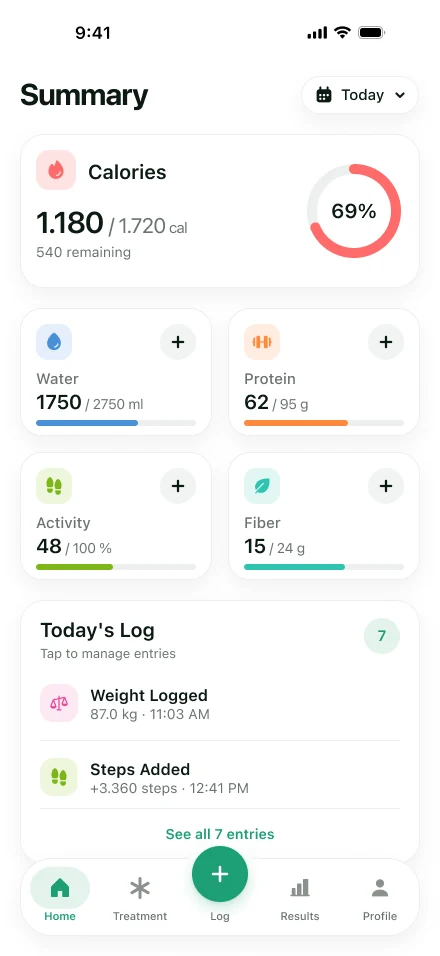
Your day at a glance 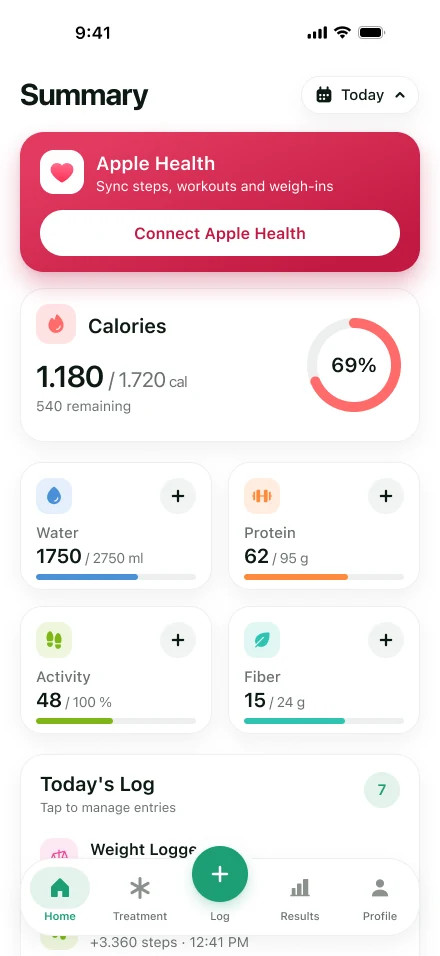
Syncs with Apple Health 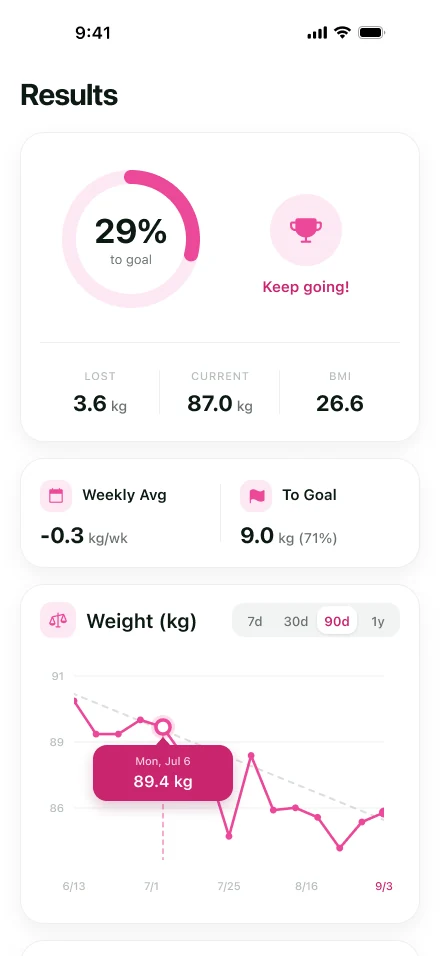
Progress toward your goal
Frequently asked questions
How often should I strength train on a GLP-1?
The 2025 joint advisory recommends strength training at least three times a week, plus at least 150 minutes of moderate aerobic activity. Start where your fitness is and build up, ideally with advice from your clinician.
Do I lose muscle on a GLP-1?
Some of the weight lost is lean mass. In the STEP 1 trial of semaglutide, about 38% of the weight lost was lean mass, and the advisory's authors estimate muscle itself is roughly a fifth of total weight lost.
Is cardio enough to protect muscle?
The advisory says resistance or mixed training is better established for preserving lean mass than aerobic exercise alone, which has a smaller effect.
What if I feel too tired or sick to train?
Take a lighter session or rest, especially in the days after a dose step. If fatigue or stomach side effects are severe or won't go away, tell your prescriber.
Sources
- Nutritional priorities to support GLP-1 therapy for obesity: a joint Advisory from the American College of Lifestyle Medicine, the American Society for Nutrition, the Obesity Medicine Association, and The Obesity Society — Obesity (Silver Spring), 2025
- WEGOVY (semaglutide) prescribing information and Medication Guide — DailyMed, U.S. National Library of Medicine
Keep reading
 Lifestyle
Staying Hydrated on a GLP-1 — Why It Matters and How to Keep Up
GLP-1 labels warn that vomiting and diarrhea can lead to dehydration and kidney problems. Why fluids slip when appetite drops, and simple ways to keep up.
 Nutrition
Eating Enough Protein on a GLP-1 When You're Not Hungry
GLP-1 medications quiet your appetite, which makes protein easy to miss. Why protein matters during GLP-1 therapy and simple ways to fit it in.
 Side effects
GLP-1 Constipation — Why It Happens and What Helps
Constipation is one of the most common GLP-1 side effects. What the labels report, the gentle fixes nutrition guidance suggests, and when to call your doctor.