
Nutrition
Eating Enough Protein on a GLP-1 When You're Not Hungry
GLP-1 medications quiet your appetite, which makes protein easy to miss. Why protein matters during GLP-1 therapy and simple ways to fit it in.
Lunch arrives. Three bites in, you're done — not uncomfortable, just finished, in a way that would have been unthinkable a few months ago. The rest goes in a container you probably won't open. On a GLP-1 this is the medication doing its job. The catch is what's left in the container: very often, the protein.
Why does protein matter more right now?
When you lose weight, some of what you lose is lean mass, including muscle. A 2025 joint advisory from the American College of Lifestyle Medicine, the American Society for Nutrition, the Obesity Medicine Association and The Obesity Society lists adequate protein together with strength training as a core priority for people on GLP-1 therapy — alongside nutrient-dense food, fiber, hydration and managing side effects.
Protein is also steadily filling, which helps smaller meals feel like real meals.
How do you fit it in when you're not hungry?
Eat it first. Fullness arrives early now, so the first bites count most. Start with the eggs, fish, chicken, tofu, beans or yogurt, and let the rest of the plate wait.
Spread it out. Three or four smaller protein moments are easier on a quiet appetite than one big plate.
Keep the easy things within reach:
- Greek yogurt or skyr
- Eggs, boiled ahead
- Cottage cheese
- Tinned fish
- Tofu, tempeh, edamame
- Lentil or bean soups
- Milk, or a protein shake on days solid food feels like too much
Why does strength training keep coming up?
The advisory pairs protein with resistance exercise for a reason: protein is the material, but muscle needs a reason to keep it. Simple bodyweight or band work a few times a week counts — ask your care team what suits you.
What about fiber and water?
Smaller meals usually mean less of both, which can make constipation — already a common GLP-1 side effect — worse. Add vegetables, fruit, oats or legumes where you can, and keep a bottle of water within sight.
What we'd track
- A photo of each meal — rough is fine; you're looking for patterns, not grams.
- Whether each meal had a protein source — yes or no.
- Water across the day.
- Strength sessions — even short ones.
After a week or two you'll see whether certain days — often the ones right after a dose — are when protein quietly disappears. That's the day to plan for.
Snap meals and see protein at a glance in HoltSee it in Holt
Real screens from the app — the same places you’ll log, review and share.
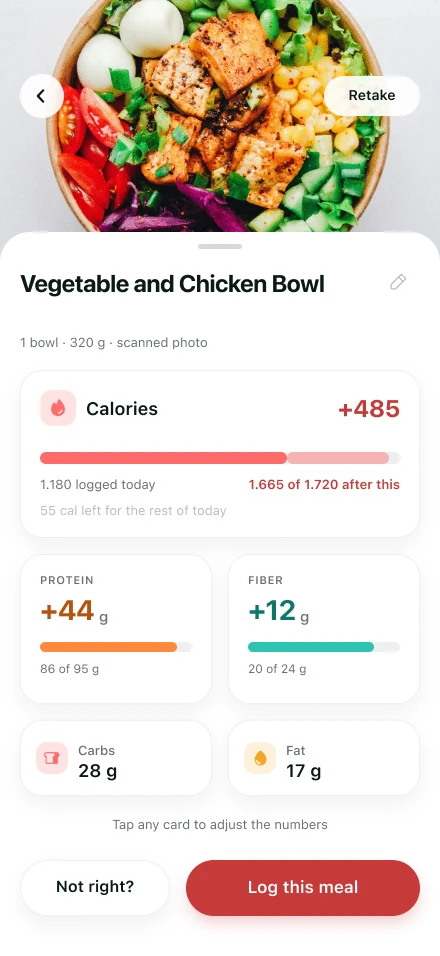
Snap a meal, get the protein 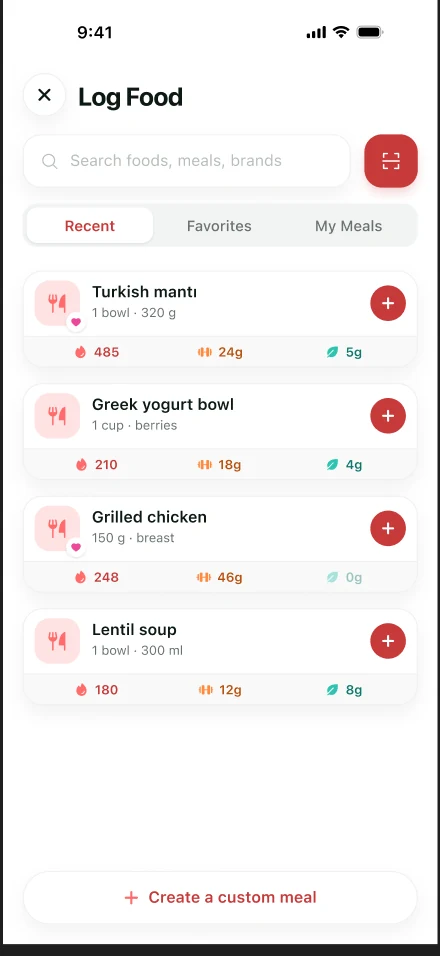
Your food log 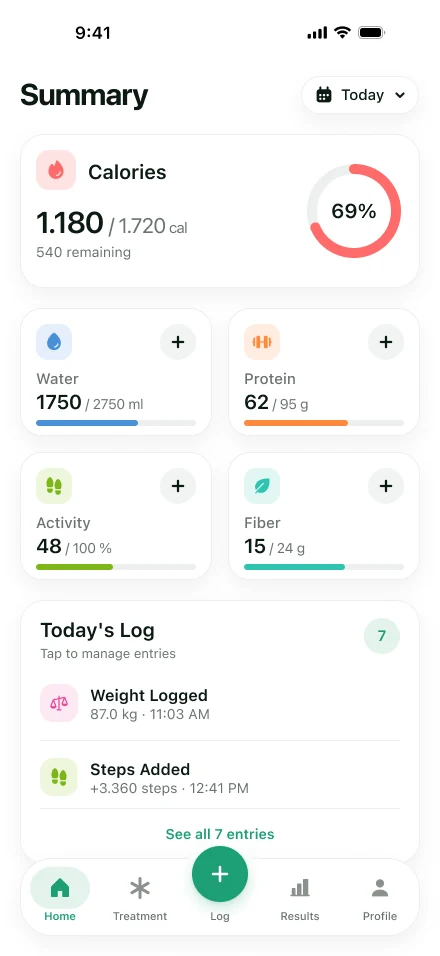
Your day at a glance
Frequently asked questions
How much protein should I eat on a GLP-1?
Needs vary with body size, age, activity and health conditions, so ask your prescriber or a registered dietitian for a target that fits you. Professional guidance emphasizes adequate protein together with strength training during GLP-1 therapy.
Are protein shakes okay on a GLP-1?
They can be a practical option when solid food feels like too much, but they're a supplement to meals, not a replacement for a varied diet. Check with your care team if you have kidney disease or other conditions that affect protein needs.
Sources
- Nutritional priorities to support GLP-1 therapy for obesity (joint advisory) — ACLM, ASN, OMA and The Obesity Society, 2025
- Joint nutritional priorities to support GLP-1 therapy for obesity (PDF) — The Obesity Society
Keep reading
 Nutrition
What to Eat on GLP-1 Shot Day (and the Day After)
There's no official shot-day diet, but a few gentle habits from nutrition guidance can make the days around a GLP-1 injection easier on your stomach.
 Side effects
GLP-1 Constipation — Why It Happens and What Helps
Constipation is one of the most common GLP-1 side effects. What the labels report, the gentle fixes nutrition guidance suggests, and when to call your doctor.
 Lifestyle
Staying Hydrated on a GLP-1 — Why It Matters and How to Keep Up
GLP-1 labels warn that vomiting and diarrhea can lead to dehydration and kidney problems. Why fluids slip when appetite drops, and simple ways to keep up.