
Lifestyle
Traveling With GLP-1 Pens — Storage, Flying and Shot Day
Flying with Ozempic, Wegovy, Mounjaro or Zepbound? What each label says about storage out of the fridge, what TSA allows, and how shot day works across time zones.
You're packing the night before a flight, and the pen is the last thing left in the fridge. Does it go in the carry-on or the suitcase? Will it be fine in a hotel room for a week? And your shot day is Sunday — but which Sunday, once you've crossed six time zones? Each label answers part of this, TSA answers another part, and the rest is a quick call to your pharmacist.
How long can my pen stay out of the fridge?
This is where the brands differ most, so check the exact product you were given. All four labels say not to freeze the medicine and not to use it if it has been frozen, and to protect it from heat and light.
| Product (label) | In the fridge | Out of the fridge |
|---|---|---|
| Ozempic pen | 36–46°F (2–8°C) before first use, until the expiration date | After first use: 56 days at 59–86°F (15–30°C) or in the fridge |
| Wegovy single-dose pen or syringe | 36–46°F (2–8°C) | If needed, before removing the cap: 46–86°F (8–30°C) in the original carton for up to 28 days |
| Wegovy FlexTouch pen | 36–46°F (2–8°C) before first use | After first use: up to 56 days at room temperature or in the fridge |
| Mounjaro or Zepbound single-dose pen or single-dose vial | 36–46°F (2–8°C) | Up to 86°F (30°C) for a total of 21 days |
| Mounjaro or Zepbound KwikPen or multi-dose vial | 36–46°F (2–8°C) until the expiration date, unopened | Up to 86°F (30°C); see below for when to throw it away |
A few details matter for travel:
- Ozempic lists only refrigerated storage before first use. The 56-day room-temperature window starts once you've used the pen.
- Wegovy says to throw away a single-dose pen or syringe that has been frozen, exposed to light or temperatures above 86°F (30°C), or out of the fridge for 28 days or longer. For the FlexTouch pen, the prescribing information gives 59–86°F (15–30°C), while the pen's Instructions for Use gives 68–77°F (20–25°C) — follow the leaflet in your box, or ask your pharmacist.
- Mounjaro and Zepbound count the 21 days as a total, so time out of the fridge adds up across trips.
- KwikPens and multi-dose vials follow a different clock. An unopened one kept at room temperature should be thrown away after 30 days. Once opened, it can be stored in the fridge or at room temperature, and should be thrown away after 30 days at room temperature, 30 days after first use, or after 4 weekly doses, whichever comes first.
The labels give temperature limits, not travel advice. Whether a cooler, a hotel minibar or a pharmacy-supplied travel case suits your trip is a question for your pharmacist.
Can I take GLP-1 pens through airport security?
Yes. TSA allows medically necessary liquids, gels and aerosols over 3.4 ounces in reasonable quantities for your flight. You must declare them to the officer at the checkpoint, and they may get extra screening, which can include being asked to open containers. TSA says screening will never include placing anything into a medically necessary liquid.
You don't need to put medically required liquids in a zip-top bag. If you'd rather your medicine not go through the X-ray, you can ask for a visual inspection, but TSA says to ask before anything goes into the tunnel.
TSA's medical conditions page says ice packs, freezer packs and gel packs used to keep medication cool may be presented frozen, partially frozen or melted. Say what they're for when you reach the officer.
What about needles and used pens?
TSA allows unused syringes when they're with injectable medication, and you must declare them at the checkpoint. Used syringes are allowed when carried in a sharps disposal container or a similar hard-surface container. The labels themselves point to the FDA's safe sharps disposal pages if you need rules for where you're staying.
Carry-on or checked bag?
TSA lets you travel with medication in both, but strongly recommends the carry-on in case you need it. The CDC gives a second reason for trips abroad: luggage can be lost or delayed.
Do I need a prescription label or a doctor's letter?
TSA doesn't require medicines to be in prescription bottles, but notes that some states have their own labeling laws, and recommends clear labels to make screening easier.
For international travel, the CDC suggests keeping medicines in their original, labeled containers, asking your prescriber for a note if you use injectable medicines, packing enough for the whole trip plus extra in case of delays, and checking with the embassy of your destination, and any layover countries, that your medicines are allowed.
What happens to shot day across time zones?
The labels don't mention time zones. What they do say is that you take your dose once a week, on the same day, at any time of day — and that you can change the day if you need to:
- Ozempic and Wegovy: you may change the day of the week as long as your last dose was given 2 or more days before.
- Mounjaro and Zepbound: you may change the day as long as there are at least 3 days (72 hours) between the 2 doses.
So for planning, the useful number is hours since your last dose, not the date on the hotel clock. A long eastward flight can make Sunday arrive early; a westward one can stretch it. If a trip would push your next dose close to one of those limits, or you're thinking of moving your day for good, run it past your pharmacist or prescriber. Our missed dose post covers what each label says if a trip makes you late. The free shot-day planner can help you map dose days around travel dates.
What we'd track
- Your last dose, with time. Across time zones, "when did I last inject?" is the question that decides everything else.
- Your next dose countdown. A countdown in hours is easier to reason about than two calendars.
- Days out of the fridge. For Mounjaro or Zepbound single-dose pens, the 21 days are a running total. A quick note each trip keeps it honest.
- Injection site. Hotel bathrooms make it easy to reuse the same spot. Logging it keeps your rotation on track.
- Side effects after travel. Long flights, new food and less water can make nausea or constipation flare.
Holt reminds you on your schedule and puts a Live Activity on your lock screen when it's shot time. The treatment screen shows your last dose and a countdown to the next one, and when you log a shot, Otto suggests the next spot in your rotation. More on rotation in our injection sites guide.
Keep your shot day on track while you travel with HoltYour dose history keeps every dose with its date, strength and site, so a late Sunday in Lisbon doesn't get lost by the time you're home.
See it in Holt
Real screens from the app — the same places you’ll log, review and share.
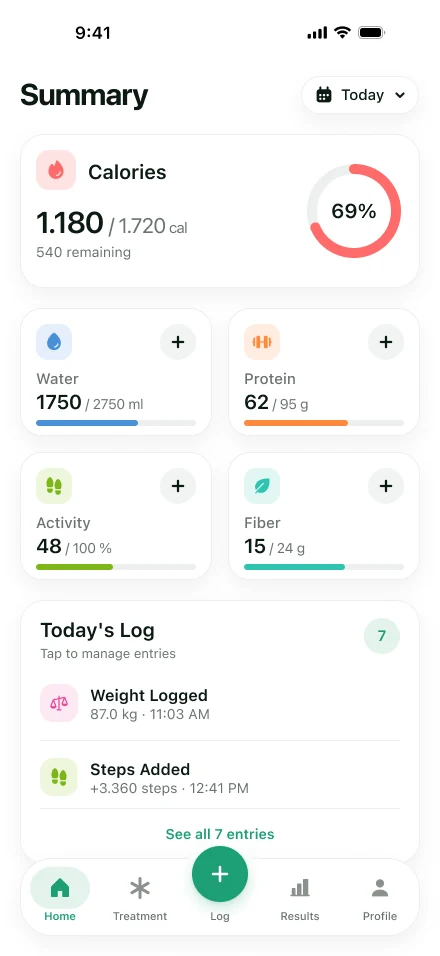
Your day at a glance 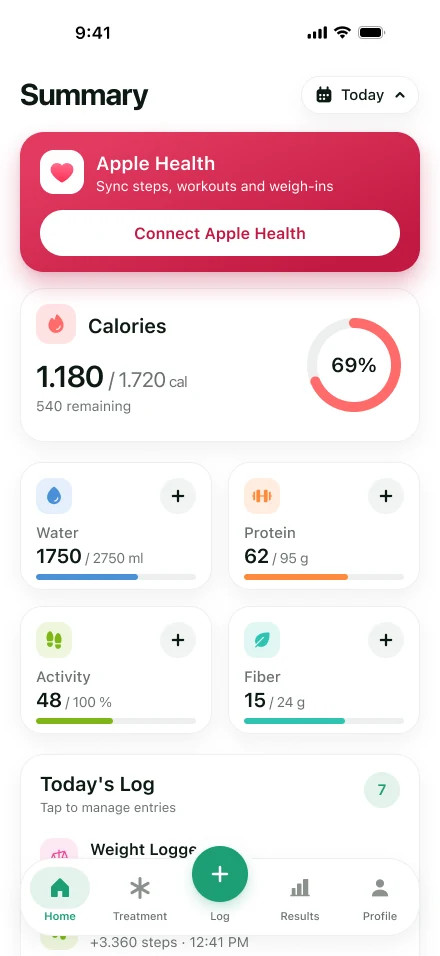
Syncs with Apple Health 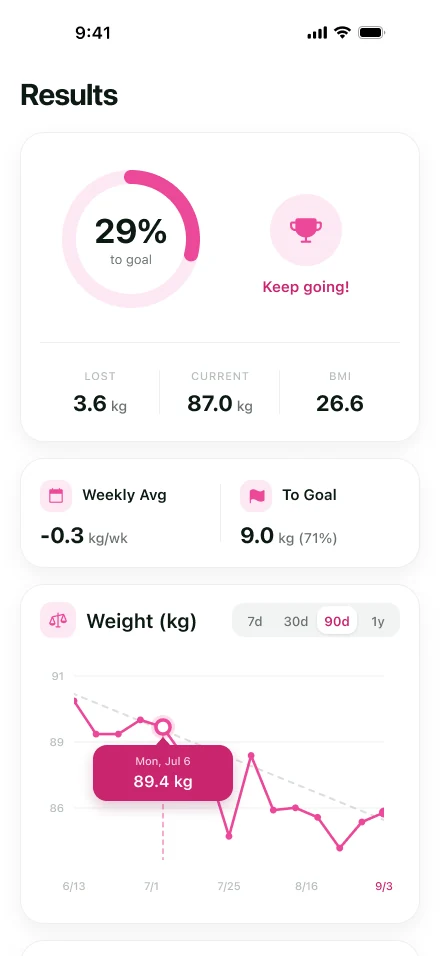
Progress toward your goal
Frequently asked questions
Can I bring my Ozempic or Zepbound pen in my carry-on?
Yes. TSA allows medically necessary liquids over 3.4 ounces in reasonable quantities in carry-on bags, as long as you declare them at the checkpoint. TSA strongly recommends keeping medication in your carry-on in case you need it.
How long can Zepbound stay out of the fridge?
The Zepbound label says single-dose pens and single-dose vials can be kept unrefrigerated at up to 86°F (30°C) for a total of 21 days. The KwikPen and multi-dose vial have different rules, so check which one you have.
Can I take an ice pack through airport security for my medication?
TSA's disabilities and medical conditions page says ice packs, freezer packs and gel packs used to keep medication cool may be presented at the checkpoint frozen, partially frozen or melted. Tell the officer what they're for.
Do I need a doctor's letter to fly with GLP-1 pens?
TSA doesn't require one. For travel abroad, the CDC suggests asking your prescriber for a note if you use injectable medicines, and keeping medicines in their original, labeled containers.
My shot day falls on a travel day. Can I move it?
The labels allow changing your weekly day under conditions. Ozempic and Wegovy require your last dose to be at least 2 days before; Mounjaro and Zepbound require at least 3 days (72 hours) between doses. If you're unsure, ask your pharmacist.
Sources
- OZEMPIC (semaglutide) prescribing information, Medication Guide and Instructions for Use — DailyMed, U.S. National Library of Medicine
- WEGOVY (semaglutide) injection and tablets prescribing information, Medication Guide and Instructions for Use — DailyMed, U.S. National Library of Medicine
- MOUNJARO (tirzepatide) prescribing information, Medication Guide and Instructions for Use — DailyMed, U.S. National Library of Medicine
- ZEPBOUND (tirzepatide) prescribing information, Medication Guide and Instructions for Use — DailyMed, U.S. National Library of Medicine
- Disabilities and Medical Conditions — Transportation Security Administration
- Travel Tips — Transportation Security Administration
- Unused Syringes — Transportation Security Administration
- Used Syringes — Transportation Security Administration
- Traveling Abroad with Medicine — Centers for Disease Control and Prevention
Keep reading
 Lifestyle
Alcohol on Ozempic or Zepbound — What the Labels and Research Say
Can you drink on Ozempic, Wegovy or Zepbound? What the labels do and don't say, what early research shows about GLP-1s and alcohol cravings, and what to note.
- Lifestyle
Staying Hydrated on a GLP-1 — Why It Matters and How to Keep Up
GLP-1 labels warn that vomiting and diarrhea can lead to dehydration and kidney problems. Why fluids slip when appetite drops, and simple ways to keep up.
- Lifestyle
Strength Training on a GLP-1 — Protecting Muscle as You Lose Weight
Weight lost on a GLP-1 includes some lean mass. What the research shows, what a 2025 joint advisory recommends for strength training, and how to start.