
Nutrition
Eating Out on Ozempic or Zepbound — How to Order and Enjoy It
Eating out on a GLP-1 with a smaller appetite? How to order protein-first, handle big portions and rich food, box leftovers, and log the meal without fuss.
It's your friend's birthday dinner, and the menu is all sharing plates, a pasta course and a dessert everyone's already talking about. Six months ago you'd have worked through all of it. Tonight you're three bites into the burrata and already feeling comfortably done, and you're wondering how to get through the next two hours without either forcing it down or explaining your medication to the table.
Eating out on a GLP-1 is very doable. It just works a little differently now, and a few small habits make it a lot more pleasant.
Is there anything I can't eat at a restaurant?
No food is off limits on the label. The Ozempic and Zepbound labels both say the weekly injection can be taken at any time of day, with or without meals, and neither lists foods to avoid.
What changes is how meals feel. Both labels state that these medications delay gastric emptying, which means food stays in your stomach longer. That's part of why you feel full sooner. The labels also list nausea, vomiting, diarrhea, constipation and stomach pain among the most common side effects, and a large restaurant meal is exactly the kind of thing that can bring them on.
Why does a rich meal out hit harder than one at home?
Mostly size and fat. Restaurant portions tend to be bigger than what you'd serve yourself, and the cooking often uses more butter, oil and cream.
The 2025 joint advisory from four US nutrition and obesity societies notes that foods high in fat can slow stomach emptying further, and that vomiting is more likely after large meals. For diarrhea, it says avoiding large or high-fat meals can help. Put a generous plate of something fried or creamy together with a medication that already slows digestion, and the evening can turn uncomfortable.
That doesn't mean ordering a plain salad every time. It means knowing which dishes your stomach handles well, and that differs from person to person.
How should I order?
A few ideas that tend to work:
- Look for the protein first. The joint advisory suggests eating protein-rich foods first in a meal so you're more likely to get enough before you fill up. Fish, chicken, steak, tofu, beans or eggs are easy anchors on most menus.
- Order smaller. A starter as a main, a half portion, or a side or two often matches your appetite better than a full entrée.
- Go easy on the richest dishes. Something grilled, roasted or steamed is usually gentler than deep-fried or heavy with cream sauce, especially in the weeks after a dose step.
- Share. Splitting a main or a dessert lets you taste everything without a full portion of anything.
- Think about the drinks. The advisory says alcohol may worsen nausea and reflux on GLP-1 therapy and should be kept to a minimum. Our post on alcohol and GLP-1 medications goes into more detail.
If you're tracking a protein goal, our protein calculator gives a rough range to discuss with your clinician, and the post on eating enough protein on a GLP-1 has ideas for low-appetite days.
What if I'm full halfway through?
Then you're done, and that's fine. Fullness can arrive faster than you're used to, so it helps to eat a bit more slowly and check in with yourself between bites. That's our suggestion rather than a formal guideline, but it gives the signal time to land before you've overshot.
Ask for a box early, before the plate starts to look like a challenge. Many people find that a restaurant dinner turns into two meals now, which is no bad thing. If you're worried about the table noticing, "I had a late lunch" is a perfectly good answer. You don't owe anyone a medication history.
Does it matter if I eat out on shot day?
It can. Not everyone notices a pattern, and the labels don't tie side effects to a particular day. But some people find their appetite is lowest and their stomach least forgiving in the day or two after a shot or a dose step.
If you know a big dinner is coming, it may help to look at where it falls in your week. Our post on what to eat on shot day covers the gentler days, and the dose day planner lays out your upcoming dose dates so you can see where a dinner falls. Moving your shot day is a question for your prescriber, not something to change on your own.
What we'd track
- What you ordered. A photo is enough. After a few meals out, you'll see which dishes sit well and which don't.
- How it felt afterwards. Fine, heavy, queasy. Log a side effect if one shows up, with how bad it was.
- Where the meal fell in your week. Dinner the night after your shot may feel very different from the same dinner five days later.
- Protein. Smaller plates make it easy to come up short. A rough estimate tells you whether to add something at breakfast tomorrow.
Holt's photo meal scan estimates calories, protein, fiber, carbs and fat from a picture of your plate, which is handy when there's no nutrition label to look up. If you eat at the same place often, save the meal to "my meals" and log it in a tap next time. Side effects go on severity sliders and line up against your dose days, so patterns are easy to spot. More on that on our GLP-1 food tracker page.
Snap your restaurant plate and log it in HoltA few dinners in, you'll know what to order without overthinking it, based on your own notes rather than a list of rules.
See it in Holt
Real screens from the app — the same places you’ll log, review and share.
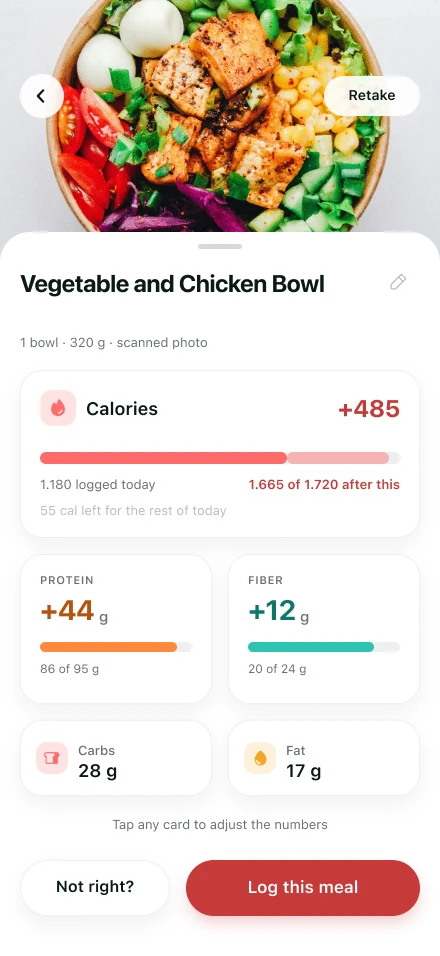
Snap a meal, get the protein 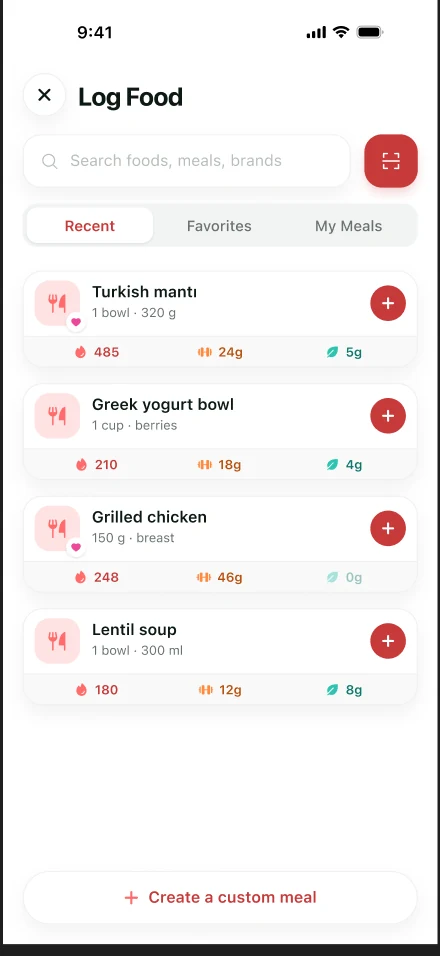
Your food log 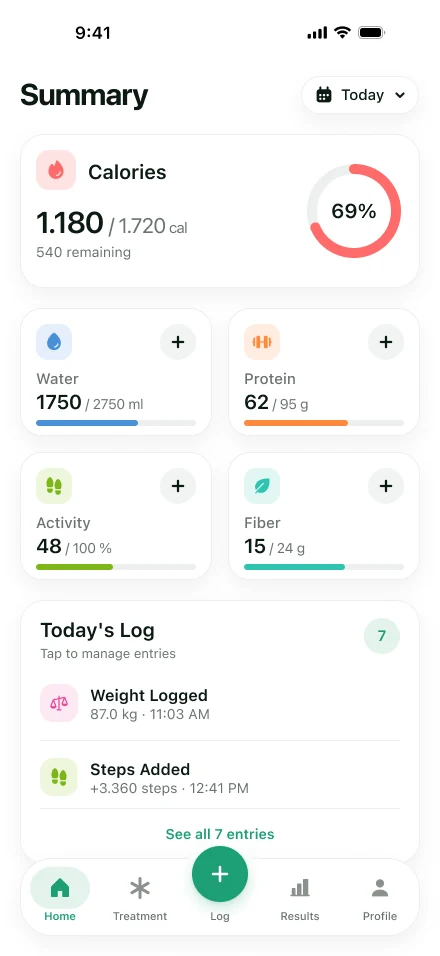
Your day at a glance
Frequently asked questions
Can I eat at restaurants while taking Ozempic or Zepbound?
Yes. The Ozempic and Zepbound labels don't restrict any foods, and the weekly shot can be taken with or without meals. The main change is that you'll often feel full sooner, so a normal restaurant portion may be more than you want.
Why do greasy restaurant meals make me feel sick on a GLP-1?
GLP-1 medications slow how quickly your stomach empties, and the 2025 joint nutrition advisory notes that high-fat foods can slow it further. It also says vomiting is more likely after large meals, so a big, rich plate is a common trigger.
What should I order first?
The joint advisory suggests eating protein-rich foods first in a meal so you're more likely to get enough before you fill up. At a restaurant, that might mean starting with the fish, chicken, beans or eggs on your plate.
Is it OK to leave food on my plate?
Yes. Stopping when you're full is the point, not a failure. Ask for a box, or order a starter or half portion if the menu has one.
When should I call my doctor after a meal out?
The labels say to get medical help for severe stomach pain that won't go away, with or without vomiting. Also contact your provider if you can't keep fluids down after vomiting or diarrhea.
Sources
- Nutritional priorities to support GLP-1 therapy for obesity: a joint Advisory from the American College of Lifestyle Medicine, the American Society for Nutrition, the Obesity Medicine Association, and The Obesity Society — Obesity (Silver Spring), 2025
- OZEMPIC (semaglutide) prescribing information and Medication Guide — DailyMed, U.S. National Library of Medicine
- ZEPBOUND (tirzepatide) prescribing information and Medication Guide — DailyMed, U.S. National Library of Medicine
Keep reading
 Nutrition
Eating Enough Protein on a GLP-1 When You're Not Hungry
GLP-1 medications quiet your appetite, which makes protein easy to miss. Why protein matters during GLP-1 therapy and simple ways to fit it in.
- Nutrition
What to Eat on GLP-1 Shot Day (and the Day After)
There's no official shot-day diet, but a few gentle habits from nutrition guidance can make the days around a GLP-1 injection easier on your stomach.
 Lifestyle
Alcohol on Ozempic or Zepbound — What the Labels and Research Say
Can you drink on Ozempic, Wegovy or Zepbound? What the labels do and don't say, what early research shows about GLP-1s and alcohol cravings, and what to note.