
Side effects
GLP-1 Nausea — How Long It Lasts and What Helps
Nausea on Ozempic, Wegovy, Mounjaro or Zepbound? How common the labels say it is, when it tends to show up, what nutrition guidance suggests, and when to call.
It's the morning after your first shot at a new dose. You skipped dinner because you weren't hungry, and now the smell of coffee is enough to make you put the mug down. You're wondering whether this is how every week will feel from now on. For most people, the labels suggest, it isn't — but it helps to know what's typical and what isn't.
How common is nausea on a GLP-1?
It's the most common side effect on most of these labels. The figures below come from each label's placebo-controlled trials. They're from different studies with different people, so read each row against its own placebo, not against the other rows.
| Medication (label, trials) | Nausea on medication | On placebo |
|---|---|---|
| Ozempic 0.5 mg / 1 mg (type 2 diabetes) | 15.8% / 20.3% | 6.1% |
| Wegovy 2.4 mg injection (weight reduction) | 44% | 16% |
| Mounjaro 5 / 10 / 15 mg (type 2 diabetes) | 12% / 15% / 18% | 4% |
| Zepbound 5 / 10 / 15 mg (weight reduction) | 25% / 29% / 28% | 8% |
Two things stand out. Even on placebo, some people felt sick, so not every queasy day is the medicine. And the 2025 joint nutrition advisory notes that some apparent differences between semaglutide and tirzepatide may reflect different placebo rates in the trials, not a real gap between the drugs.
When does it tend to happen?
Around dose steps. The Ozempic label says the majority of nausea, vomiting and diarrhea reports happened during dose escalation. The Mounjaro and Zepbound labels say the same, and add that these events decreased over time. The Wegovy label says its stomach side effects were most frequently reported during dosage escalation.
The advisory puts it in plain terms: side effects are more likely in the first weeks of treatment and with dose increases, and tend to become less frequent and less severe on a stable dose. It also notes that nausea often shows up in the morning or after long stretches without eating.
So the honest answer to "how long does it last?" is that no label gives a number of days. What they describe is a pattern: worse after starting or stepping up, easing as you settle. Our dose escalation guide explains how those steps usually work.
Why does a GLP-1 make you feel sick?
The advisory describes a few overlapping reasons. GLP-1 medications slow how quickly your stomach empties, which can bring on bloating, fullness and nausea. They also act on parts of the brain involved in appetite and nausea. And higher doses are more likely to cause these symptoms.
That slower stomach is also why a meal that felt normal before can sit heavily now.
What helps, according to nutrition guidance?
The advisory collects practical suggestions clinicians can share. As reported there, not as personal advice:
- Smaller, more frequent meals. It suggests a small breakfast, then small meals every three to four hours, with enough fluids.
- Go easy on fatty and high-fiber foods early on. It suggests avoiding them in the first few days of treatment.
- Avoid large meals. It notes vomiting is more likely after a big meal.
- Don't fall into not eating. It describes a cycle where nausea leads to skipping food, which worsens nausea, which makes eating even less likely.
- Ginger or peppermint tea, or acupressure bands. It says these can be helpful for some people.
- Keep alcohol to a minimum. It notes alcohol may worsen nausea and reflux on a GLP-1. More in our alcohol post.
If you want ideas for the day itself, our post on what to eat on shot day goes into food choices in more detail.
What about anti-nausea medicine?
That's a question for your prescriber, not for us. The advisory mentions that anti-nausea medicines can help some people while they adjust, but also that some of them can make constipation worse — and constipation is already common on these drugs. What suits you depends on your health and what else you take.
When is nausea more than a side effect?
Most nausea is unpleasant but ordinary. A few patterns are not, and the Medication Guides are clear about them.
Our hydration guide covers why fluids slip on a GLP-1 and how to keep up.
What we'd track
- Nausea severity, daily. A simple slider is enough. "Bad" is hard to compare across weeks; a 6 out of 10 isn't.
- Dose days and dose steps. Lining nausea up against shots shows whether it peaks a day or two after each dose and whether it's easing at your current strength.
- Water. If you're struggling to keep food down, fluids are the first thing to slip and the most important to watch.
- Meal size and timing. A meal photo makes it obvious when a big dinner came before a bad night.
- What you tried. Ginger tea, smaller lunches, an earlier dinner, and whether it helped.
Holt lets you log nausea with a severity slider and shows it against your dose days, so you can see whether it's tied to shot day or to a dose step. Water logs from the home-screen widget, and the photo meal scan gives a rough picture of what and how much you ate. If you're tracking other symptoms too, our side effect tracker guide shows how it fits together.
Log nausea against your dose days in HoltWhen you see your prescriber, the doctor-visit report summarizes side effects alongside your doses, so "how's the nausea been?" has a real answer.
See it in Holt
Real screens from the app — the same places you’ll log, review and share.
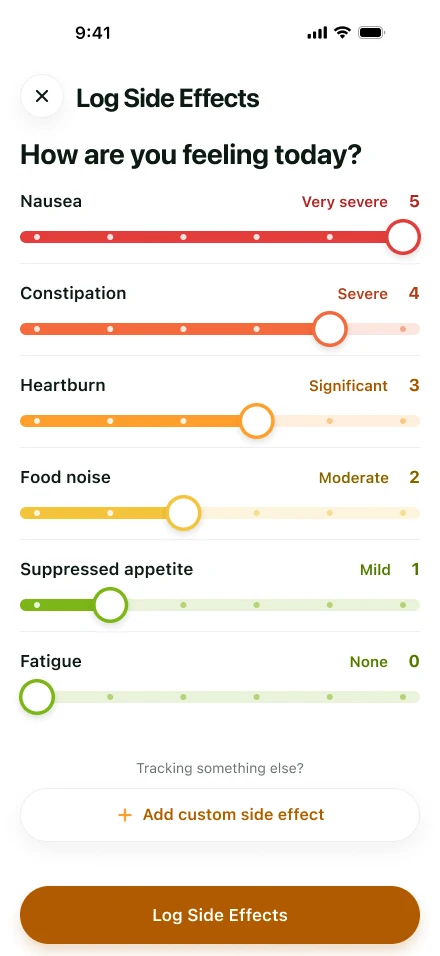
Side effects, by severity 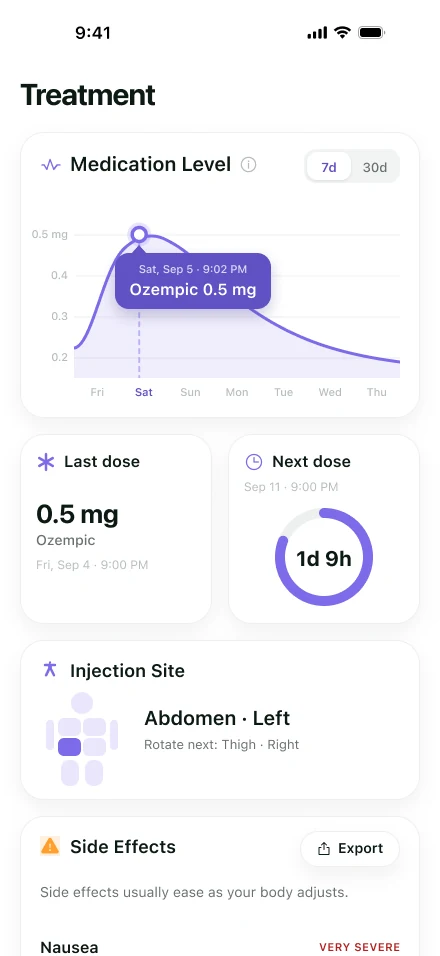
Medication level and next dose 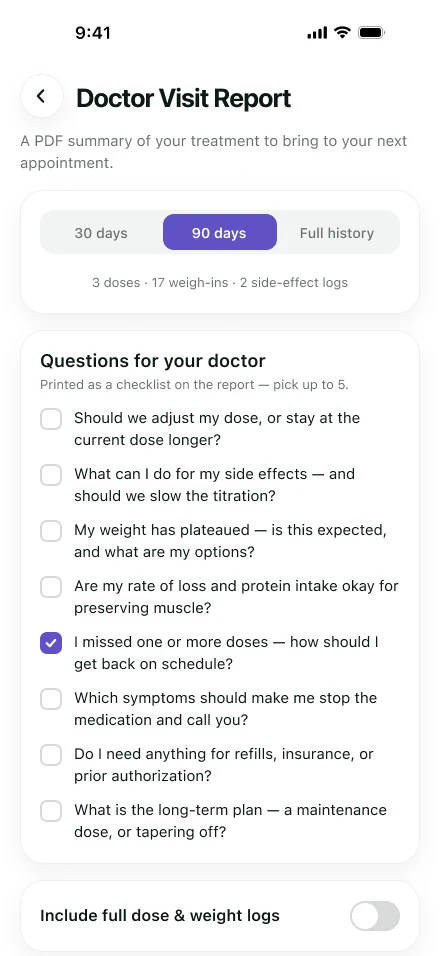
A report for your next appointment
Frequently asked questions
How long does nausea last on Ozempic or Zepbound?
The labels don't give a number of days. The Ozempic, Mounjaro and Zepbound labels say most nausea, vomiting and diarrhea in their trials happened during dose escalation, and the tirzepatide labels add that it decreased over time. The 2025 joint nutrition advisory says side effects tend to ease with a stable dose.
How common is nausea on Wegovy compared with Zepbound?
In the Wegovy label's weight-reduction trials, 44% of people on 2.4 mg reported nausea, against 16% on placebo. The Zepbound label reports 25–29% across its doses, against 8% on placebo. These come from different trials, so they aren't a head-to-head comparison.
Can I take something for GLP-1 nausea?
Ask your prescriber. Some anti-nausea medicines can cause other problems, such as constipation, so the right choice depends on you and your other medicines.
Is nausea a sign my dose is too high?
Not on its own. Nausea is common, especially after a dose step. But tell your prescriber if it's bothering you, because how well you tolerate a dose is part of how they decide on the next step.
When is nausea an emergency?
The Medication Guides say to stop the medicine and call your provider right away if you have severe stomach pain that won't go away, with or without vomiting, sometimes felt in the back. Also call if nausea, vomiting or diarrhea won't stop, since fluid loss can lead to kidney problems.
Sources
- OZEMPIC (semaglutide) prescribing information and Medication Guide — DailyMed, U.S. National Library of Medicine
- WEGOVY (semaglutide) injection and tablets prescribing information and Medication Guide — DailyMed, U.S. National Library of Medicine
- MOUNJARO (tirzepatide) prescribing information and Medication Guide — DailyMed, U.S. National Library of Medicine
- ZEPBOUND (tirzepatide) prescribing information and Medication Guide — DailyMed, U.S. National Library of Medicine
- Nutritional priorities to support GLP-1 therapy for obesity: a joint Advisory from the American College of Lifestyle Medicine, the American Society for Nutrition, the Obesity Medicine Association, and The Obesity Society — Obesity (Silver Spring), 2025
Keep reading
 Side effects
GLP-1 Hair Loss — What the Labels Say and Why It Happens
Hair loss on Ozempic, Wegovy or Zepbound? What the FDA labels report, why rapid weight loss can trigger shedding, and when it's worth seeing a doctor.
- Side effects
GLP-1 Constipation — Why It Happens and What Helps
Constipation is one of the most common GLP-1 side effects. What the labels report, the gentle fixes nutrition guidance suggests, and when to call your doctor.
 Nutrition
Eating Out on Ozempic or Zepbound — How to Order and Enjoy It
Eating out on a GLP-1 with a smaller appetite? How to order protein-first, handle big portions and rich food, box leftovers, and log the meal without fuss.