
Medication
What to Track in Your First Month on a GLP-1
Starting Ozempic, Wegovy, Mounjaro or Zepbound? The five things worth tracking in your first four weeks — and why each one matters for the months after.
The pen is in the fridge, the first dose is done, and the box says to come back in four weeks for the next step. Four weeks is long enough to forget most of what happened in them — and short enough that what happened in them really matters.
The first month on semaglutide (Ozempic, Wegovy) or tirzepatide (Mounjaro, Zepbound) is mostly the starting dose. The labels describe it as a dose for getting your body used to the medication rather than for the full effect. Which makes it the best month to learn how you respond, before anything changes.
Here's what we'd write down, and why each one earns its place.
Did every dose happen on time?
Date, time, dose and — for injections — the site. It's dull, and it's the entry you'll lean on most. It answers the questions that come up in week six: Did I miss one? When exactly did I start? Have I been using the same spot?
When did the side effects show up — and when did they leave?
Nausea, constipation, diarrhea and tiredness are common early. The useful part isn't the symptom, it's the timing: how many hours or days after the dose it started, and how long it stayed. After four weeks, that usually settles into a shape — "day one and two after the shot, then fine" — that you can plan around and describe clearly.
Were you eating enough of the right things?
When appetite drops, protein, fiber and water are the first to slip. A 2025 joint advisory from four obesity and nutrition societies lists adequate protein (paired with strength training), fiber and hydration among the core nutritional priorities during GLP-1 therapy.
No need for a food diary. "Some protein at each meal — yes or no?" and "did I drink enough?" already tell you most of what you need.
What is your weight doing — over weeks, not days?
Weight swings with water, salt and digestion, more so when your eating pattern is shifting. Weigh at the same time of day a few times a week and look at the line, not the morning.
How did the days feel?
One word is plenty: steady, flat, queasy, good. Numbers miss things that a word catches — and over a month you'll see whether your good and hard days follow your dosing rhythm.
What we'd track
Here's the whole first-month list in one place:
- Each dose — date, strength, site.
- Each symptom — what, how strong, how long after the dose.
- Protein and fluids — roughly, every day.
- Weight — a few mornings a week.
- A word for the day.
Before your first dose step, look back over it: did side effects ease as the month went on? Were most days covered for protein? Is the trend moving the way you and your prescriber expected? Take that summary to your appointment — it makes "how's it going?" an easy question.
Keep your first-month log in HoltSee it in Holt
Real screens from the app — the same places you’ll log, review and share.
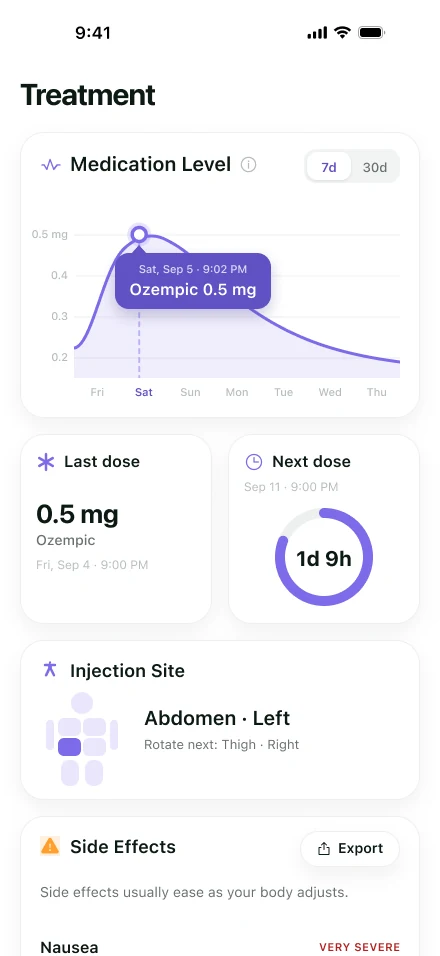
Medication level and next dose 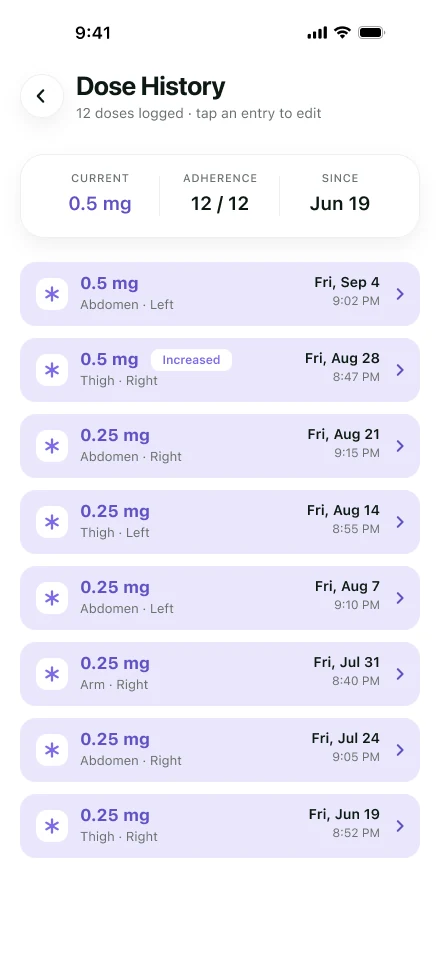
Every dose, every site 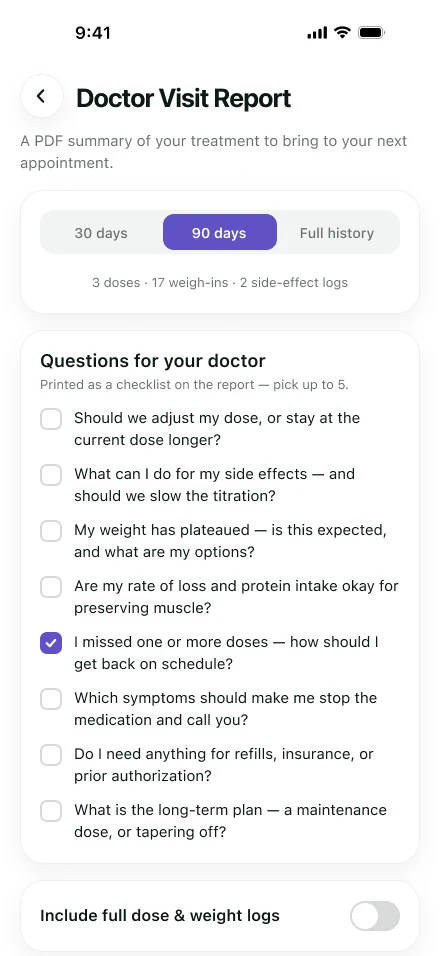
A report for your next appointment
Frequently asked questions
Do I need to track calories on a GLP-1?
Not necessarily. Many people find it more useful to track protein, fiber and fluids — the things that are easy to under-eat when appetite is low — rather than counting every calorie.
How often should I weigh myself in the first month?
There's no single right answer. Weighing at the same time of day, a few times a week, gives a trend without obsessing over daily fluctuations. Focus on the trend line, not individual readings.
Sources
- OZEMPIC (semaglutide) injection — Full Prescribing Information — U.S. Food and Drug Administration
- ZEPBOUND (tirzepatide) — Full Prescribing Information — U.S. Food and Drug Administration
- Nutritional priorities to support GLP-1 therapy for obesity (joint advisory) — ACLM, ASN, OMA and The Obesity Society, 2025
Keep reading
 Nutrition
Eating Enough Protein on a GLP-1 When You're Not Hungry
GLP-1 medications quiet your appetite, which makes protein easy to miss. Why protein matters during GLP-1 therapy and simple ways to fit it in.
 Side effects
GLP-1 Constipation — Why It Happens and What Helps
Constipation is one of the most common GLP-1 side effects. What the labels report, the gentle fixes nutrition guidance suggests, and when to call your doctor.
 Lifestyle
Staying Hydrated on a GLP-1 — Why It Matters and How to Keep Up
GLP-1 labels warn that vomiting and diarrhea can lead to dehydration and kidney problems. Why fluids slip when appetite drops, and simple ways to keep up.